REVIEW · 2-HOUR EXPERIENCES
2 Hour Chicago Landmarks & Lakefront E-Bike Tour
Book on Viator →Operated by Absolutely Chicago Segway Tours · Bookable on Viator
Lakefront Chicago looks good on wheels. This 2-hour e-bike tour is built for seeing the city’s big hits—lake views, fountains, and Museum Campus—with enough time to stop for photos without feeling rushed. You ride a smooth route that includes parks and iconic stops like Buckingham Fountain and Soldier Field.
I like that it’s not just a pedal workout. The e-bike does the heavy lifting, so you can focus on the scenery and the stories from your guide. Based on past rides with guides Clark and Mike, you’ll get entertaining Chicago context while you glide along the shoreline.
One thing to consider: the ride length and timing can shift up to about 20 minutes depending on rider ability, route conditions, and festivals. If weather or crowds make things slow, the route may flex a bit, even though the overall experience stays around the same 2-hour window.
In This Review
- Key Takeaways Before You Plan Your Ride
- Why This 2-Hour Chicago E-Bike Tour Fits So Many Trips
- Where You Start at 300 E Monroe St (and Why It Matters)
- The Pace: How Far You’ll Ride and Why It Feels Comfortable
- Stop 1: Milton Lee Olive Park (The Easy Start)
- Stop 2: Buckingham Fountain for Skyline and Lake Photos
- Stop 3: Chicago Lakefront (This Is the Real Star)
- Stop 4: Field Museum and the Museum Campus Views
- Stop 5: Soldier Field for Big Stadium Energy
- Stop 6: Northerly Island (Remember Meigs Field?)
- Stop 7: Adler Planetarium for Planet-Size Views
- Stop 8: Shedd Aquarium and the Waterfront Mood
- Stop 9: Lakefront Trail for a Real Stretch of Sightseeing
- Stop 10: McCormick Place (Industrial Scale Meets Waterfront)
- Stop 11: Agora Sculptures for a Quick Art Break
- Stop 12: Gen. John Logan Memorial (A Thoughtful Final Pause)
- The Guides: What Makes the Ride Fun, Not Just Scenic
- Practical Tips That Actually Help (Bring This, Skip That)
- Who Should Book This Tour (And Who Might Pass)
- Should You Book This 2-Hour Chicago Landmarks & Lakefront E-Bike Tour?
- FAQ
- How much does the Chicago landmarks and lakefront e-bike tour cost?
- How long is the tour, and how far do you ride?
- What’s included with the tour?
- What should I bring since sunscreen isn’t included?
- Where does the tour start and where does it end?
- What happens if weather is poor?
Key Takeaways Before You Plan Your Ride
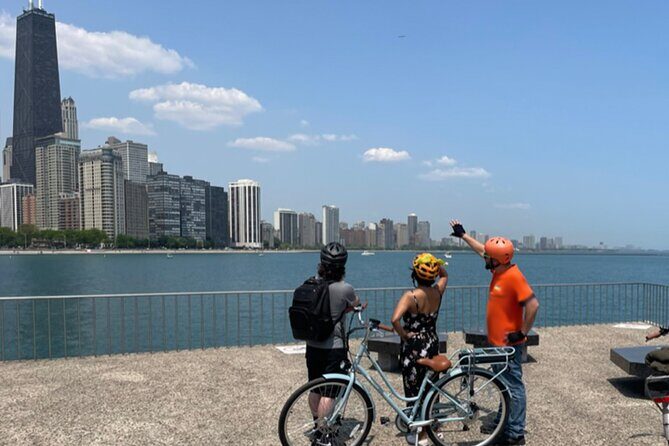
- E-bike effort is reduced, so you can enjoy the route even if you’re not a strong cyclist.
- You’ll cover about 7–9 miles, a good distance for a short Chicago highlight loop.
- Small group size (up to 10) helps with pacing and easier photo stops.
- Museum Campus + lakefront views come in one connected outing, not a scattered day plan.
- Photo moments are baked in, especially around Buckingham Fountain and the lakefront trail.
- Sunscreen isn’t included, so bring your own if you burn easily.
Why This 2-Hour Chicago E-Bike Tour Fits So Many Trips
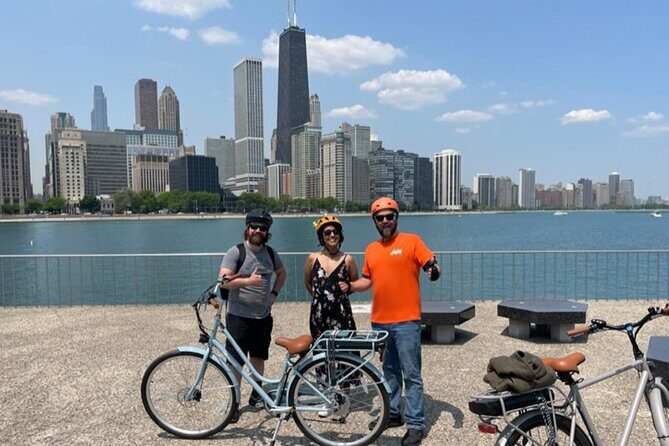
Chicago can be a lot on foot. This tour is designed for people who want a clear “greatest hits” outline—parks, lakefront, and major landmarks—without spending an entire day moving between distant neighborhoods.
I like that the format stays simple. You get a helmet and an e-bike, then follow an expert guide from one set-piece location to the next. The ride is short enough that you can still plan dinner or another attraction right after, but long enough to feel like you really traveled.
Best of all, Chicago’s lakefront is visually powerful at almost any time of day. That’s why this works: you get built-in water views while the route carries you between iconic stops.
You can also read our reviews of more cycling tours in Chicago


Where You Start at 300 E Monroe St (and Why It Matters)
The tour starts at 300 E Monroe St, Chicago, IL 60601, and ends back at the same meeting point. That round-trip setup is practical: you don’t have to solve a second transportation puzzle when the ride ends.
It’s also near public transportation, which is a big deal in Chicago. If you’re staying downtown, you can often avoid car hassle entirely. You’ll use a mobile ticket, and the tour is offered in English, which makes it straightforward for visitors who don’t want language friction.
The group stays small, with a maximum of 10 travelers, so you’re not stuck in a huge pack. That usually means calmer photo stops and less “stop-and-go” frustration.
The Pace: How Far You’ll Ride and Why It Feels Comfortable
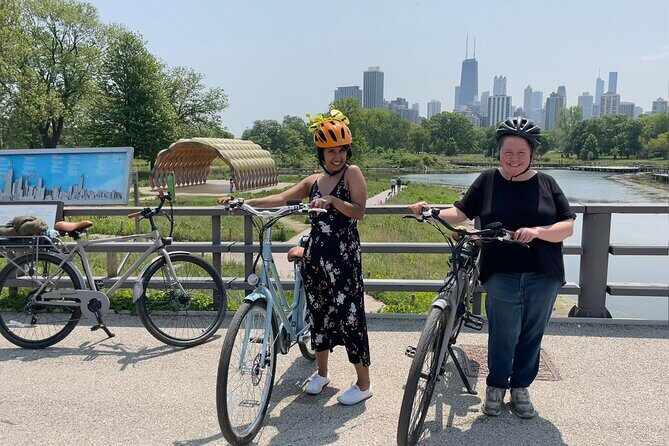
The route is typically about 7–9 miles, and the tour runs for roughly 2 hours. There’s a practical note up front: timing can vary by up to 20 minutes based on rider ability, route conditions, and festivals.
That’s useful to know, because Chicago can change fast. A smooth lakefront path on a quiet day can feel different during a special event. Still, the e-bike helps you keep moving without the kind of fatigue that cuts a short tour into half a day.
Plan for an active ride, but not a fitness challenge. Bring a water bottle if you like, wear closed-toe shoes, and treat it like a scenic sightseeing loop where the “work” is mostly staying alert and enjoying the view.
Stop 1: Milton Lee Olive Park (The Easy Start)
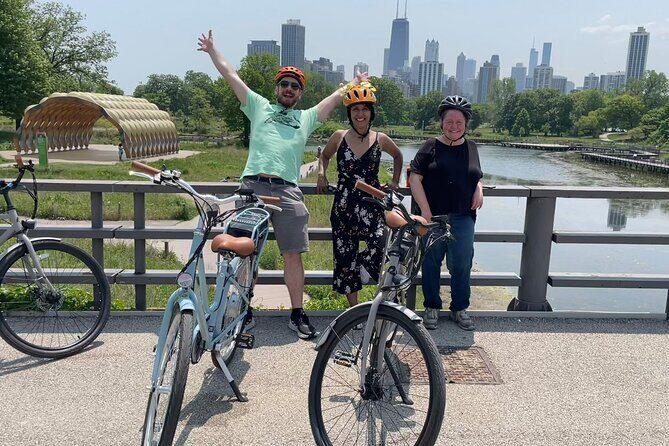
You begin near Milton Lee Olive Park, which is a smart way to warm up. This kind of start matters because it lets you get used to the bike before you’re heading toward the bigger photo landmarks.
This is where you’ll likely settle into the rhythm of biking in a guided group: mount, balance, and get comfortable with how the e-bike responds. Once you’re synced up, the rest of the tour feels smoother.
If you’re first-time on an e-bike, this early stage is exactly what you want. You’re not thrown into traffic-heavy chaos right away, and you’re still in a park-and-downtown zone where the scenery stays interesting.
Stop 2: Buckingham Fountain for Skyline and Lake Photos
Next up is Clarence F. Buckingham Fountain, one of Chicago’s most recognizable landmarks. Expect this stop to be about views and perspective: the fountain area is a classic framing spot where you can pair Chicago’s skyline with lakefront vibes.
Photo-wise, Buckingham Fountain is ideal because it’s a focal point. Even if you’re not sure where to aim your camera, this location gives you an obvious subject, plus built-in city backdrop.
The only consideration here is crowding. Chicago’s signature scenes often draw people. If your goal is quiet photos, aim for a calm moment and be patient as the group reposition.
You can also read our reviews of more tours and experiences in Chicago
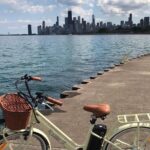
Stop 3: Chicago Lakefront (This Is the Real Star)
From the fountain zone, you’ll continue along the Chicago Lakefront. This is the part that turns the tour from “sightseeing” into “Chicago mood.”
The lakefront path gives you open space, long sightlines, and that feeling of air and distance that city streets don’t offer. It’s also where you get the best sense of scale—Chicago doesn’t just look impressive from skyscrapers; it looks impressive stretched along the water.
When you’re on an e-bike, you also get a nice advantage. You can look around without needing to stop constantly, and you can glide through the spaces where pedestrians might feel slower and cars might feel more stressful.
Stop 4: Field Museum and the Museum Campus Views
You’ll roll into Museum Campus, starting with the area around the Field Museum. This is one of those stops where the guide’s narration can matter. You’re not just passing big buildings; you’re moving through one of the city’s most prominent cultural zones.
Even if you don’t go inside, you’ll get what I call the “outside lesson”: how the buildings sit together, how the campus faces the city, and how the lakefront shapes the whole area.
Drawback? Museums can be tempting to extend into a longer visit, and you don’t have that time today. Use this as a photo-and-orientation stop, then decide later if you want to come back for a full museum day.
Stop 5: Soldier Field for Big Stadium Energy
Next is Soldier Field, Chicago’s famous stadium. This stop changes the tone. It adds a larger, more monumental feel after the calmer lakefront and park scenery.
It also gives you a clearer “Chicago architecture and land use” sense. You’ll see how major sports and major public space share the same overall waterfront area.
If you’re sports-minded, you’ll probably enjoy this stop even more. If you’re not, it still works because it’s a landmark with scale and a strong visual silhouette.
Stop 6: Northerly Island (Remember Meigs Field?)
Then it’s onto Northerly Island, a very different kind of stop compared with the buildings. This is where you get open-air space and views that feel less built-up.
The tour framing includes a nod to Meigs Field, which is a fun way to connect the present-day shoreline with what the area used to represent. That kind of context can make the scenery feel smarter, not just prettier.
The consideration here is comfort. Open shoreline areas can be windy, especially near the lake. If you’re sensitive to that, wear layers you can handle during the ride.
Stop 7: Adler Planetarium for Planet-Size Views
You’ll continue to Adler Planetarium, another “Museum Campus” anchor. This stop is great if you like landmarks that are visually distinct right away.
It also helps the tour feel cohesive. You’re not just hopping randomly between spots; you’re moving through a corridor where Chicago’s major institutions cluster in a way that makes sense.
If you’re the type who wants your photos to include something iconic every time, Adler Planetarium gives you that immediately. You won’t have to work hard to find a recognizable background.
Stop 8: Shedd Aquarium and the Waterfront Mood
Next comes Shedd Aquarium, a landmark that blends architecture with a strong connection to the lakefront theme. Even if aquarium interiors aren’t your priority, the stop works as an easy “big-name” point on your Chicago route.
This area also tends to be lively, so it’s a good time to be ready for more foot traffic. The tour keeps you moving, though, so you don’t have to navigate everything yourself.
If you’re visiting with kids or family, Shedd is usually a strong emotional win. If you’re an adult traveling solo, it still delivers: it’s one more piece of the museum-and-water picture.
Stop 9: Lakefront Trail for a Real Stretch of Sightseeing
After the institutional stops, you ride onto the Lakefront Trail. This segment is where the tour feels like a true bike tour rather than a series of short stops.
You get a long-ish view channel—water, skyline hints, open space—while still being guided and supported. It’s the “just keep going” portion, which is exactly what many first-time Chicago visitors want.
One thing to watch: trail conditions. Like any outdoor path, the surface and pace can change depending on the day. That’s part of why the tour timing can shift by up to about 20 minutes.
Stop 10: McCormick Place (Industrial Scale Meets Waterfront)
Next is McCormick Place, which adds a different layer of Chicago. It’s a reminder that the lakefront isn’t only parks and landmarks; it’s also where big events and major infrastructure sit.
This stop can feel more utilitarian than the museum stops, but it broadens your picture of the city. You’ll see how Chicago’s waterfront supports commerce and large gatherings.
If you only want postcard views, this may feel like a detour. If you like understanding how a place works, it’s a smart contrast.
Stop 11: Agora Sculptures for a Quick Art Break
Then you’ll pass Agora Sculptures, which gives the tour a palate cleanser. Art stops like this are small but useful. They help break the monotony of just biking between big buildings.
This is also where the guide’s pacing can help. A quick art break can make the whole ride feel varied, not repetitive.
It’s not a “stay and read every detail” stop in a 2-hour tour. Think of it as a visual moment and a stretch for your eyes.
Stop 12: Gen. John Logan Memorial (A Thoughtful Final Pause)
Finally, the route includes the Gen. John Logan Memorial area before you head back toward the start point. A memorial stop adds a different tone again: it slows the pace emotionally, even if the actual ride time doesn’t.
These moments can be brief, but they make the tour feel grounded in place. Chicago isn’t only towers and water views; it’s also public memory and civic design.
If you’re someone who likes your sightseeing to include at least one reflective stop, this ending can land nicely.
The Guides: What Makes the Ride Fun, Not Just Scenic
Two guides are specifically highlighted in past feedback: Clark and Mike. Both are described as energetic and entertaining, with strong local stories and local history context.
That matters more than you might think. An e-bike tour can turn into a sightseeing “drive-by.” The difference here is that the guide’s narration gives you hooks—why the fountain matters, how the campus fits the lakefront, what Northerly Island has meant over time.
So, even if you don’t plan to go inside any museums today, you’ll still leave with a better mental map of Chicago.
Practical Tips That Actually Help (Bring This, Skip That)
I’d plan like this:
- Bring sunscreen. It’s not included, and Chicago sun can bite even when the breeze feels cool.
- Wear closed-toe shoes and clothing you can move in.
- Bring a light layer if the lakefront feels breezy.
Since the route can vary by up to 20 minutes, it helps to show up ready to ride and not with a tight schedule that can’t handle a little shift.
Also, since the tour ends back where it starts, treat it as a built-in block of time. Plan your next stop nearby so you’re not rushing after you finish.
Who Should Book This Tour (And Who Might Pass)
This is ideal for:
- First-time Chicago visitors who want a clean highlights loop in 2 hours
- People who want lakefront views without the effort of a long bike workout
- Families or groups who like big-name landmarks strung together with guided storytelling
It might not be perfect for you if:
- You want long museum time or deep indoor exploration
- You hate photo stops and prefer only moving with no pause at landmark points
Should You Book This 2-Hour Chicago Landmarks & Lakefront E-Bike Tour?
Yes, if you want an efficient, good-value way to see Chicago’s lakefront and major landmarks without building a complex route yourself. The combination of a short ride distance, a small group, and an e-bike-friendly pace makes it an easy win for many travel styles.
I’d especially recommend it if you like structured sightseeing—start, stops, stories, photos—and you want to leave with a clear sense of where everything sits. If your goal is postcard views plus a practical Chicago orientation, this tour is a strong fit.
If you prefer totally independent sightseeing with zero pauses, you might find guided stops slightly limiting. But if you’re trying to make the most of a limited day, this is one of the smarter ways to do it.
FAQ
How much does the Chicago landmarks and lakefront e-bike tour cost?
The price is $72.15 per person.
How long is the tour, and how far do you ride?
The duration is about 2 hours, and the route is typically around 7–9 miles.
What’s included with the tour?
You get an e-bike and a helmet.
What should I bring since sunscreen isn’t included?
Sunscreen is not included, so bring your own if you need it. It also helps to wear comfortable closed-toe shoes for riding.
Where does the tour start and where does it end?
The tour starts at 300 E Monroe St, Chicago, IL 60601, USA, and it ends back at the same meeting point.
What happens if weather is poor?
The experience requires good weather. If it’s canceled due to poor weather, you’ll be offered a different date or a full refund.