REVIEW · FARMS
Explore Chicago’s Indoor Mushroom Farm Experience
Book on Viator →Operated by Four Star Mushrooms · Bookable on Viator
A tour of an indoor mushroom farm in Chicago is weirdly fun. You’ll walk through a controlled environment set-up where gourmet mushrooms are grown from raw substrate to packaged product, plus you’ll hear how this fits into restaurant demand and regenerative agriculture. I like the hands-on feel of the process walkthrough, and I also appreciate how much is explained in plain language for a small group. The one thing to keep in mind is this is more of a grown-up-style facility tour than a hands-on kids’ workshop.
What I love most is the full chain of production you see—bagging and sterilizing substrate, then inoculation, incubation staging, and finally the fruiting rooms. The second win for me is the business reality: you’re not just looking at mushrooms; you learn how the crop gets packaged for retail and wholesale customers across Chicagoland. A minor drawback is that it’s not set up as a let-kids-run-free experience, so younger children may get impatient or want to touch things they shouldn’t.
Still, for the cost and the time, this is a very efficient learning stop. It runs about 90 minutes total, with the actual farm tour around 60 minutes, and the group is capped at 25 people. If you prefer quiet, traditional sightseeing, you might find the industrial side a bit more “worksite” than “museum,” but the explanations make it worth it.
In This Review
- Quick reasons to book this Chicago mushroom farm tour
- Why Chicago’s indoor mushroom farm tour is more interesting than it sounds
- The 90-minute visit flow: what you’ll see and how it fits together
- Inside a controlled environment: what that term really means
- The regenerative agriculture angle, explained in plain terms
- Price and value: is $20 worth a 90-minute indoor tour?
- Who this tour suits best (and who might want to skip)
- Practical tips for your visit at 320 N Oakley Blvd
- The experience is not a museum show—so lean into what it is
- Should you book the indoor mushroom farm tour in Chicago?
- FAQ
- How long is the Chicago indoor mushroom farm experience?
- Where does the tour start and end?
- How much does the tour cost?
- How many people are in a group?
- What language is the tour offered in?
- Do I need a printed ticket?
- What will I learn during the tour?
- Is it suitable for children?
- What is the cancellation policy?
Quick reasons to book this Chicago mushroom farm tour

- From sterile substrate to fruiting rooms: you see the whole production flow, not just the harvest.
- Controlled environment agriculture explained clearly: you learn what “inside farming” actually means.
- Packaging for retail and wholesale: the tour connects cultivation to how the mushrooms reach Chicago kitchens.
- Regenerative agriculture angle: you’ll get context on why mushroom cultivation matters.
- Small group size: capped at 25, so you can actually ask questions.
Why Chicago’s indoor mushroom farm tour is more interesting than it sounds
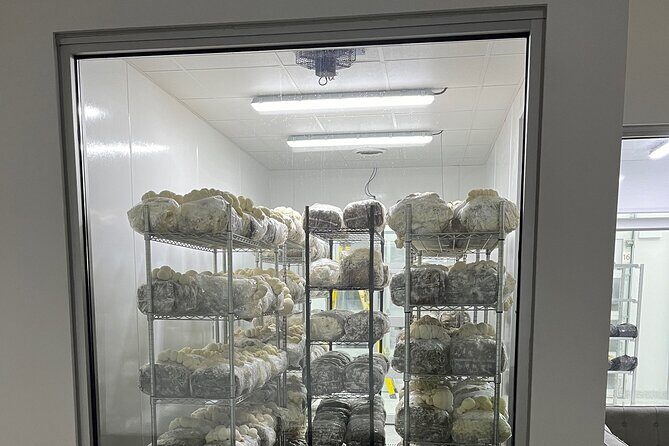
Chicago has plenty of big, famous attractions. This one is smaller and more unusual, and that’s exactly why I think it works. Instead of staring at a single historic object, you tour a living production system—one that happens indoors, with climate and conditions managed on purpose.
You get the best of two worlds. On one side, it’s very practical: you’ll see how raw materials become edible gourmet mushrooms. On the other side, it’s tied to bigger themes: regenerative agriculture and how food systems connect to restaurant culture. That mix is what makes the tour feel like more than a novelty stop.
And honestly, mushrooms are a great topic for a short trip because they’re familiar, but the process behind them isn’t. You’ll leave with a new respect for the steps you never see at the grocery store—sterilization, inoculation, controlled incubation, then fruiting and packaging.
You can also read our reviews of more tours and experiences in Chicago.


The 90-minute visit flow: what you’ll see and how it fits together
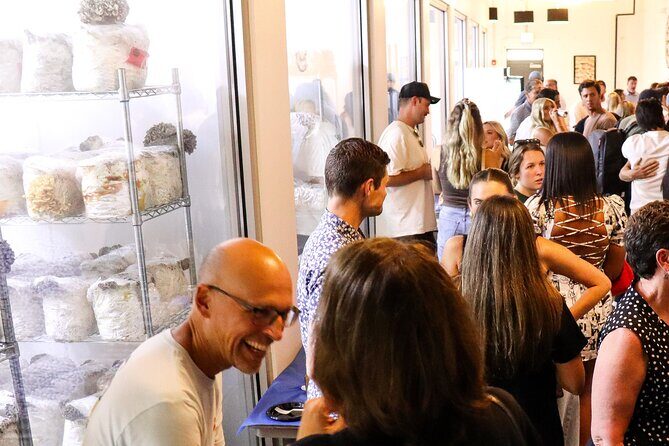
Your experience starts at 320 N Oakley Blvd, Chicago, IL 60612, and it ends back there. The tour runs about 1 hour 30 minutes total, and the farm tour segment is roughly 60 minutes. It’s offered in English, and it uses a mobile ticket, which keeps things simple when you’re trying to move through a day of Chicago plans.
Because there’s only one main stop, the pace is easy to follow. You’re not zig-zagging around town. You’re staying focused on one facility and one production line, so every question makes sense in context.
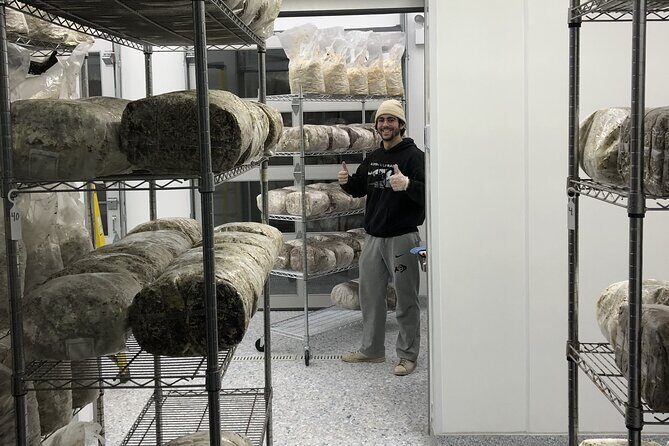
Here’s the production sequence you’ll walk through, in the order you’ll likely encounter it:
- Raw substrate bagging and sterilization
You’ll see how the growing medium is prepared and sterilized before anything else happens. This part matters because it’s where contamination control starts—mushrooms are sensitive, and clean inputs help production stay predictable.
- Inoculation
Next comes inoculation, when the growing material is prepared for mushroom growth. Think of it as the moment the process switches from prep to actually starting the life cycle.
- Incubation staging
Then you’ll learn how the material is staged for incubation. The big idea: growth doesn’t happen randomly. It’s managed with timing and environmental conditions.
- Grow rooms for fruiting
After incubation, the fruiting stage is where you see mushrooms actually develop. This is usually the most visually exciting part, because it shows the payoff of all the earlier steps.
- Packaging for retail and wholesale
Finally, you’ll see how product is packaged. This is where the tour stops being purely science and becomes “how Chicago eats,” since mushrooms don’t just appear—they get handled and shipped to places that serve and sell them.
If you like tours where the explanation is tied to what you’re seeing, this structure is ideal. You can follow the logic from start to finish instead of watching unrelated displays.
Inside a controlled environment: what that term really means
“Controlled environment agriculture” can sound like corporate jargon. During your visit, it becomes much more concrete.
In simple terms, you’re in a facility where conditions for growing are managed so the process stays reliable. That matters for mushrooms because they’re not a one-and-done crop that you can grow the same way as outdoor plants. Instead, the growing medium has to be prepared properly, then the environment needs to support consistent fruiting.
As you move through the different stages—sterilization to inoculation to incubation to fruiting—the tour helps you see why control is the point. You’re learning how each step reduces risk and improves consistency.
One practical takeaway I like: it helps you connect what you see in a grocery store to what’s happening behind the scenes. Mushrooms are often treated like a mysterious ingredient. After this tour, you’ll understand that their success depends on repeatable processes, not luck.
The regenerative agriculture angle, explained in plain terms
The tour also touches regenerative agriculture and how mushroom cultivation plays a role. Even if you’re not deep into sustainability topics, you can still get something useful from this part because it’s framed around function: what mushrooms do in a broader food system.
In the way the tour is presented, mushroom cultivation isn’t treated as a separate hobby. It’s positioned as part of responsible agriculture—something that can fit into systems thinking rather than only focusing on output.
If you care about food production, this section gives you vocabulary to talk about mushrooms beyond taste. It also makes the tour feel timely, since agriculture discussions are shifting toward how production systems impact resources, waste, and cycles.
Price and value: is $20 worth a 90-minute indoor tour?
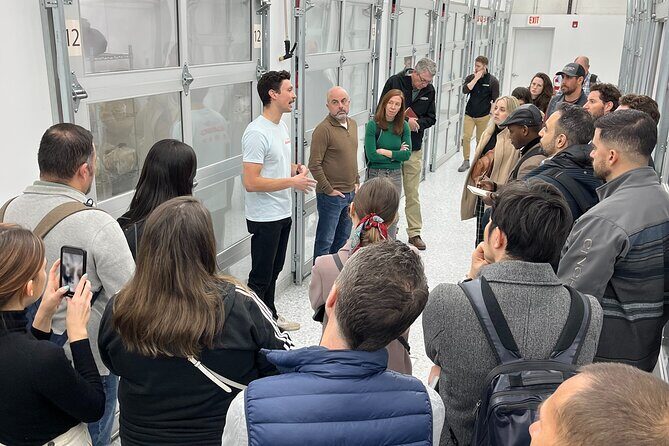
At $20 per person for about 1 hour 30 minutes, I’d call this a solid value for people who like learning by watching real operations. You’re paying for access to a working production space, and you’re not getting a long bus ride to a far-off site.
The group size is also a big deal for value. With a maximum of 25 travelers, the tour doesn’t feel like you’re standing in a crowd of strangers while someone reads a script. Smaller groups tend to make explanations clearer and questions easier.
If you’re doing Chicago on a schedule, the timing helps, too. The tour start time listed is 12:00 pm, so it can work as a midday reset before your next neighborhood plan.
Would I call it a must-do for everyone? No. If you want classic skyline views, this isn’t that. But if you want something different that’s quick, informative, and actually connected to how food is made, the price lines up well.





Who this tour suits best (and who might want to skip)
This experience is best for you if:
- you like food science, farming, or how ingredients get from facility to kitchen
- you enjoy explanations tied to real equipment and real steps
- you want a short, focused activity that doesn’t eat your whole day
- you’re curious about restaurant culture and how local supply chains work
It may not be your best choice if:
- you prefer quiet, low-structure sightseeing
- you dislike tours that feel like a workplace (because it is one)
- you’re expecting a hands-on class where kids can freely experiment
On that last point, there’s helpful real-world context from the experience itself: a family with a couple of young children was there, and the feedback was that the group was tolerant and nobody seemed bothered by kids being curious—though it’s clearly not set up for kids to run into equipment.
Practical tips for your visit at 320 N Oakley Blvd
To get the most out of your time, plan like you’re visiting a working facility, not a casual attraction.
A few practical things to consider:
- Wear comfortable shoes. Even if the tour is well paced, you’ll likely be standing and moving through production areas.
- Bring a curious mindset. The tour is built around stages—sterilization, inoculation, incubation, fruiting, packaging. If you listen for the “why” behind each stage, it all clicks faster.
- Use the mobile ticket. It’s part of the experience flow, so have it ready on your phone.
- Ask questions when you can. With a cap of 25 people, it’s a good size for interaction if you have specific interests.
Timing-wise, your tour starts at 12:00 pm, and it runs about 90 minutes total with the farm tour around 60 minutes. If you’re planning lunch before or after, give yourself enough buffer so you don’t feel rushed.
The experience is not a museum show—so lean into what it is
Here’s the thing I think makes this tour work: it isn’t trying to be a theatrical show. It’s a tour of a working system. That means the focus is on process, tools, and how the operation fits into Chicago food supply.
You’ll likely come away with a mental map:
- how a controlled environment supports consistent mushroom growth
- how early steps like sterilization and inoculation set up later success
- how the facility moves product from grow rooms into packaging for retail and wholesale
And if you like talking food with friends after your trip, you’ll have new details to share. Most people can identify mushrooms. Fewer people can explain how the cultivation cycle is managed indoors.
Should you book the indoor mushroom farm tour in Chicago?
Book it if you want a short, unusual, practical Chicago experience that teaches you how a real operation works. The $20 price feels fair for a behind-the-scenes look that takes about 90 minutes, in a small group capped at 25. You’ll get a full production walkthrough from prepared substrate through fruiting and packaging, plus a sustainability frame through regenerative agriculture.
Skip it if your perfect day is all classic sightseeing and you don’t want a workplace vibe. Also, if you’re traveling with very small kids who need hands-on play to stay happy, you might find it less engaging—though the real feedback suggests families can be comfortable there as long as kids are respectful and curious.
If you’re on the fence, here’s my simple rule: if you enjoy learning how everyday foods are made, this tour will land well.
FAQ
How long is the Chicago indoor mushroom farm experience?
It runs about 1 hour 30 minutes (approx.), with the tour itself around 60 minutes.
Where does the tour start and end?
It starts at 320 N Oakley Blvd, Chicago, IL 60612, USA and ends back at the meeting point.
How much does the tour cost?
The price is $20.00 per person.
How many people are in a group?
The experience has a maximum of 25 travelers.
What language is the tour offered in?
The tour is offered in English.
Do I need a printed ticket?
No. It uses a mobile ticket.
What will I learn during the tour?
You’ll see how gourmet specialty mushrooms are grown from start to finish, including substrate bagging and sterilization, inoculation, incubation staging, grow rooms for fruiting, and packaging for retail and wholesale.
Is it suitable for children?
Most travelers can participate, and one review noted that young children were present and nobody seemed to mind, though it’s described as more of a grown-up style tour.
What is the cancellation policy?
You can cancel for a full refund up to 24 hours before the experience’s start time.