REVIEW · AUDIO TOURS
Chicago Self-Guided Audio Tour
Book on Viator →Operated by Uvamai Niche Tourism · Bookable on Viator
Fifteen Chicago stops, no guide headset required. This self-guided audio tour strings together major sights and some clever behind-the-scenes stories, from Union Station film lore to the Chicago Riverwalk engineering plot. You get a private audio playlist plus an interactive map, and you can take it in your own order.
I especially like two things: the narration is built to be easy to hear while you’re outside, and the plan is flexible enough to fit a short visit or a fuller day. The map uses headphone markers so you can jump to a stop and press play when you’re standing right there.
One thing to consider: the audio is designed as short, focused segments per attraction, not a multi-hour guided lecture. If you want long, uninterrupted storytelling at every stop, you may finish the audio quickly and want to read up on the side.
In This Review
- Key things to know before you go
- How the self-guided playlist and map work in Chicago
- Union Station: film swagger and WWII training tunnels
- Field Museum: beyond the T-Rex and into museum science
- Buckingham Fountain: Great Lakes symbolism and restoration drama
- Art Institute of Chicago: acquisition stories and American Gothic energy
- Millennium Park and Cloud Gate: modern Chicago engineered below your feet
- Chicago Cultural Center: the People’s Palace vibe and Tiffany domes
- Chicago Riverwalk: reversing the river and reclaiming the waterfront
- Navy Pier: from military training to a tourist and community balance
- Driehaus Museum: a Gilded Age mansion as a decorative arts time capsule
- 360 Chicago observation deck: reading the skyline’s logic
- Lincoln Park Zoo: conservation focus in a free-entry setting
- Chicago History Museum: Great Fire aftermath to modern resilience
- Newberry Library: quiet research rooms and rare collections
- Griffin Museum of Science and Industry: the 1893 World’s Fair building and hands-on curiosity
- Price and timing: why $6 can work, and when it won’t
- Should you book this Chicago self-guided audio tour?
- FAQ
- How do I access the audio guides?
- Is this a GPS-guided tour?
- Are attraction entry tickets included?
- How long does the tour take?
- Can I start and end where I want?
- How long are the tour links valid?
- What do I need to bring?
- Is the tour only in English?
Key things to know before you go

- SoundCloud playlist format: click once and play stop-by-stop at your pace
- Google My Maps with headphone icons: tap a marker to jump to the right audio
- Up to 6 days of access: use it across multiple outings if your schedule is messy
- Mix of free and ticketed sights: some stops are free-entry, others require entry fees
- Not a GPS tour: you’ll navigate yourself, with the map doing the heavy lifting
How the self-guided playlist and map work in Chicago
This is not a GPS guided walk. Instead, you use your phone for two links you receive through your booking platform: one SoundCloud playlist with all 15 audio guides, and one Google My Maps page with markers for each stop.
Here’s the simple workflow:
- Open the SoundCloud link in your web browser and play the audio for whichever stop you’re at.
- Open the Google My Maps link in your browser (not the Google Maps app) and tap a headphone icon.
- If you want, you can also start with the suggested order, then break away whenever you want.
Because it’s self-guided, I recommend you do a quick check before you leave your hotel: load the map, decide your first two stops, and save your energy for walking and looking instead of troubleshooting.
You’ll need headphones/earphones, a fully charged smartphone, and internet access. Plan on keeping your data connection on (or using Wi‑Fi when available) so the audio doesn’t stall mid-story.
You can also read our reviews of more guided tours in Chicago



Union Station: film swagger and WWII training tunnels
Union Station is the kind of building that makes you slow down even if you’re not a transit nerd. When you listen here, the Great Hall doesn’t just feel pretty. The audio points out how the station became a cinematic backdrop, with references to popular films including The Untouchables and Public Enemies.
You’ll also get a side of Union Station that most first-time visitors miss: the idea of hidden World War II connections, including stories about training that happened in the area. Plus, the audio nudges you to look for clues around the station’s layout, including mentions of tunnels below your feet.
Practical take: this is a great first stop because it teaches you how to read the building. If you show up early, you can wander without crowds and still get through the story at a natural pace.
Entry note: the audio visit here is listed as free.
Field Museum: beyond the T-Rex and into museum science

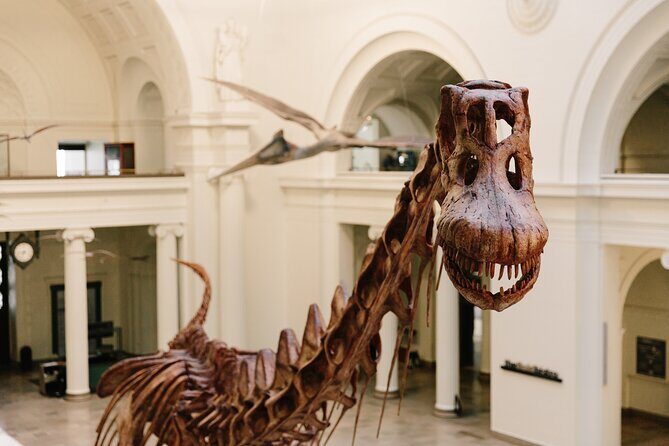
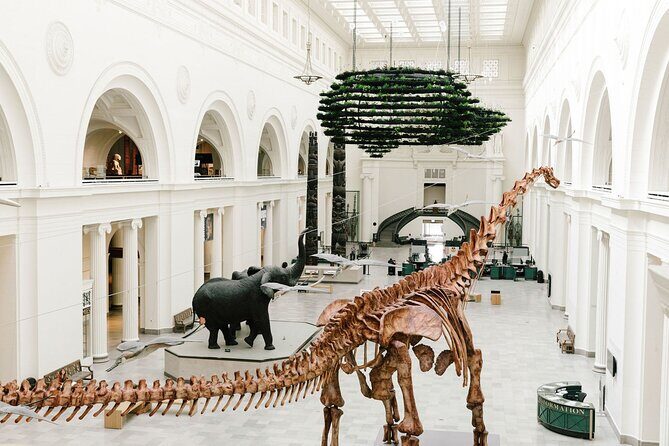
The Field Museum is famous for the skeletons, but the audio experience pushes you toward what’s less obvious. You’ll hear how the museum traces back to the 1893 World’s Fair, and you’ll get guided attention on collections that many visitors skip.
Expect stories tying together Ancient Americas, Egyptian mummies, and the kind of behind-the-scenes research that happens upstairs in labs. Even if you don’t read every label, the audio helps you spot what to focus on so you don’t just float through big rooms.
Practical note: this is one stop where your time matters. If you only give it 20 minutes, pick a few themes to chase. If you have more time, use the audio as a roadmap and let the rest be your wandering reward.
Entry note: the Field Museum stop is not included for admission fees.
Buckingham Fountain: Great Lakes symbolism and restoration drama
Buckingham Fountain is one of those Chicago sights you can’t miss once you know where it is. The audio frames it as more than a water show by giving you the backstory on the family legacy behind its creation and the engineering that made it a major fountain on a global scale.
You’ll also hear about the Great Lakes symbolism in its design, which is a clever way to understand why the fountain feels tied to the whole region rather than just downtown. And you’ll get the human side: restoration efforts that saved it from decay, plus notes about the fountain’s seasonal rhythm and nighttime light show history.
Practical take: if you can plan your timing, come when the fountain’s doing its thing, then stay long enough to let the audio story finish before you move on. That way, the meaning lands while you’re still staring at the water.
Entry note: this stop is free.
Art Institute of Chicago: acquisition stories and American Gothic energy
The Art Institute is a big deal. The audio keeps you from treating it like a random museum walk by focusing on how famous works entered the collection—sometimes through controversial circumstances and sometimes through major donors.
You’ll also connect the museum’s growth to Chicago’s industrial rise, hearing how local patrons competed with European collectors. If you like American art, the audio specifically calls out cultural icons such as Grant Wood’s American Gothic, helping you understand why certain pieces became shorthand for the nation’s imagination.
Practical consideration: this museum is huge. The audio helps, but you still need to choose. If you try to “do it all,” you’ll end up tired and underwhelmed. Pick one or two story threads the audio gives you, then build your route around the nearby galleries.
Entry note: this stop is not included for admission fees.
You can also read our reviews of more tours and experiences in Chicago




Millennium Park and Cloud Gate: modern Chicago engineered below your feet
Millennium Park feels like a modern miracle. The audio helps you see the work that makes it possible, including political drama around the park’s transformation and the architectural challenges that shaped it.
You’ll get guided attention on the Crown Fountain’s technology and the Lurie Garden’s ecological significance. The story also points out details many people overlook because they’re busy taking photos of the big headline views.
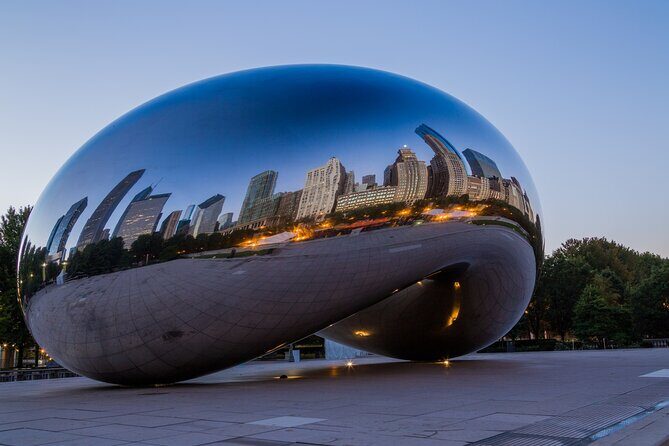
Then you’re at Cloud Gate—the Bean—where the audio shifts into art plus engineering plus visitor habits. You’ll hear about the controversial process behind its creation, the artist’s vision, and the engineering challenges that could have stalled it. The audio even talks about mathematical properties of the sculpture and why the reflective surface pulls you into the scene.
Practical take: this is one of the best pairings in the whole route. Listen to the Millennium Park part as you walk through the park spaces, then let the Cloud Gate story reset your eyes before you circle the sculpture.
Entry note: Millennium Park and Cloud Gate are free.
Chicago Cultural Center: the People’s Palace vibe and Tiffany domes
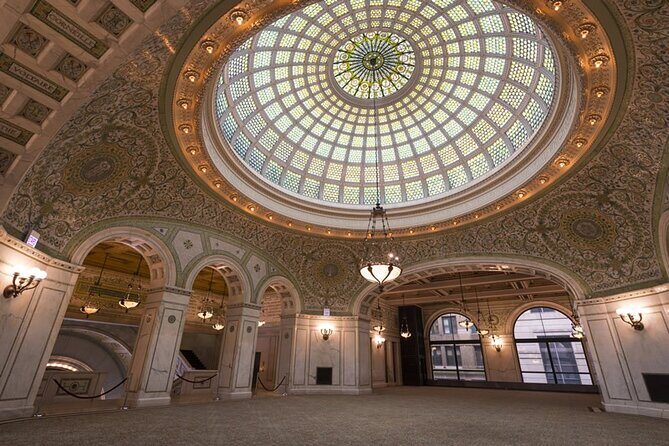
If you like architecture that feels civic, the Chicago Cultural Center is a strong stop. The audio calls it the People’s Palace, and it explains why: the building became a cultural space meant for everyday access.
You’ll learn how the building shifted from being Chicago’s first central library into a cultural powerhouse. The audio focuses on the craftsmanship behind mosaics and the political battles that helped keep the building from being demolished. And yes, it spotlights the Tiffany glass domes, which are the kind of detail that make you look up even when you’re not expecting it.
Practical take: this is a good breather stop. It’s a place where you can slow down, listen in a quieter space, and still feel like you’re learning something real.
Entry note: this stop is free.
Chicago Riverwalk: reversing the river and reclaiming the waterfront

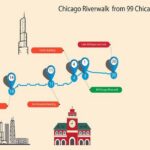
The Riverwalk is easy to enjoy because it’s right there, but the audio adds a layer that makes it more meaningful. You’ll hear the river’s role in Chicago’s founding, plus the story of reversing the river’s flow—a move that reshaped the city’s growth.
The audio also frames the modern Riverwalk as a renaissance of a once-neglected industrial corridor. It points you toward architectural treasures you might miss if you’re only looking at skyline photos. You’ll also get notes on ecosystems that survive in an urban environment.
Practical take: start walking and let the audio guide your attention to the “why” behind what you see. Then, when you’re done listening, keep walking without sound. It’s a nice moment to just feel the city.
Entry note: this stop is free.
Navy Pier: from military training to a tourist and community balance
Navy Pier is busy, but the audio makes it less generic. You’ll hear how it connected to World War training and how the pier nearly faced demolition before being rescued.
Then the story shifts into how it evolved into a major entertainment destination. The audio also touches on an ongoing challenge: balancing tourism with local needs. It adds a sustainability angle too, with environmental initiatives mentioned as part of how the pier manages its impact.
Practical take: if you’re the type who likes big public places, you’ll enjoy this. If crowds drain you, you can still use the audio as a “dip in, learn, move on” stop.
Entry note: this stop is free.
Driehaus Museum: a Gilded Age mansion as a decorative arts time capsule
The Driehaus Museum is an excellent change of pace because you’re not staring at objects behind glass the whole time. The audio treats the mansion as a time capsule of American luxury and craftsmanship, tied to one man’s passion for decorative arts.
You’ll hear about the restoration process that brought the home back to life and stories behind each room’s furnishings. The audio also highlights decorative details such as Tiffany windows and hand-painted ceilings, so it’s less about “look at the room” and more about “understand what you’re seeing.”
Practical consideration: your experience will depend on how much you like interiors. If you’re all about paintings and big galleries, this may feel more like a guided stroll through styles than a blockbuster museum day. Still, it’s a very photogenic and readable stop.
Entry note: this stop is not included for admission fees.
360 Chicago observation deck: reading the skyline’s logic
From an observation deck, the big value is not only height—it’s interpretation. The audio gives you expert-style context for what you’re seeing, tying views back to architectural evolution and urban planning.
You’ll get stories about skyscrapers that define Chicago’s identity and references to how the city shaped the concept of a skyscraper city. The audio also points you toward understanding neighborhoods from the sky, not just naming buildings.
Practical take: give yourself enough time to let the sound finish while your eyes are on the skyline. If you rush up and down, you’ll lose the “map reading” aspect that makes observation decks click.
Entry note: this stop is not included for admission fees.
Lincoln Park Zoo: conservation focus in a free-entry setting
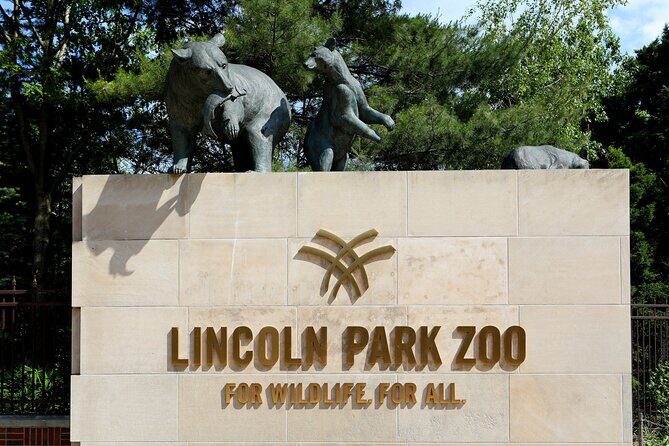
Lincoln Park Zoo is one of those places where the audio can steer you toward the meaning behind the animals. The audio emphasizes conservation, captive breeding programs, and species preservation—plus how the zoo developed from a smaller menagerie into a globally respected care and research center.
You’ll also hear about scientific breakthroughs and habitat design. The audio highlights on-site research and explains how the zoo balances public education with animal welfare and scientific work.
Practical take: if you want a walk that feels like both recreation and purpose, this is your stop. For best results, listen at a relaxed pace and stop when an animal or exhibit catches your attention.
Entry note: this stop is free.
Chicago History Museum: Great Fire aftermath to modern resilience
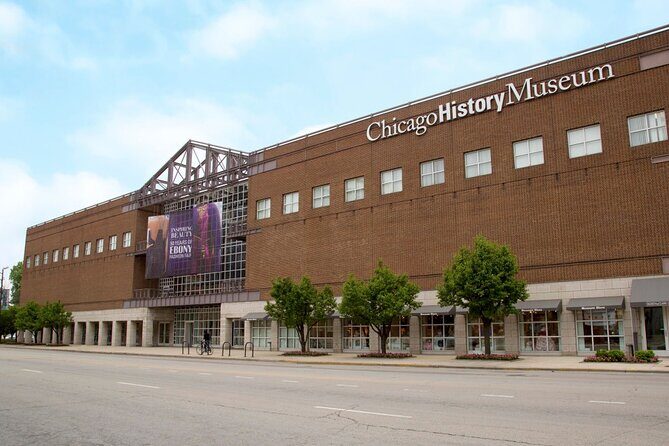
If you want the city’s story in human terms, the Chicago History Museum is a strong match. The audio connects major events like the Great Fire aftermath and the World’s Fair impact to the everyday reality of how Chicago changed.
You’ll hear about artifacts and local accounts, plus stories about cultural movements that started in Chicago. The tone is about resilience and reinvention, with a focus on ordinary people as well as big moments.
Practical consideration: this one is most satisfying if you can spare enough time to read some labels. The audio will point you to what matters, but a museum like this rewards your curiosity if you slow down.
Entry note: this stop is not included for admission fees.
Newberry Library: quiet research rooms and rare collections
The Newberry Library is a great choice for a break from loud streets. The audio highlights why it matters: it’s an independent research library with collections spanning centuries of human knowledge.
You’ll learn about its founding story and what makes its holdings special, including rare manuscripts and historic maps. The audio also points you toward reading rooms and explains the library’s role in Chicago’s intellectual life and public programs.
Practical take: this is one of the best stops for calmer listening. If you’re tired of crowds, you’ll appreciate the more still, reflective pace.
Entry note: this stop is free.
Griffin Museum of Science and Industry: the 1893 World’s Fair building and hands-on curiosity
Science museums can turn into one big blur. The audio helps you anchor the experience in story and place. You’ll hear how the Griffin Museum is housed in the last remaining building from the 1893 World’s Columbian Exposition, which gives the visit a real sense of Chicago’s turning points.
Expect audio attention on specific highlights such as the captured German U-boat and the Pioneer Zephyr train. The story also points to interactive exhibits tied to technology, medicine, and innovation, and how the museum grew into an educational powerhouse.
Practical take: if you’re visiting with mixed interests—some arts, some science—this is the stop that often satisfies everyone. Use the audio to pick one or two “hands-on” themes to chase so you don’t wander without landing anywhere.
Entry note: this stop is not included for admission fees.
Price and timing: why $6 can work, and when it won’t
At $6 per person, this tour is priced like a value add, not a replacement for guided expertise. And that’s exactly how you should approach it: as a way to make iconic stops feel intentional without paying for a long live tour.
The duration is listed as about 3 to 9 hours, which makes sense because you won’t do all 15 places at once unless you’re on a mission. If you want a smoother day, I’d group it like this:
- A classic “architecture and lakefront” loop: Union Station, Millennium Park, Cloud Gate, Riverwalk, Navy Pier
- A museum-and-indoors day: Field Museum, Art Institute, Newberry Library, Chicago History Museum, Griffin Museum
- A “change of pace” day: Cultural Center, Driehaus, 360 Chicago, Lincoln Park Zoo, plus one museum
Where this product may not fit is if you want long, slow, story-rich narration at every location. The audio is built to be digestible while you’re walking, looking, and moving on. If you prefer a thick guidebook vibe, you might want to plan for extra reading after the audio ends—or simply pick fewer stops and go deeper visually.
Should you book this Chicago self-guided audio tour?
Book it if you like structure but hate rigid schedules. This tour is a good match when you want high-impact highlights and stories that help you notice details you’d likely miss on your own.
Skip it (or change expectations) if you’re after a long live-guide experience. The audio format is short and practical, and the best results come when you use it to frame what you see—not when you expect hours of uninterrupted narration.
If you’re traveling solo, short on time, or just want your Chicago day to feel smarter without stress, this is an easy yes. At $6, you’re mostly paying to turn famous places into places with reasons—and that’s a bargain in any city.
FAQ
How do I access the audio guides?
You receive private access links through your booking platform messaging system. One link opens a SoundCloud playlist for the audio, and the other opens a Google My Maps page with headphone icons for each stop.
Is this a GPS-guided tour?
No. It’s self-guided, so you navigate yourself. The map helps you find each attraction, and the audio plays when you select the matching stop.
Are attraction entry tickets included?
Not for everything. The tour notes that entry fees are not included, and some stops are marked as free while others are marked as ticket required.
How long does the tour take?
The total time is listed as about 3 to 9 hours, depending on how many stops you choose and how long you spend at each location.
Can I start and end where I want?
Yes. Since it’s self-guided, you can decide your starting and ending point within Chicago based on your convenience.
How long are the tour links valid?
The private access links remain valid until your tour is complete, with a maximum validity of up to 6 days.
What do I need to bring?
You should bring headphones/earphones, a fully charged smartphone, and internet access.
Is the tour only in English?
Yes. The audio experience is offered in English.