REVIEW · ART INSTITUTE TOURS
Skip-the-line: Art Institute of Chicago Guided Tour
Book on Viator →Operated by Chicago Museum Tours · Bookable on Viator
Museum lines are for the patient. This Art Institute of Chicago skip-the-line semi-private tour gets you inside quickly, then gives a small group route built around major works and real Q&A with the guide.
The trade-off: it’s a 2.5-hour highlight sprint, so if you love slow looking, you’ll want extra time after the tour.
In This Review
- Key highlights that make this tour worth it
- Why this skip-the-line Art Institute tour is a smart play
- Tour logistics: 10:30 start, mobile ticket, and a small-group cap
- The highlights route: from Tiffany stained glass to Warhol and Pollock
- Tiffany and the skill of looking closely
- Seurat and the method behind the magic
- van Gogh, and why emotion can be technical
- Georgia O’Keeffe and the punch of American scale
- Hopper and the art of the pause
- Albright and the idea that images can lie
- Grant Wood and American identity in plain sight
- Chagall, Picasso, and the jump to modern art
- Warhol: pop art as a system
- Pollock closes with energy
- What you can expect from the guides (and how that changes everything)
- Price and value: is $71.40 worth it?
- Best use of your time after the tour
- Who this tour fits best
- Should you book the Art Institute skip-the-line highlights tour?
- FAQ
- What time does the Art Institute of Chicago guided tour start?
- How long is the tour?
- How big is the group?
- Does the price include admission, and is it skip-the-line?
- What language is the tour offered in, and do you get a ticket on your phone?
- Is there free cancellation?
Key highlights that make this tour worth it
- Skip-the-line entry + admission fees included, so you’re not juggling tickets and timing
- Small group cap of 12, which keeps the pacing human and the questions actually useful
- A tight highlights route hitting names like van Gogh, Hopper, Pollock, and Warhol
- Guides bring context, so familiar paintings become stories you can remember
- You leave with a map of where to go next, which helps if you plan to stay in the museum
- 10:30 am start at 111 S Michigan Ave, right in the middle of things
Why this skip-the-line Art Institute tour is a smart play
The Art Institute of Chicago is a big place. Left to your own devices, you can end up doing laps, staring at wall labels until your brain feels like oatmeal, and missing the works you actually came for.
This tour is designed to solve that problem. You get skip-the-line access and a guided route that focuses on the museum’s most recognizable hits, without turning your visit into a scavenger hunt.
I also like that it’s built for people who want meaning, not just sight-seeing. Guides cover why pieces matter and how the collection got put together the way it is, so you get context fast—then you can linger on your own later.
The one caution is time. At roughly 2 hours 30 minutes, it’s a fast-paced walk-through. You’re seeing a lot, but not stopping for a long, quiet stare at every single painting.
You can also read our reviews of more guided tours in Chicago



Tour logistics: 10:30 start, mobile ticket, and a small-group cap
This experience starts at 10:30 am at 111 S Michigan Ave, Chicago, IL 60603. It ends back at the meeting point, which is handy if you’re pairing your museum time with other plans later the same day.
You’ll have a mobile ticket, and you should receive confirmation at booking. The tour is offered in English and is designed for people with at least moderate physical fitness, since you’ll be walking through galleries for a couple of hours.
Group size matters here. This is a maximum of 12 travelers, and it’s described as semi-private. That usually means you spend less time waiting, and more time hearing the guide’s explanation (instead of only catching snippets over the shoulder of whoever is in front of you).
Also, this tour tends to book up. The average booking window is about 20 days in advance, so if you’re traveling in peak season, I’d lock in a date sooner rather than later.
The highlights route: from Tiffany stained glass to Warhol and Pollock
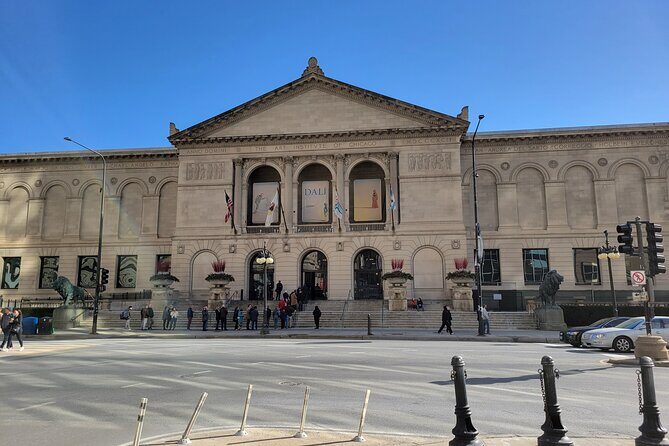
Think of this as a guided “greatest hits” tour. You won’t see every gallery in the museum. You will, however, get a guided tour of the pieces that help you understand how the Art Institute thinks and collects—spanning Impressionism, American art, modern works, and pop culture.
Tiffany and the skill of looking closely
You kick off with Hartwell Memorial Window – Tiffany Studios. Even if you normally skip decorative arts, this is a strong opener because it trains your eye on craft: color, light, and the kind of detail you miss when you rush.
Then you move into French painting with Paris Street; Rainy Day – Gustave Caillebotte. This one is perfect for a highlights tour because it rewards a quick return to the basics: composition, atmosphere, and what a city scene communicates when the weather is doing half the storytelling.
Seurat and the method behind the magic
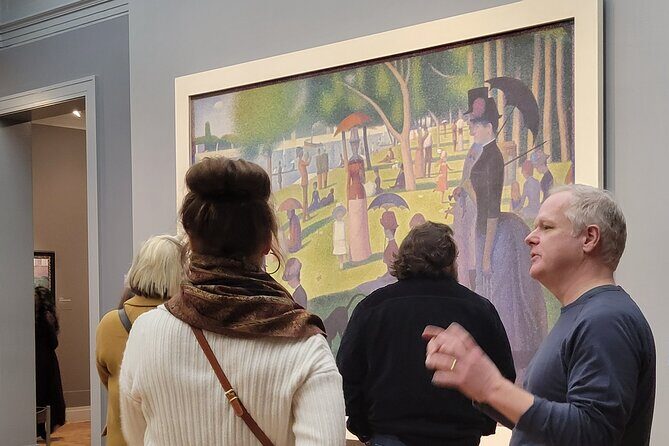
Next up is Sunday on La Grande Jatte – Georges Seurat. If this painting feels instantly famous, that’s exactly why it works on a timed tour. The guide can help you decode what you’re seeing without you needing a full art-history degree.
This section is where you’ll learn how style becomes structure. Seurat’s approach isn’t just a look—it’s a built system. Once you understand the method, the painting stops being just pretty and becomes logical.
You can also read our reviews of more tours and experiences in Chicago



van Gogh, and why emotion can be technical
From there, you land in The Bedroom – Vincent van Gogh. This is a good reminder that “expressive” doesn’t mean “random.” You’ll likely get talking points about how van Gogh uses color and arrangement to push feeling to the front.
It’s one of those stops where a guide can quickly turn your reaction into comprehension. You see it, you feel it, then you understand the choices that caused the feeling.
Georgia O’Keeffe and the punch of American scale
Then you move to Sky Above Clouds – Georgia O’Keefe. O’Keeffe is a great inclusion for a highlights tour because the paintings can feel simple until someone explains what makes the shapes hit so hard.
This is also where the guide’s Chicago know-how can matter, if they connect dots between American art and the way museums build their collections over time. If you’re the type who loves national art movements, this will likely be a favorite block.
Hopper and the art of the pause
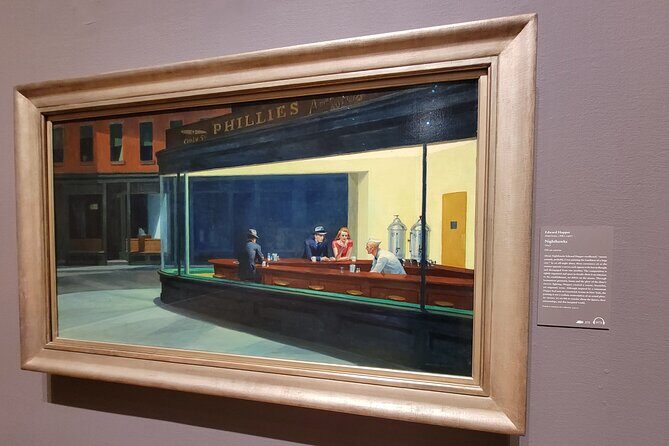
Now comes Nighthawks – Edward Hopper. It’s impossible not to recognize it, but it’s also easy to misread it as only mood.
On a guided route, you’ll get the kind of context that helps you see why the light, the figures, and the emptiness around them create tension. Even if you only spend a minute looking on your own, the guide’s framing can make that minute feel richer.
Albright and the idea that images can lie
Then shift to A Picture of Dorian Gray – Ivan Albright. This stop is a reminder that “famous work” often means “famous theme,” even if you don’t know the artist.
This is where a strong guide can make you look again at the same image with new eyes, especially if they talk about how the artwork connects to its cultural source and the artist’s own approach to illusion and perception.
Grant Wood and American identity in plain sight
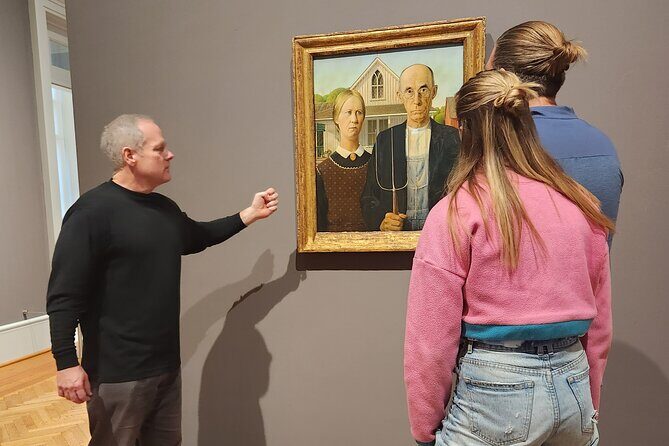
American Gothic – Grant Wood comes next, and it’s a crowd-pleaser for obvious reasons. But the best part of a guided highlights tour is that you don’t just re-find the painting—you learn how to read it.
You’ll also get more appreciation for how the Art Institute’s collection highlights the story of American art, not just individual masterpieces.
Chagall, Picasso, and the jump to modern art
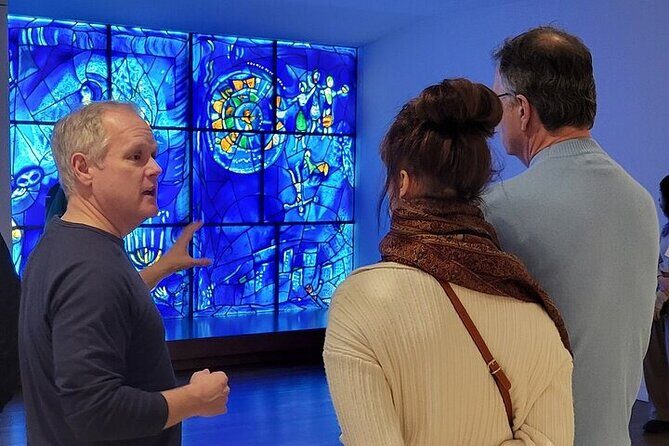
Then the tour moves into big modern swings: America Windows – Marc Chagall, The Old Guitarist – Pablo Picasso. These are ideal for a guided route because each one has a distinct visual language.
A guide can help you notice things you might otherwise gloss over—how symbols operate, how form shifts, and how artists bend realism to say something deeper.
Warhol: pop art as a system
From there, you get Four Mona Lisas – Andy Warhol. This painting is instantly recognizable, but it’s often the kind of work people treat like a joke until they understand what it’s doing.
A good guide can connect Warhol’s repetition and timing to the way modern culture processes images—so you end up seeing more than just the reference.
Pollock closes with energy
Finally, you reach Greyed Rainbow – Jackson Pollock. If you’ve ever wondered how to look at abstract painting without getting stuck in confusion, this is where context helps.
On a highlights tour, the key is learning what to notice fast: rhythm, movement, layering, and the difference between “random” and “arranged.” You’re not expected to memorize brushwork—but you are pushed to see structure.
What you can expect from the guides (and how that changes everything)
One of the best parts of this tour is the guide style. Names that come up often include Joel, Bernie, Scout, Colleen, Marlin, Arnold, Robert, and Michelle. The common thread is storytelling that makes the museum feel organized, not overwhelming.
Here’s what I like about that approach for a first visit:
- The guide helps you avoid aimless wandering by steering you to the right rooms in a sensible order
- You get context about artists and time periods, so the art doesn’t float in isolation
- You can ask questions and get answers that connect back to what you’re seeing
- The tour often includes quick museum orientation—how it’s laid out and how to return for deeper looks
There’s also an efficiency bonus. Multiple guides are described as excellent at moving through the museum so you see major works without the usual stall-and-stare chaos. One of the best practical outcomes is that you finish with a clearer sense of the museum’s structure, which makes self-guided time afterward much easier.
Price and value: is $71.40 worth it?
At $71.40 per person, this isn’t a budget add-on. But it also isn’t just a ticket plus a voice memo.
Here’s why it tends to be good value if you’re short on time:
- Skip-the-line entry reduces the biggest time-waster at popular attractions
- Admission fees are included, so you’re not paying separately just to get inside
- The group is capped at 12, which helps you actually hear explanations
- The tour is about 2 hours 30 minutes, giving you a strong overview of key works
If you’re someone who enjoys art but gets tired fast in a huge museum, this is the right kind of structure. You’ll see the works you came for, understand the connections, and then decide what deserves your extra attention.
If you hate walking quickly or you want to linger for long stretches, you may feel the pace. In that case, consider using this tour as a “map and taste test,” then doing the slow version later.
Best use of your time after the tour
This experience includes an admission ticket, which is a big deal. Instead of treating the tour as your only museum time, you can use it as a launchpad.
When the guide sends you off (and helps you get pointed in the right direction), you’re in a better position to:
- revisit the one or two works you keep thinking about
- choose a theme you liked (Impressionism, American art, modern, or pop)
- spend more time in the rooms that match your taste
A highlights tour is like ordering appetizers. It makes sense to follow up with your main course once you know what you like.
Who this tour fits best
This is a strong fit if you:
- want a fast overview of major works without spending hours choosing a route
- are traveling as a solo, couple, or family and want guidance that works for mixed interests
- like asking questions and getting explanations tied to the artwork in front of you
- can handle moderate walking and standing for a couple of hours
It’s also a good choice for first-timers because the museum is large and the tour helps you get your bearings fast. And because the group is small, it’s easier to keep your attention on the art instead of the crowd.
If you’re very art-focused and want deep study of one movement or one wing, you might prefer a longer, more specialized visit. Here, the goal is breadth and context, not marathon looking.
Should you book the Art Institute skip-the-line highlights tour?
Book this tour if you want a smart first pass through the Art Institute and you don’t want to waste your limited Chicago time wandering. The mix of skip-the-line access, small group size, and admission included makes it a practical option for first visits.
Skip or change your plan if your style is slow, quiet looking and you get annoyed by a tour pace. In that case, use this idea differently: treat it as a short map, then plan your longer time on your own later.
My quick decision rule: if you’re excited to see big names like van Gogh, Hopper, Warhol, and Pollock but need help making sense of them quickly, this is an efficient way to do it. If you’re already planning a full-day, self-guided museum deep dive, you may want a longer format instead.
FAQ
What time does the Art Institute of Chicago guided tour start?
It starts at 10:30 am. The meeting point is 111 S Michigan Ave, Chicago, IL 60603.
How long is the tour?
The tour duration is about 2 hours 30 minutes (with 2 hours noted for the guided portion).
How big is the group?
This tour has a maximum of 12 travelers.
Does the price include admission, and is it skip-the-line?
Yes. The tour includes all admission fees and is described as a skip-the-line semi-private guided museum tour.
What language is the tour offered in, and do you get a ticket on your phone?
The tour is offered in English, and you’ll have a mobile ticket.
Is there free cancellation?
Yes. You can cancel for a full refund up to 24 hours before the experience starts. If you cancel less than 24 hours before, the amount paid is not refunded.