REVIEW · WALKING TOURS
Chicago Walking Tour: The Magnificent Mile
Book on Viator →Operated by Chicago Architecture Center · Bookable on Viator
Chicago’s iconic street gets a real story on foot. This 90-minute Magnificent Mile walking tour keeps things personal with a 10-person max, and you’ll see major landmarks up close while learning how the street shaped Chicago’s skyline. My favorite part is the included stop at the Chicago Architecture Center galleries, which adds context beyond what you pick up just looking out the sidewalk. One thing to keep in mind: it’s a compact walk, so you won’t get long interior time at every building along Michigan Avenue.
You’ll meet at the Chicago Architecture Center at 111 E Wacker Dr, then head straight onto Michigan Avenue. I also like how the pacing leaves room to pause for pictures and take in the details, not just speed past famous facades.
In This Review
- Key Highlights You’ll Care About
- Why the Magnificent Mile Works Better at Walking Speed
- Meeting at 111 E Wacker Dr: Starting at the Chicago Architecture Center
- Stop-by-Stop on Michigan Avenue: The Landmarks and What They Mean
- The Magnificent Mile: The Street as a Design Statement
- Michigan Avenue (DuSable) Bridge: A View-Line You’ll Remember
- Starbucks Reserve Roastery: Where Pop Culture Meets City Branding
- The Wrigley Building: Classic Chicago Fame, Up Close
- InterContinental Chicago: Big Hotel Presence on a Big Street
- Burberry Store on Michigan Avenue: Retail Architecture as Street Theater
- 875 N Michigan Avenue (Formerly the John Hancock Center): A Skyline Landmark
- Women’s Athletic Club: Architecture With a Social Role
- The Newly Renovated Tribune Tower: What Renovation Can Signal
- The Included Galleries at the Chicago Architecture Center
- Group Size and Pace: Why 10 People Feels Like a Real Tour
- Price and Value: Is $35 Worth It?
- Practical Tips Before You Go
- Should You Book This Magnificent Mile Walking Tour?
- FAQ
- Where does the tour meet and end?
- How long is the walking tour?
- How much does it cost?
- Is admission to the Chicago Architecture Center included?
- Is food or drink included?
- Are pets allowed?
- Can building interiors be guaranteed?
Key Highlights You’ll Care About
- Small group of 10 max for a calmer, more personal guide conversation
- Chicago Architecture Center galleries included so the walk has built-in context
- Michigan Avenue landmarks in sequence (from DuSable Bridge to Tribune Tower)
- Certified guide narration that turns views into stories you can remember
- Photo-friendly stops since you’re walking and stopping often
Why the Magnificent Mile Works Better at Walking Speed
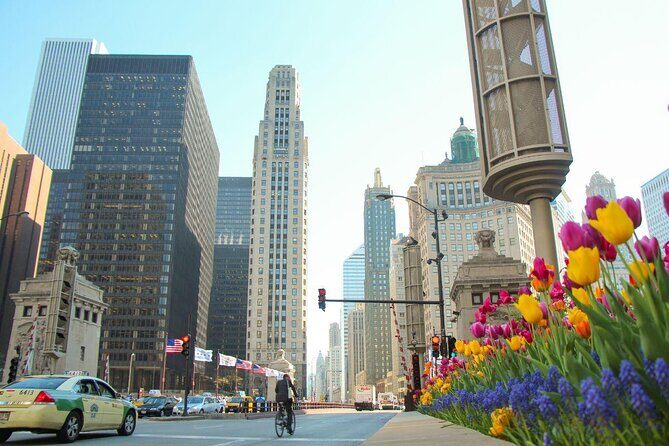
Michigan Avenue can feel like one long picture postcard when you visit on your own. On a walking tour, you slow down just enough to notice the stuff that makes Chicago Chicago: how buildings sit on the street, how the city frames views, and why these corners became showpieces.
This tour is built for people who like architecture but also want it explained in plain language. You’re not stuck in traffic or scanning from a bus window. Instead, you get to stand close, look up, and connect each landmark to what the neighborhood was becoming over time.
And because the group is capped at 10, the guide can actually respond to questions. That matters when you’re trying to understand details like what makes one building’s role different from another—without the tour turning into a lecture you can’t interrupt.
You can also read our reviews of more walking tours in Chicago



Meeting at 111 E Wacker Dr: Starting at the Chicago Architecture Center
The tour begins at the Chicago Architecture Center (111 E Wacker Dr). I like this approach because it starts with a mini “read the city” mindset. Before you head out, you’re set up to recognize patterns: styles, eras, and how Chicago marketed itself through big, public-facing architecture.
The admission you pay for also covers entry to the Galleries of the Chicago Architecture Center. Translation: this isn’t only a sidewalk show. Even if the walk goes fast, you still have a second chance to absorb the broader Chicago story in a more comfortable setting.
If you’re taking the train/bus, the meeting point is in a convenient spot for public transportation. And since the tour ends back at the meeting location, it’s easy to continue exploring nearby without re-planning your day.
Stop-by-Stop on Michigan Avenue: The Landmarks and What They Mean
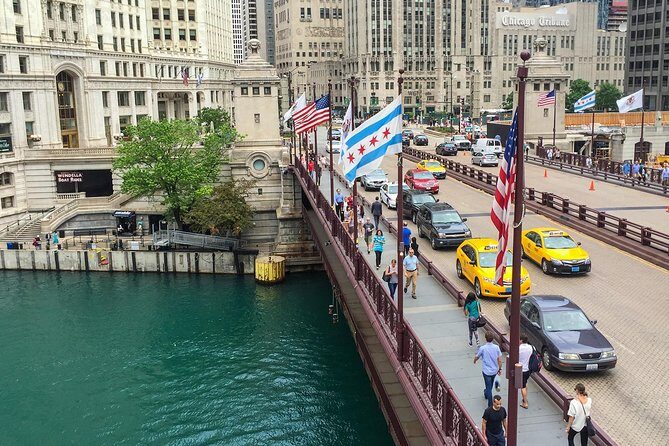
Expect a structured flow: you’ll start with the Magnificent Mile itself, then move along with a series of landmark views and short explanations that tie the street to Chicago’s growth.
The Magnificent Mile: The Street as a Design Statement
Right away, you’ll talk about what the Magnificent Mile is, where it fits in Chicago’s bigger story, and how its major buildings helped shape its identity. This opening matters because it gives you a framework.
Without that context, Michigan Avenue can blur into “tall buildings and shopping.” With it, you start noticing how different eras and institutions staked their claim in the skyline.
Michigan Avenue (DuSable) Bridge: A View-Line You’ll Remember
One of the first big visual moments is the Michigan Avenue (DuSable) Bridge. You’re not just looking at a bridge; you’re seeing a connector that supports movement between parts of the city—and helps explain why Chicago’s downtown layout feels so intentional.
This is the kind of stop that’s great for orientation. If you’ve only seen Chicago from the river or from afar, this helps you understand the street grid and the city’s scale.






Starbucks Reserve Roastery: Where Pop Culture Meets City Branding
You’ll also pause to view the Starbucks Reserve Roastery. Even if you’re not there for coffee, it’s a good example of how global brands plug into Chicago’s “main street” energy.
I like this stop because it bridges architecture and modern street life. You can’t separate the built environment from what it hosts. This is Chicago’s downtown: high-profile, high-visibility, and designed to be seen.
The Wrigley Building: Classic Chicago Fame, Up Close
Next up: the Wrigley Building. This is one of those Chicago landmarks you’ve probably seen in photos, but the street-level perspective adds something. From the sidewalk, you start noticing proportions and the way the building projects confidence upward.
This stop also helps you compare “icon” buildings. Not every famous structure is famous for the same reason, and the guide’s explanations give you tools to tell the difference just by looking.
InterContinental Chicago: Big Hotel Presence on a Big Street
You’ll view the InterContinental Chicago. Hotels like this are part of the Magnificent Mile’s identity because they concentrate visitors, meetings, and city branding in one high-visibility spot.
It’s a practical lesson too: when a building becomes a magnet for travelers, it also affects the neighborhood’s rhythm. You’ll start seeing the street as a stage, not just a corridor of stores.
Burberry Store on Michigan Avenue: Retail Architecture as Street Theater
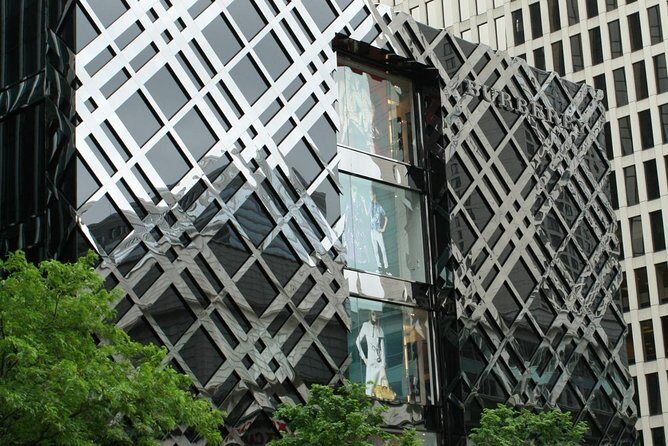
At the Burberry store, the tour turns to something many visitors miss: storefronts are not just window-dressing. They’re part of how Michigan Avenue presents itself.
The guide’s commentary helps you think about design choices in retail spaces—how entrances, facades, and location work together to keep a street feeling like a destination.
875 N Michigan Avenue (Formerly the John Hancock Center): A Skyline Landmark
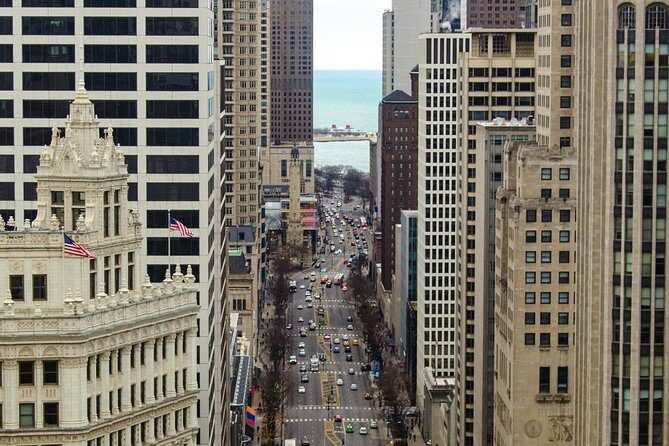
You’ll also view 875 N Michigan Avenue, formerly known as the John Hancock Center. This is a skyline anchor, and standing there gives you a better sense of how tall structures change the entire feel of a downtown street.
Even if you know it by a former name, the tour helps you connect the current view to the building’s identity. That’s useful for reading Chicago’s skyline over time—names change, but presence stays.
Women’s Athletic Club: Architecture With a Social Role
A standout stop is the Women’s Athletic Club. Buildings tied to social and civic life often have a different “purpose story” than purely commercial structures.
This stop is a reminder that the Magnificent Mile isn’t only about shopping and famous towers. It’s also about institutions—places where Chicagoans gathered, worked, and organized community life.
The Newly Renovated Tribune Tower: What Renovation Can Signal
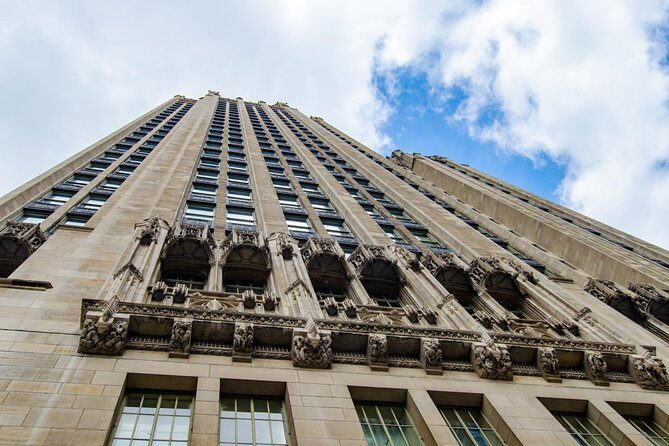
Finally, you’ll view the Tribune Tower, noted as newly renovated. Renovations can feel like a modern buzzword until you stand in front of a landmark and see how the city decides what to preserve and what to refresh.
This is a great closer because it points forward. It’s not only about what the Magnificent Mile used to represent; it’s also about how Chicago keeps its icons relevant.
The Included Galleries at the Chicago Architecture Center
Because admission to the Galleries is included, you can extend the experience in a more relaxed way than a walking-only tour. I find this combination works well for two types of visitors:
- If you love architecture, the galleries give you extra background so the street stops land harder.
- If you’re more casual, they keep the tour from being only a series of photos. You get to slow down and make sense of what you saw outside.
Also, museum/gallery time is useful when weather shifts. If you’re walking for 90 minutes and the sky changes, having that indoor option right after (or around) the tour can save your mood.
Group Size and Pace: Why 10 People Feels Like a Real Tour
A tour capped at 10 travelers isn’t just a marketing line. It changes the experience. It’s easier to hear the guide, easier to ask a question, and easier to keep your own pace for photos.
The duration is listed at about 1 hour 30 minutes, so it’s long enough to feel like a proper walk, but short enough to fit into a busy day. That timing is ideal if you’re combining it with museum visits or a longer evening plan.
One practical note: building interiors and access can be subject to change based on weekends, holidays, or unexpected closures. If you’re hoping for specific interior access at a particular building, plan for the street-view version of the experience as the reliable baseline.
Price and Value: Is $35 Worth It?
At $35 per person, the value hinges on two things: what you learn and what you get included. Here, admission to the Chicago Architecture Center galleries is built into the price, which means you’re not paying only for narration and a stroll.
You’re also getting a professional and certified guide who explains what you’re seeing, rather than a self-guided walk where you might miss the “why.” For a lot of people, that guide layer is the difference between collecting photos and understanding what you’re looking at.
So is it worth it? If you enjoy architecture, skyline storytelling, or you want a structured way to get your bearings fast on Michigan Avenue, it’s a strong deal for a guided experience plus an indoor add-on.
If you only want shopping time, you might find it less aligned with your day. But if you want to look at the Magnificent Mile and actually understand what you’re seeing, this pricing feels fair.
Practical Tips Before You Go
This is a walking tour, so you’ll want to dress for pavement and standing still for photos. Layers help because Chicago weather can shift quickly.
A few details that affect comfort:
- Wear shoes you can walk in for about 90 minutes.
- The tour does not include food or drink, and there’s no mention of stroller luggage storage or coat check. If you’re traveling with a stroller, or you have bulky items, plan to carry light.
- Service animals are allowed, and pets are not allowed.
Also, the tour runs near public transportation, which is helpful if you’re also visiting nearby attractions around the downtown core.
Should You Book This Magnificent Mile Walking Tour?
I think this tour is a good fit if you want a focused introduction to Chicago’s most famous downtown street—plus context you can carry with you for the rest of your visit. The best reason to book is the combination of a guided, stop-and-look experience with included Chicago Architecture Center galleries time.
I would skip it only if you’re hoping for a long, interior-heavy architectural day or you’re mainly after shopping time with no interest in the city-building stories behind the skyline.
If you’re trying to make one “architecture + landmarks” plan that’s efficient and fun at street level, this is one of the smarter ways to spend a morning or afternoon in Chicago.
FAQ
Where does the tour meet and end?
It starts at the Chicago Architecture Center, 111 E Wacker Dr, Chicago, IL 60601, and it ends back at the same meeting point.
How long is the walking tour?
The duration is about 1 hour 30 minutes.
How much does it cost?
The price is $35.00 per person.
Is admission to the Chicago Architecture Center included?
Yes. Admission to the Galleries of the Chicago Architecture Center is included.
Is food or drink included?
No. Food and drink are not included.
Are pets allowed?
No. Pets are not allowed.
Can building interiors be guaranteed?
Access to building interiors featured on the tour may change due to weekend and holiday schedules or unforeseen closures.