REVIEW · ARCHITECTURE RIVER CRUISE
Chicago’s Secret Interiors Architectural Walking Tour
Book on Viator →Operated by Chicago River Boat Architecture Tours · Bookable on Viator
Chicago hides its best rooms in plain sight. That’s the pitch here, and it’s a good one: you walk through the Loop, then step inside famous (and lesser-known) spaces with serious architectural detail, plus skyline views that land differently when you’ve seen the ground truth up close. I love the rare interior access to places you’d usually miss, and I also love the story tying buildings to money, engineering, and the city’s swagger.
One possible drawback: the route depends on good weather, and the Rookery is not included on Sundays (it’s closed that day). Still, for $35 and about two hours, it’s a smart way to get a lot of Chicago architecture for your time.
In This Review
- Key takeaways before you go
- Why this tour clicks in Chicago’s financial core
- Starting at Union Station and ending at State Street
- Stop 1: The Loop and La Salle’s Financial Canyon
- Stop 3: Union Station, Burnham’s Beaux-Arts gateway
- Stop 4: The Rookery Building and the Sunday closure reality
- Stop 5: The Field Building and Art Deco street presence
- Stop 6: The Marquette Building, the Chicago window, and mosaic storytelling
- Stop 7: Palmer House Hotel a Hilton Hotel and Gilded Age glamour
- Stop 8: Chicago Cultural Center or the Monadnock Building choice
- Stop 9: Marshall Field and Company Building, Tiffany glass and the Tea Room
- What you actually gain beyond the skyline photos
- Price and timing: is $35 worth it?
- The only caution I’d take (based on real-world outcomes)
- Who should book this tour
- Should you book Chicago’s Secret Interiors Architectural Walking Tour?
- FAQ
- How much does the Chicago’s Secret Interiors Architectural Walking Tour cost?
- How long is the tour?
- Where do I meet, and where does the tour end?
- Do I need a printed ticket?
- How many people are in the group?
- Is the Rookery Building included every day?
- Who provides the tour?
- Is good weather required?
- What happens if the tour is canceled due to poor weather?
- Is free cancellation available?
- Are service animals allowed?
Key takeaways before you go
- Small group size (max 15): you keep pace, stay together, and actually hear your guide.
- Real interiors, not just photos: lobbies, courts, mosaics, and hotel glam that you can’t easily find on your own.
- Loop-to-station flow: starting at Union Station and ending near State Street makes the day easy to structure.
- Architectural styles by era: Chicago School windows, Beaux-Arts grandeur, Art Deco swagger, and hotel-era luxury.
- Sunday note: the Rookery swap matters if you’re planning your week around specific buildings.
- Good guide makes it: many past guides named (Ethan, Grant, Avery, Matt, Ty, and Matthew) are praised for keeping groups moving and adding sharp detail.
Why this tour clicks in Chicago’s financial core
This is not a big lecture from the sidewalk. It’s a building-by-building look at how Chicago put its money where its ambition was—and then engineered that ambition into stone, steel, terracotta, glass, and sculpted ornament. You’ll notice how the same city blocks that look like a skyline from the street can feel totally different once you’re standing inside: light courts change the mood, mosaic ceilings turn a lobby into a room full of history, and even a “normal” doorway can lead to a surprise.
Also, the value here is the concentration. For one $35 ticket, you get a route that strings together the Loop’s most important landmarks plus interiors that fit the theme of secret, opulent spaces. It’s the kind of afternoon plan that saves you from spending hours deciding what to see next.
You can also read our reviews of more walking tours in Chicago


Starting at Union Station and ending at State Street
You meet at Chicago Union Station, 225 S Canal St and finish at the Marshall Field and Company Building, 111 N State St. That end point is handy: it keeps you near shopping and transit options, and it avoids the classic walking-tour problem where you end up far from everything you actually want to do next.
The tour uses a mobile ticket, which is convenient if you hate printing stuff while traveling. It’s also built around walking between stops, and the group size is capped at 15, so it doesn’t feel like a city-wide herd.
One small tip: since the tour requires good weather, plan to wear layers. Even if your buildings are mostly indoor, you still have transitions between them. Past departures mention cold weather being manageable partly because you spend time indoors—but you still need a warm coat and a way to handle rain just in case.
Stop 1: The Loop and La Salle’s Financial Canyon
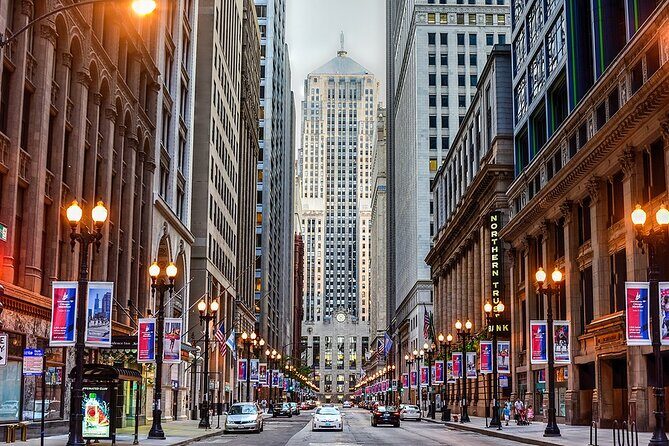
You start in the Loop—Chicago’s show floor for business power. This is where the architecture isn’t quiet or decorative. It’s assertive. You’ll hear the stories behind the magnates and famous figures from the Gilded Age and Roaring Twenties, and you’ll connect those personalities to what you see: the skyline’s vertical push, the money-machine momentum, and the way architects responded to an ultra-competitive downtown.
Then the tour moves into the area often described as a financial canyon. The point isn’t only that tall buildings look dramatic against the sky. It’s that the city built these structures close together—so you get a “street canyon” effect. When you learn what architects intended, those between-building gaps stop being empty space and start feeling like part of the design.
What I’d watch for: how building heights, setbacks, and ornament balance with practical needs like light and movement. Even if you’re not an architecture nerd, you’ll start seeing patterns faster.
Stop 3: Union Station, Burnham’s Beaux-Arts gateway
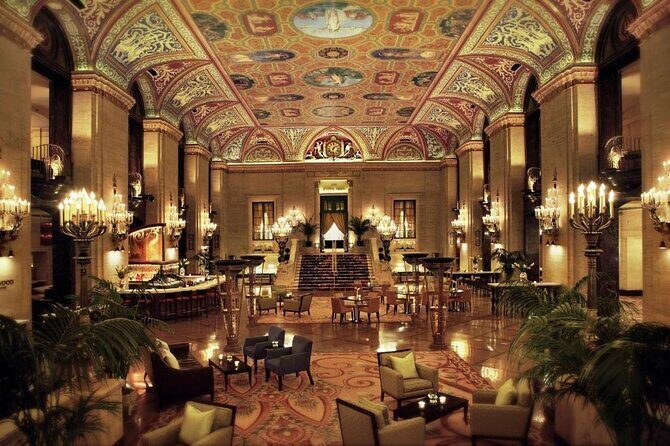
Union Station is one of Chicago’s easiest wins because it’s both grand and functional. Designed by Daniel Burnham and completed in 1925, it’s the early 20th-century idea of a public building done at full ambition.
Inside, you can expect the classic Beaux-Arts look on the exterior, then a big interior moment: the Great Hall and its magnificent skylight. This stop helps you understand a key theme of the tour: Chicago didn’t just build offices. It built arrivals—places where commerce, travel, and civic pride all met.
Why it matters: a station is an architecture showcase that thousands of people pass through. Seeing it as a designed space (not just a place to wait for a train) changes how you read the city.
Stop 4: The Rookery Building and the Sunday closure reality
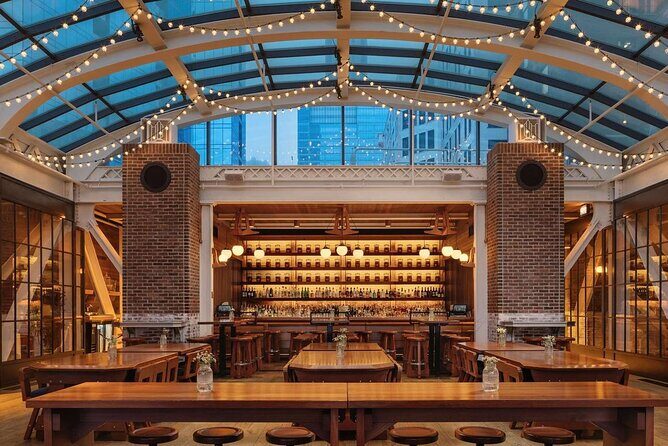
If the Rookery is on your route, it’s a highlight. The building was designed by Burnham and Root in 1888, and later the lobby was reimagined by Frank Lloyd Wright—that mix alone tells you why it’s so compelling. The Rookery blends Romanesque and Moorish influences, but what really holds your attention is the way light and structure work together.
You’ll see (and hear about) the famous light court, intricate ironwork, and the iconic oriel staircase. It’s a prime example of how Chicago architecture learned to be dramatic without relying only on surface ornament.
One practical catch: The Rookery is closed on Sundays, so it’s not included on Sunday departures. If your schedule lands on a Sunday and the Rookery matters most to you, I’d double-check the day of the week before booking.




Stop 5: The Field Building and Art Deco street presence
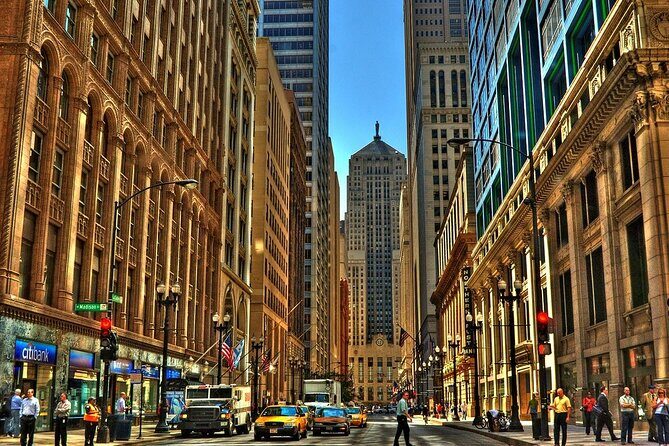
Next up is the Field Building, with its Art Deco identity. This is a good change of pace because it’s a different era and a different attitude: less “19th-century craft” and more “interwar confidence.”
You’ll focus on the design details and how they shape the way the building reads from street level and inside. Even when you’re walking quickly, Art Deco has a way of giving you visual hooks—symmetry, geometry, and that patterned sense of order.
Why you’ll likely like this stop: it helps you understand that Chicago architecture isn’t one style. It’s a timeline you can walk through.
Stop 6: The Marquette Building, the Chicago window, and mosaic storytelling
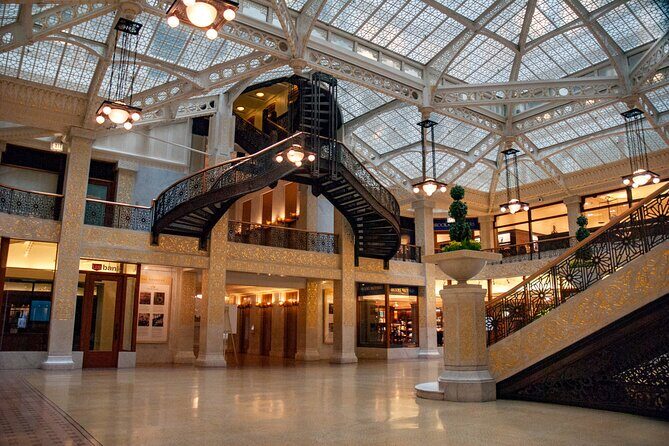
The Marquette Building is a strong architecture-nerd magnet because of two specific details you’ll hear emphasized: its pioneering Chicago window and its terra cotta facade. The combination is part of the Chicago School story—using windows and materials to solve real design problems while still creating an elegant street image.
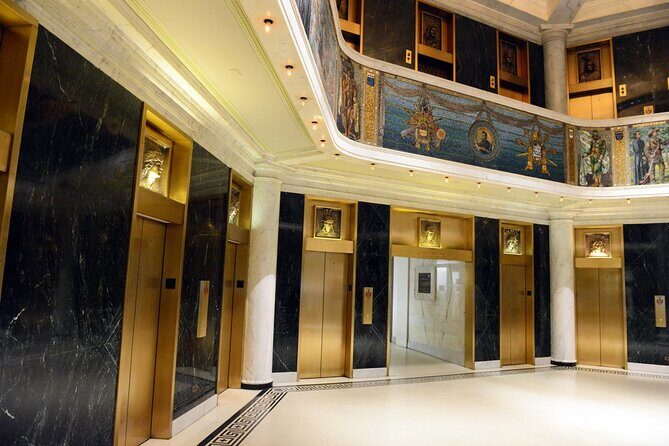
Inside, the lobby mosaics are a major reason to care. They narrate the story of Jacques Marquette’s exploration of Illinois. In other words, the interior doesn’t just look pretty. It’s telling you where this city came from and how people understood their world.
Watch for: how the facade and windows connect to the interior experience. This stop makes you think about architecture as an integrated system, not separate pieces.
Stop 7: Palmer House Hotel a Hilton Hotel and Gilded Age glamour
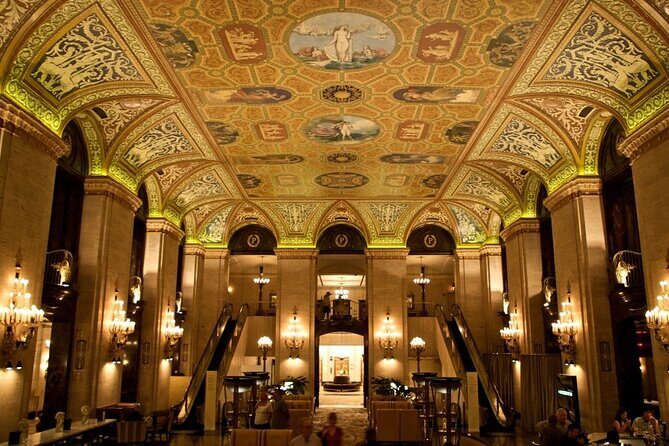
The Palmer House is the kind of place you’d expect to feel expensive, and the tour frames it that way for a reason. It’s known as one of Chicago’s grandest hotels and it leans hard into Gilded Age luxury and Beaux-Arts style.
The story here is also important: it was rebuilt after the Great Chicago Fire in 1871. So you’re not only seeing opulence—you’re seeing resilience and reinvention turned into public space.
In the lobby, you can expect the frescoed ceiling, mosaic floors, and the famous bronze peacock doors. The stop also connects the building to real celebrity presence over the years, which gives the interiors a human scale beyond architectural details.
Small reality check: hotel interiors can mean more “look but don’t linger forever” rules depending on the space and crowd. That said, the tour keeps the pacing moving.
Stop 8: Chicago Cultural Center or the Monadnock Building choice
At this point, the tour gives you a choice: Chicago Cultural Center or the Monadnock Building.
- If you go with the Chicago Cultural Center, the focus is architectural beauty paired with cultural heritage.
- If you go with the Monadnock Building, the focus shifts to the “commercial style” vibe that was common in the late 19th century. It’s more about how business buildings signaled identity and status in that era.
Either way, this part of the tour broadens your view beyond office towers and high-rise showpieces. You get at least one step into the city’s civic or commercial language.
Stop 9: Marshall Field and Company Building, Tiffany glass and the Tea Room
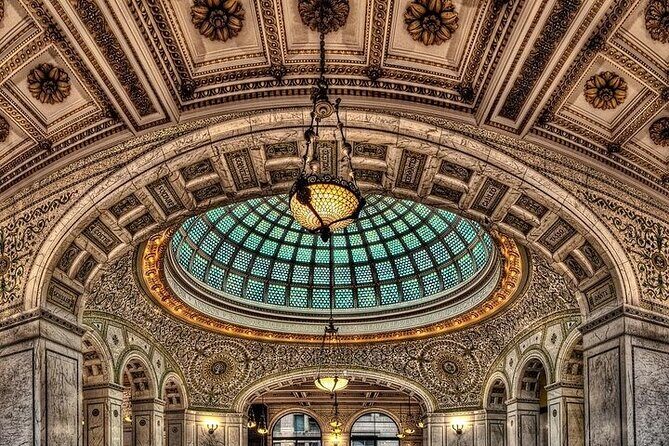
This is a very satisfying finishing stop because it’s both iconic and detailed. The Marshall Field and Company Building is famous for the Tiffany glass mosaic dome and the walnut-paneled Tea Room. It’s a snapshot of early 20th-century department store luxury—when retail wasn’t just selling goods, it was selling atmosphere.
Today, it’s Macy’s, but the tour treats the building as a living piece of Chicago’s architecture and commerce story. Finishing here makes sense: you start at Union Station, pass through the financial core, and end at a temple-like retail interior that still draws crowds.
Why this ending works: after you’ve learned how the city built itself up, you see the same ambition turned toward everyday shopping and public display.
What you actually gain beyond the skyline photos
The skyline is the easy part to understand. The tour’s real value is what happens when you learn why these spaces look the way they do. You start connecting the dots between:
- money and architectural ambition,
- engineering constraints and design choices,
- and the way each building uses ornament to communicate status.
You’ll also get a fresh sense of Chicago walking speed. The Loop becomes navigable as a story, not just a place to cross the street.
One more practical plus: this tour focuses on walking and interiors, not a repeat of what you’d see on a boat. If you’re also planning a river cruise, this pairs well because you’re covering different angles and different kinds of access.
Price and timing: is $35 worth it?
For $35 and about two hours, this is strong value if you’re the type who likes to learn while seeing. You also get an expert tour guide included, and the group limit of 15 suggests you’re not paying for a crowded scramble.
The stops are short—around 10 minutes per listed interior—with walking time between. Reviews mention a break in the middle and that the whole thing can feel closer to about an hour and a half on average, depending on the day and pace. That makes it a good fit if you don’t want to commit to a half-day tour.
If you’re debating between skipping guided architecture and doing things solo: solo is fine for exterior photos. This tour is the one that gets you inside spaces where the design details are the main event.
The only caution I’d take (based on real-world outcomes)
Most departures seem to run smoothly, with guides praised for keeping groups together and maintaining energy even in cold or rainy conditions. Still, there is one outlier report that the guide didn’t show and the group waited before trying to reach the provider. That’s rare, but it’s a reminder to show up early and double-check your confirmation details.
Practical approach: arrive a few minutes early at Union Station, have your mobile ticket ready, and give your guide time to wrangle the group before you assume something is wrong.
Who should book this tour
This fits best if you:
- like architecture tied to real people and real eras,
- want interior access in the Loop without spending your whole day researching,
- enjoy walking at a manageable pace for about two hours,
- and care about craft details like domes, mosaic floors, terra cotta, and light courts.
It also works well if you’re visiting for a short time and want a structured hit list from a single starting point. And because it’s near public transportation and service animals are allowed, it’s easier to integrate into a broader city plan.
Should you book Chicago’s Secret Interiors Architectural Walking Tour?
If you’re excited by the idea of stepping into the spaces behind the skyline, yes—book it. For $35, you’re buying access and context, not just exercise. The route is compact, the group is small, and the stop mix covers major Chicago architecture eras: Beaux-Arts grandeur, Chicago School window design, Art Deco character, and department-store luxury.
The main reason not to book is scheduling: if you’re traveling on a Sunday and the Rookery is your top interior priority, you’ll want to reconsider or pick a different day. Also factor in weather, since the tour is described as requiring good conditions.
If you want a smart, efficient way to see the Loop’s story up close, this is a strong choice.
FAQ
How much does the Chicago’s Secret Interiors Architectural Walking Tour cost?
The tour costs $35.
How long is the tour?
It lasts about 2 hours.
Where do I meet, and where does the tour end?
You meet at Chicago Union Station, 225 S Canal St, and the tour ends at the Marshall Field and Company Building, 111 N State St.
Do I need a printed ticket?
No. You use a mobile ticket.
How many people are in the group?
The tour has a maximum of 15 travelers.
Is the Rookery Building included every day?
No. The Rookery is closed on Sundays, so it is not included on Sunday routes.
Who provides the tour?
An expert tour guide is included.
Is good weather required?
Yes, this experience requires good weather.
What happens if the tour is canceled due to poor weather?
If it’s canceled because of poor weather, you’ll be offered a different date or a full refund.
Is free cancellation available?
Yes. You can cancel up to 24 hours in advance for a full refund. If you cancel less than 24 hours before the start time, the amount paid will not be refunded.
Are service animals allowed?
Yes, service animals are allowed.