REVIEW · HISTORICAL TOURS
African American Heritage Tour of Chicago
Book on Viator →Operated by Chicago Personal Neighborhood Tours · Bookable on Viator
Bronzeville tells Chicago’s real story on wheels. This African American Heritage Tour of Chicago links Bronzeville to Hyde Park and South Shore, using a comfortable ride and live storytelling from Steve (often called Steven or Mr. Johnson). You’ll spend real time on the city’s South Side, not just quick photo stops off a busy route.
Two things I especially like: you get neighborhood-to-neighborhood context and the guide puts names and dates to what you’re seeing. Second, the tour ends with soul food in a way that feels like a cultural beat, not just a checkbox.
One drawback to plan around: even though it’s listed around four hours, some people report it runs longer, and the rhythm can vary depending on timing and what’s available at each stop. I’d also expect that discussions around housing and the South Side come up, so it helps to be in the right headspace.
In This Review
- Key takeaways before you ride
- Bronzeville: where the tour starts telling names and meaning
- Hyde Park: Obama, a museum stop, and famous-home photo angles
- South Shore: lakefront views and Kanye West’s childhood home
- The van-and-neighborhood strategy: why this format works in Chicago
- Soul food at the end: Pearls and why the meal fits the message
- Steve’s narration style: passion, humor, and the pace question
- Timing and practical value: what you’re really paying for
- Who should book this tour, and who should consider another option
- Should you book the African American Heritage Tour of Chicago?
- FAQ
- How long is the African American Heritage Tour of Chicago?
- What neighborhoods does the tour cover?
- Is pickup available?
- Where does the tour start and end?
- Is the tour in English?
- Are tickets included for the stops?
- Is the vehicle air-conditioned?
- What time does the tour begin?
- Is there a limit on group size?
- Can I cancel for a full refund?
Key takeaways before you ride
- Bronzeville with gospel roots: you’ll hear why Bronzeville got its name and learn about Pilgrim Baptist Church’s role in gospel music.
- High-profile stops without the big-city hassle: Obama, Muhammad Ali, Jesse Jackson’s Operation PUSH, and other famous names show up along the route.
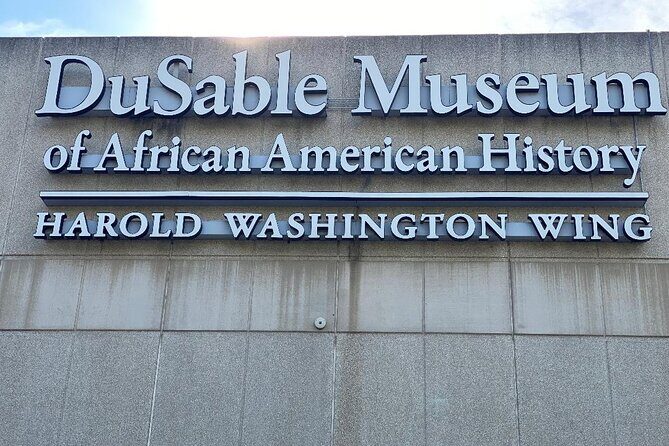
- A museum visit is part of the plan: Hyde Park includes an African American museum stop, with admission marked as free.
- South Shore adds parks and lakefront views: plus Kanye West’s childhood home in the mix.
- Timing can run long: give yourself buffer time, especially for an afternoon start.
- Audio and pacing depend on the day: a few reports mention microphone issues or a more animated delivery.
Bronzeville: where the tour starts telling names and meaning
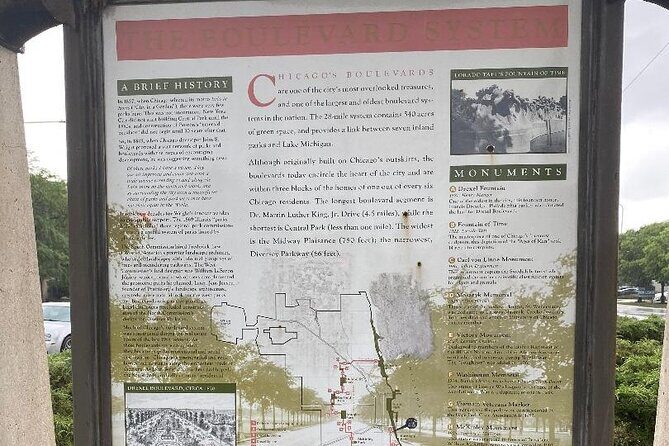
Bronzeville is the emotional and historical engine of this tour. You’ll ride through a part of Chicago that’s predominantly African American and hear why the area is called Bronzeville—based on the color “bronze,” which the guide uses as a starting clue to the neighborhood’s identity.
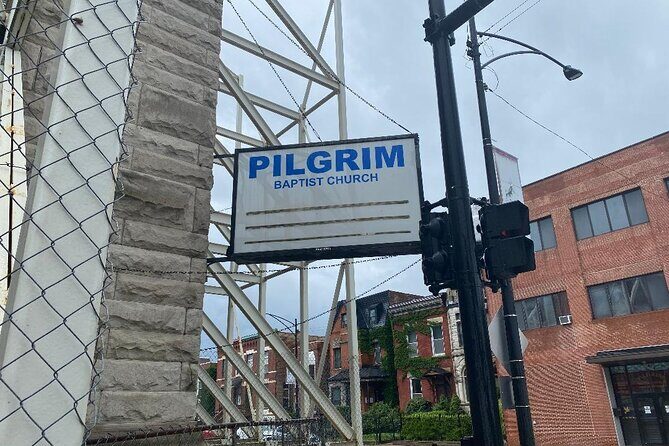
The Pilgrim Baptist Church stop is a centerpiece. The tour frames it as the birthplace of gospel music, which matters because it’s not just a building you drive past. It’s a reminder that Chicago’s Black cultural influence wasn’t only in entertainment—it shaped religious life, music publishing, and community leadership too.
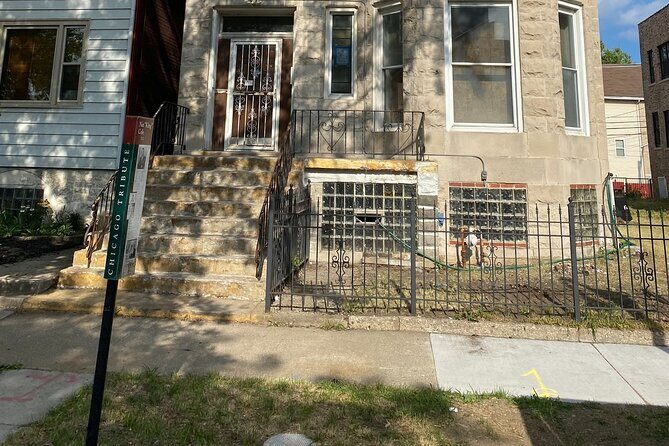
Then the route expands into places tied to major figures and movements. You’ll be directed toward the home of Elijah Muhammad in Hyde Park, described here as the man who founded America’s Black Muslim movement in the U.S. The tour also references the sometimes controversial Louis Farrakhan home, which signals that this isn’t a sanitized walk-through of only the easiest stories.
From there you move toward Muhammad Ali’s former residence and Reverend Jesse Jackson’s Operation PUSH national headquarters. Even if you don’t expect to see these as open-for-public sights, the value is in how the guide connects them to Chicago’s power centers—church, politics, media, and civil rights work.
Practical note: the Bronzeville segment is listed as one hour, and admission for this portion is marked as not included. That doesn’t mean you’re walking around paying entry fees, but it does mean you should be ready for the fact that not every stop comes with a bundled ticket the way some tours do.
You can also read our reviews of more historical tours in Chicago


Hyde Park: Obama, a museum stop, and famous-home photo angles
Hyde Park is where the tour brings you face-to-face with Chicago’s national attention. The plan includes a stop to see the home of Barack Obama. Like many similar city tours, you’re typically viewing from outside rather than going inside, but that can still be meaningful when the guide anchors it to Chicago life and community outcomes.
This is also where the tour includes an African American museum visit. Admission is marked as free in the plan, and this is one of the moments where the tour shifts from mostly “look and listen” to “look, then stand still and absorb.” If you want one block of the day where you can slow down, stretch your legs, and reset your brain, this is it.
Hyde Park also weaves in celebrity homes and cultural references, including the home of Kanye West and Jennifer Hudson, plus additional names the guide ties to Chicago’s creative ecosystem. The practical win here is that you’re not zigzagging all over town on your own. You get a guided route that strings these references together logically.
The segment is listed as one hour, and then the tour ends at a soul food restaurant. Depending on schedule, this could land as your main meal. If you’ve got an appetite and patience for a guided day, the timing can feel satisfying. If you’re the type who likes a very early lunch, you may want to consider that some people felt the meal timing could be better.
South Shore: lakefront views and Kanye West’s childhood home
South Shore is the change of scenery you need after Bronzeville and Hyde Park’s denser storytelling. Here, you’ll learn about Chicago’s lakefronts and parks as the tour shifts into outdoors-and-views mode.
You’ll also see Kanye West’s childhood home. Like other famous-address stops on the tour, the point isn’t that you’re touring a home—it’s that the guide uses these locations to connect pop culture to real neighborhoods and real streets.
Admission is marked as free for this stop, and it’s listed as one hour. That makes it a good “still moving, still learning” stretch. It’s also the part of the day where you’ll likely feel the city more—wind off the lake, park sightlines, and that sense that Chicago’s neighborhoods aren’t all the same shape or mood.
If you’re photo-minded, this is often where people start taking more pictures because the environment gives you angles beyond the curb.
The van-and-neighborhood strategy: why this format works in Chicago
One of the smart things about this tour is the format. You’re in an air-conditioned vehicle, and you’ll explore several distinct neighborhoods in a comfortable ride. Chicago streets can be a lot, especially on a tight schedule, so a local-driver route usually beats trying to self-navigate addresses and photo stops back-to-back.
The meeting point is the Chicago Theatre at 175 N State St, and the tour ends back at the same spot. That helps your planning a lot—no “where do I get back to?” scramble at the end of a long day.
Pickup is offered from select locations, and there’s an upgrade option for airport pickup. The plan says airport pickup can be about 10% less than an Uber ride when schedule allows. If you’re landing around the tour time and you don’t want to wrestle with train transfers and taxis, that can be a genuine value move.
Also, the tour is described as near public transportation. That matters because even if you don’t use pickup, you’re not stranded across town from any transit options.
One more practical detail: the maximum group size is listed as 100 travelers. In real life, that doesn’t always mean you’ll feel crowded, but it does suggest this is built to handle real demand. If you’re sensitive to sound, crowd flow, or frequent stop-and-go, consider picking a day when traffic and weather are calmer.
Soul food at the end: Pearls and why the meal fits the message
This tour doesn’t treat food like an optional add-on. It ends at a soul food restaurant, and in at least one set of feedback, the restaurant Pearls is mentioned as family-owned and enjoyable.
Here’s the reason that matters: you’re not just learning history, then immediately heading back to a generic tourist dinner. You’re finishing with a food culture tied to the same communities you studied in the car and on the museum stop.
If you like your tours to land with an actual taste of place, this is the part that often makes the day feel complete. And if you want to keep talking with your guide after the driving stops, a meal setting usually helps people loosen up.
The only caution is pacing. The tour is listed around four hours, but some people report it can stretch longer. If you plan something right after, I’d leave room. You don’t want your meal to become a rushed scramble for reservations.



Steve’s narration style: passion, humor, and the pace question
The guide is the heartbeat of this tour. Feedback repeatedly highlights Steve’s energy—he talks a lot, he loves Chicago, and he’s quick to answer questions. More than one person notes the tour feels interactive, and that he can be funny and engaging while still sharing historical context.
This matters because a heritage tour can turn bland fast if the guide reads facts and stops. Here, the guide’s delivery is part of the experience: stories, context, and explanations that try to connect the dots for you.
But you should also know about the tradeoff. A minority of comments describe the style as too intense, repetitive, or not a match for what they expected from the day. One person also pointed out microphone issues, and others criticized how time was spent at certain kinds of sights.
So how do you protect your own experience? I’d do two things:
- Set your expectation that the day is more “guided storytelling” than “quiet audio tour.”
- Keep a small mental checklist of what you want most—museum time, specific famous stops, and a relaxed meal—and ask the guide early how the schedule is tracking.
Timing and practical value: what you’re really paying for
Price value is tricky on tours like this because your experience depends on three things: how the route flows, how the guide paces, and how much of your day you’re willing to give over to driving and narration.
Some feedback mentions paying around $125 per person. At that kind of price point, I’d want two things to be true for it to feel worth it: a good museum stop and a clear sense that the named highlights are actually prioritized in the time you’re paying for.
In the plan, you’ve got admissions listed as not included at the first stop and marked free at the Hyde Park and South Shore segments. That gives you a framework. Still, the main variable is time: if the day runs long or a stop feels shorter than you hoped, the value math changes fast.
A few practical tips to make this tour feel like a win:
- Plan for possible delay. If your evening is tight, you might feel it.
- Go in hungry for context, not only pictures.
- If audio quality matters to you, sit where you can hear the guide clearly and pay attention early.
Who should book this tour, and who should consider another option
This is a strong fit if you want:
- A guided look at African American Chicago across multiple neighborhoods
- A route that includes major names and community institutions
- A lively guide who connects places to stories
It’s also a decent option for families and mixed groups, since the tour is described as Most travelers can participate and it’s in English.
It might be less ideal if you:
- Want a strict four-hour timeline no matter what
- Prefer a calmer, less animated narration style
- Don’t want a day that sometimes discusses public housing and neighborhood issues as part of the broader story
In other words: if you want a themed driving tour with strong storytelling, this fits. If you want a quiet museum-day substitute, you may be happier with a different format.
Should you book the African American Heritage Tour of Chicago?
I’d book it if you’re excited by the idea of pairing neighborhood driving with named cultural stops, then finishing with soul food. The tour’s biggest strength is that it tries to explain Chicago’s Black community influence in a way you can actually feel as you move through the city.
Before you commit, do a quick reality check:
- Give yourself buffer time for a longer-than-advertised day.
- Aim for a day with good weather, since the experience is described as weather-dependent.
- If you care most about the African American museum stop or specific famous-home references, ask how the schedule prioritizes them.
If that matches your travel style, this is the kind of tour that can change how you read the city afterward.
FAQ
How long is the African American Heritage Tour of Chicago?
The tour is listed at about 4 hours.
What neighborhoods does the tour cover?
The itinerary includes stops in Bronzeville, Hyde Park, and South Shore.
Is pickup available?
Yes. Select pickup locations are offered, and airport pickup is available as an upgrade when the schedule allows.
Where does the tour start and end?
It starts at the Chicago Theatre, 175 N State St, Chicago, IL 60601, and ends back at the meeting point.
Is the tour in English?
Yes, it’s offered in English.
Are tickets included for the stops?
The plan lists admission as not included at the Bronzeville stop, while admission is marked free at the Hyde Park and South Shore stops.
Is the vehicle air-conditioned?
Yes. An air-conditioned vehicle is included.
What time does the tour begin?
Start time is 11:00 am.
Is there a limit on group size?
Yes. The tour has a maximum of 100 travelers.
Can I cancel for a full refund?
Yes. Free cancellation is available up to 24 hours in advance for a full refund, based on the experience’s local time.