REVIEW · HISTORICAL TOURS
Chicago Walking Tour: Historic Treasures of Chicago
Book on Viator →Operated by Chicago Architecture Center · Bookable on Viator
Chicago is a city where buildings talk. In this small-group walk, you’ll follow the story of the skyline street by street, from landmark exteriors to interior moments that most people miss. I love how the Chicago Architecture Center sets the tone right away, and I love that you get a guided narrative instead of just pointing at pretty facades. The main catch to plan around is that interior access can change, and entry to the Palmer House lobby requires proof of COVID-19 vaccination.
This tour is also built for real conversation. A docent-led introduction at the Chicago Architecture Center gets you oriented fast, and the pace stays friendly enough for questions, not just photo stops. You’ll see a run of famous sites like the Wrigley Building, the Palmer House, and the Chicago Cultural Center, all in about two hours. The only other drawback is practical: it’s a walking tour with no luggage or stroller storage, so it’s best if you’re traveling light.
In This Review
- Key highlights I’d mark on your Chicago map
- Why this Loop walk feels like a short-cut to Chicago architecture
- Price and value: what $35 buys in real time
- Chicago Architecture Center: start smart at 111 E Wacker Dr
- Wrigley Building: a quick look that sets up the skyline story
- Palmer House Hilton historic lobby: the interior stop with a COVID proof rule
- Carbide and Carbon and Reliance: reading details while you walk
- Chicago Cultural Center: ending inside a landmark public space
- What the best guides do (and why names like Bob, Russell, and Jim matter)
- Timing, walking, and what to bring so the 2 hours feel easy
- When to consider skipping an interior (or re-routing your expectations)
- Who this tour fits best (and who should look at alternatives)
- Should you book Historic Treasures of Chicago?
- FAQ
- How long is the Chicago Historic Treasures walking tour?
- What is included in the tour price?
- Is admission included for all the buildings on the route?
- Do I need COVID-19 vaccination proof for the tour?
- How big is the group?
- Can I cancel for free?
Key highlights I’d mark on your Chicago map

- Docent-led start at the Chicago Architecture Center (with galleries admission included) so you understand what you’re seeing
- Small group capped at 15 people, which makes questions actually fit into the walk
- Palmer House lobby interior access is free but requires COVID-19 vaccination proof
- A fast lineup of iconic buildings across Michigan Avenue, State Street, and the Loop
- The Chicago Cultural Center ends the tour with exterior and interior time
- Certified narration and guides who improvise when the city changes (like parade-day detours)
Why this Loop walk feels like a short-cut to Chicago architecture
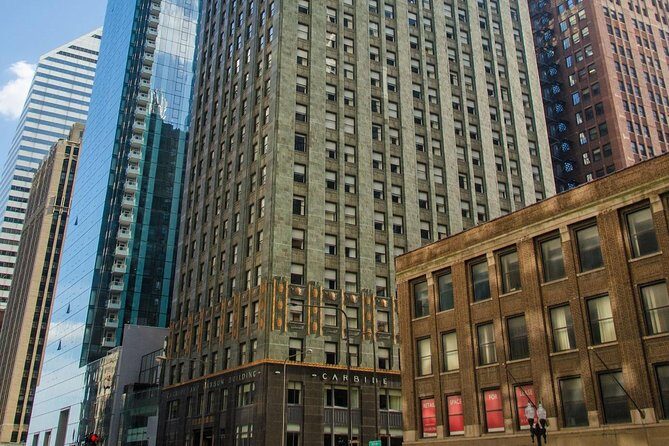
Chicago’s architecture can feel like a lot if you’re seeing it randomly. This tour gives you a path, a story, and a way to read details while you walk. You’ll move through the Loop area on streets that put big-city planning on display—then you’ll stop long enough to notice how styles changed over time.
I like that the walk isn’t just about famous names. It’s also about how those buildings shaped street life: what people see at eye level, what designers put into lobbies and public rooms, and why certain forms became symbols for Chicago. You’ll also get that “wait, I never noticed that” effect—especially when you’re looking at carvings, materials, and the way buildings interact with busy sidewalks.
And yes, the tour is short enough to fit your schedule. Two hours is the sweet spot for a first pass through the Loop if you want context before you explore on your own.
You can also read our reviews of more walking tours in Chicago



Price and value: what $35 buys in real time
At $35 per person for about two hours, this is strong value—mainly because you’re not paying extra for the key guided component. The Chicago Architecture Center galleries admission is included, and the narration is by a professional and certified guide (docent-led at the start).
Here’s where the math gets good for your day:
- You get guided orientation plus stops at multiple headline buildings instead of paying for separate tickets and separate tours.
- You’re paying for interpretation, not just walking. The guide turns architecture into something you can understand quickly.
If you’re comparing options, think of this as a “Loop primer” with a couple of interior moments. You can still go deeper later, but you won’t leave with a stack of random building photos and no thread tying them together.
Chicago Architecture Center: start smart at 111 E Wacker Dr
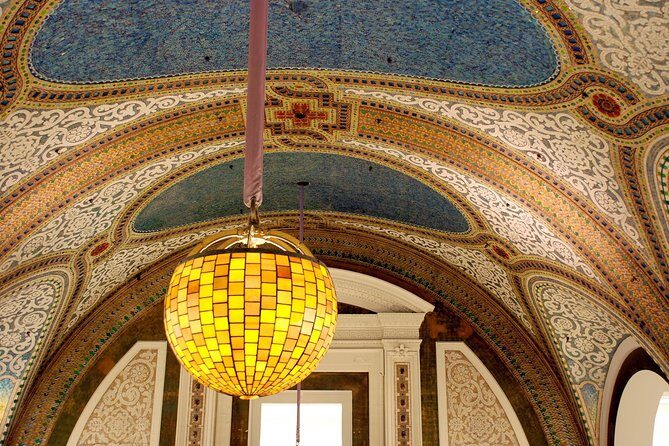
Your tour begins at the Chicago Architecture Center, 111 E Wacker Dr. The first stop is short—about 5 minutes—but it matters. You’ll get introductory remarks from the docent, plus admission to the galleries is included.
This start works because it gives you a framework before you hit the street. You’ll be better at spotting what makes Chicago’s buildings distinct: how they evolved, what public spaces were designed to do, and how architects shaped the skyline into a “language” you can read.
Practical tip: arrive a touch early so you’re not rushing when the docent starts. If you’re the type who likes to ask questions, this is the moment to warm up—people who asked early tended to get more out of the walk later, since the guide can steer your focus.
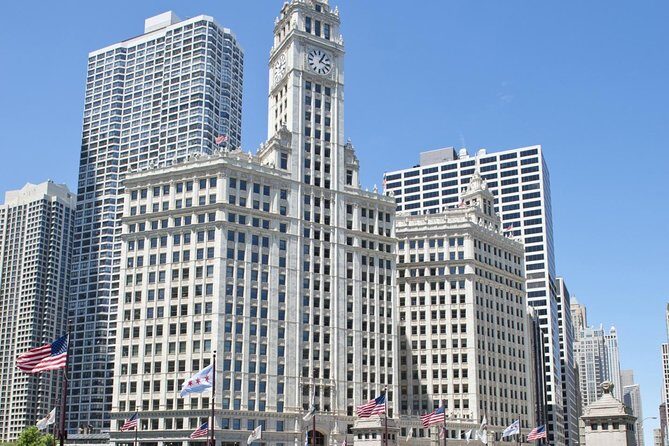
Wrigley Building: a quick look that sets up the skyline story
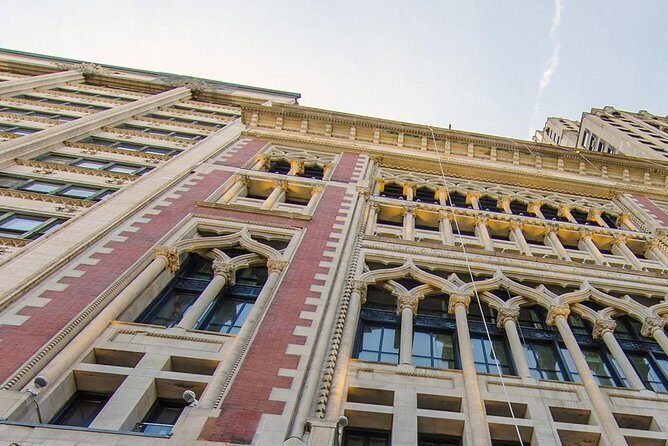
Next you’ll get a view of the Wrigley Building. The stop is about 5 minutes, and admission isn’t included—so this is an exterior moment only.
That may sound brief, but short exterior stops are useful when you’re on a schedule. The guide can point out what to notice from the sidewalk—especially how Chicago puts its big designs in the street-level experience, not behind fences and ticket counters.
What I like about this kind of stop: it trains your eye. Even if you’re not going inside, you learn what details matter so the rest of the walk clicks.
Palmer House Hilton historic lobby: the interior stop with a COVID proof rule
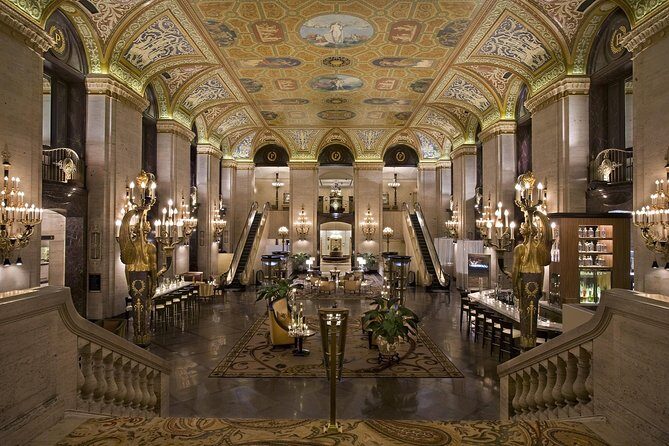
The most important logistics stop is the Palmer House Hilton Historic Lobby. It’s about a 10-minute interior visit, and admission is listed as free for the tour. The key condition is clear: proof of COVID-19 vaccination is required to enter this location.
That rule is the tour’s main “check before you go” item. If you don’t have the right documentation, you might be limited on what you can see during this stop. I’d treat this as non-negotiable planning: bring the proof you need, and don’t assume you can just show up and walk in.
Why this interior stop is worth the effort: lobbies are where the building becomes human-scale. They show how design supports movement, comfort, and public presence. In reviews, the Palmer House moment comes up as a highlight because it adds texture beyond street views.
You can also read our reviews of more historical tours in Chicago






Carbide and Carbon and Reliance: reading details while you walk
After the Palmer House, you’ll head to the Carbide and Carbon Building for a view, again about 5 minutes, with no admission ticket included. Then you’ll stop at the Reliance Building for another view, about 5 minutes, also marked free to just look.
These two exterior stops are basically your architecture “spot-checks.” They work best if you give yourself permission to slow down—look up, then shift your gaze to the areas near eye level. The guide helps you connect what you see to how Chicago styles changed and how buildings carried identity through form.
A big plus here is pacing. By keeping these stops short, the tour maintains momentum across the Loop. You’re not stuck somewhere for 30 minutes while everyone else gets restless. Still, the guide’s commentary gives you something to “take home” even if you don’t go inside.
Chicago Cultural Center: ending inside a landmark public space
Your tour ends at the Chicago Cultural Center, 78 E Washington St. You’ll spend about 10 minutes here, with time for both exterior and interior viewing. Admission is marked as free for this stop.
This is a great way to close the experience because public buildings are where architecture shows its civic role. You get to see how the space is used and why these rooms were designed to welcome people. It’s also a nice finish emotionally: you’re done with the heavy walking and you end in a place that’s built for lingering.
Another handy detail: after the tour ends, the docent returns to the Chicago Architecture Center, and participants are welcome to accompany them back. If you want an easy “last leg” back to where you started, that option is there.
What the best guides do (and why names like Bob, Russell, and Jim matter)
One of the strongest parts of this tour is the guide quality. People repeatedly praise docents for being friendly, humorous, and open to questions. Names that come through in reviews include Bob P., Russell, John, Jim, Laurel, Maureen, Paul, Margaret, Jean, and Beth.
I can’t promise which docent you’ll get, but I can tell you what to look for in how the tour runs:
- Real Q&A time instead of a rushed script
- Humor plus clarity, so you remember details instead of forgetting them on the next block
- Improvisation when the city interferes—like event-day crowding—so the tour doesn’t collapse into chaos
That guide “presence” is what turns a building list into a story. If you’re someone who likes learning while walking, this is the kind of tour where the guide makes the difference.
Timing, walking, and what to bring so the 2 hours feel easy
This is a walking tour, about two hours total. Stops are short, but you’ll still cover enough ground that comfy shoes matter. Bring water, even if the weather looks mild. You’re in the Loop, and you’ll be standing and looking around more than you expect.
A few practical notes from the tour details:
- There’s no hotel pick-up or drop-off, so plan to get yourself to the Chicago Architecture Center.
- There’s no luggage, stroller, or coat check storage. If you’ve got a big bag, plan your day so you’re not carrying it during the tour.
- It’s near public transportation, so you can combine it with other downtown plans.
Weather reality: you’ll be outside between stops. If it’s hot or rainy, dress for that and keep your jacket accessible.
When to consider skipping an interior (or re-routing your expectations)
This tour includes some interior time, but access isn’t guaranteed in every situation. The tour notes that access to building interiors may change due to weekend and holiday schedules or unforeseen closures. That matters because the itinerary includes interior viewing at places like the Palmer House lobby and the Chicago Cultural Center.
So I’d set your mindset like this: you’re signing up for a guided architecture walk with a strong chance of interior access, but you should be flexible if something is closed that day. The overall value still stands because you’ll hit multiple major landmarks and get interpretation along the route.
And don’t forget the Palmer House requirement: if you can’t meet the proof-of-vaccination rule, you’ll want to know how that could affect your interior access.
Who this tour fits best (and who should look at alternatives)
This is ideal if you:
- Want a fast Loop introduction to Chicago’s architecture without a full-day commitment
- Enjoy city history, but prefer it explained through buildings and design choices
- Like small groups and question time, not a herd moving through stops
It might be less ideal if you:
- Need lots of storage or help managing luggage or strollers
- Don’t want to deal with a COVID proof requirement for one interior stop
- Prefer purely exterior sightseeing with no interior access tied to paperwork
Should you book Historic Treasures of Chicago?
If you’re planning a first visit (or a quick weekend) and you want your Chicago architecture experience to feel organized, I’d book this. For $35, the mix of docent-led start + included CAC galleries admission + multiple landmark stops gives you a lot of clarity in a short window. The small group size is a big reason it works, and the guide talent shown in reviews—people like Bob P., Russell, John, Jim, Laurel, and Maureen—suggests you’ll get real storytelling, not just a list of names.
Book it especially if you like walking the city with a plan and coming away with details you can spot later on your own. Just make sure you can handle the one interior rule at the Palmer House, and keep your expectations flexible for potential schedule-based changes.
FAQ
How long is the Chicago Historic Treasures walking tour?
It runs for about 2 hours.
What is included in the tour price?
You get a walking tour of Chicago architecture with narration by a professional and certified guide, plus admission to the galleries of the Chicago Architecture Center.
Is admission included for all the buildings on the route?
No. The Chicago Architecture Center admission is included. Other stops are listed as view-only, and some specify admission is not included, while the Palmer House lobby and Chicago Cultural Center are listed as free for this tour.
Do I need COVID-19 vaccination proof for the tour?
Yes. Proof of COVID-19 vaccination is required to enter the Palmer House Hilton Historic Lobby.
How big is the group?
The tour has a maximum of 15 travelers.
Can I cancel for free?
Yes. You can cancel for a full refund if you cancel at least 24 hours before the experience’s start time.