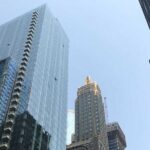
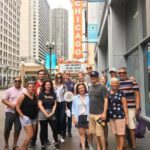
Chicago’s best buildings tell stories, and this walk shows you the trick. You’ll connect the city’s 1920s Prohibition-era vibe to the architecture and streetscapes still in use today, while your guide points out skyline views and street-level details you’d miss on your own. I like how the tour is built like a smart stroll through the Loop, not a stop-and-forget checklist.
Two things I’d highlight right away: first, the route hits major landmarks you’ll want for photos, from the Chicago River to the Millennium Park Cloud Gate (The Bean). Second, you get small-group attention (max 15), plus local tips so you’re not just sightseeing—you’re figuring out where to go next.
One possible drawback: the Prohibition angle is part of the story, but this isn’t a full-on history lecture. If you want lots of deep, technical architecture breakdowns or a wider spread of specific buildings, you may feel the pace is more “highlights with stories” than “every detail.”
In This Review
- Key highlights to expect
- The Prohibition-Age Story You Can See in Chicago’s Streets
- Meeting at the Chicago Theatre and Getting Your Bearings
- Daley Plaza Stops: Picasso, City Hall, and Art as Urban Planning
- The River Walk: Skyline Views and a Commuter’s-Eye Perspective
- Wrigley Building, Tribune Tower, and the Magnificent Mile Stretch
- Chicago Cultural Center: Step Inside a True Landmark
- Millennium Park and Cloud Gate: Timing Your Best Photo
- Price and Value: Is $49.96 a Good Deal for 2.5 Hours?
- Walking Realities: 3 Miles, Weather Flex, and a Pace You Should Plan For
- Food Stops: Chicago-Style Popcorn and Surprise Treats
- Who This Prohibition-Era Architecture Walk Fits Best
- FAQ
- How long is the Chicago Prohibition Culture & Architecture tour?
- How much does the tour cost?
- Where do I start and where does the tour end?
- Is this a large group tour?
- What’s included besides the guide and sightseeing?
- Do I need to buy tickets for the stops?
- How much walking should I expect?
- Does the tour run in bad weather?
- Can children join?
- Should You Book This Hidden Past Prohibition & Architecture Tour?
Key highlights to expect
- Small-group focus (max 15) so questions and photo stops stay relaxed
- Prohibition-era stories tied to places you can actually see today in the Loop
- Chicago skyline + Riverwalk views from street level, not just from a boat
- Bean photo moment at Millennium Park to cap off the walk
- Chicago-style popcorn plus surprise local treats along the way
- Weather-permitting sections that still keep the core route moving
The Prohibition-Age Story You Can See in Chicago’s Streets
This tour sells a simple promise: you’ll learn how the city’s 1920s Prohibition culture left a legacy you can still spot in Chicago today. The value isn’t in memorizing dates. It’s in getting a lens that makes ordinary corners feel meaningful.
Prohibition-era Chicago is basically a story of contradiction—public rules versus private behavior, and the way people shaped the city in response. Your guide turns that into a walking narrative, linking street life and landmark design to the cultural mood of the era. If you like tours that explain why a place feels the way it does, you’ll enjoy the approach.
The name also matters because this isn’t only about nightlife history. Architecture shows up as the “stage.” You’ll pass buildings that reflect Chicago’s ambition, engineering, and urban planning ideas—then your guide adds the human layer: what people were doing, what the city was becoming, and what got built to support it.
If your goal is strictly technical architecture education—architects’ names, building systems, and a stop-by-stop architectural thesis—this tour might not be your perfect match. But if you want context and clarity, it’s a strong way to get oriented fast.
You can also read our reviews of more tours and experiences in Chicago.
Meeting at the Chicago Theatre and Getting Your Bearings
You start at the Chicago Theatre at 175 N State St, right by the famous marquee. That’s a good pick for a first meeting point because it’s easy to find and it puts you right in the Loop’s core. It also sets the tone: you’re walking through a compact area where grand facades and city bustle sit side by side.
Stop 1 is the Chicago Theatre marquee area (about 10 minutes). It’s not just a warm-up. It helps you frame what you’re about to see: Chicago loves big, showy public buildings. And when you connect that style to the 1920s cultural atmosphere, the whole walk clicks.
Next comes the Chicago Pedway (about 20 minutes), weather permitting. This is one of those Chicago-only things that feels like a mini city inside the city. Even if you’ve never heard of it, you’ll understand quickly: it’s a network of underground tunnels used by locals and commuters. That matters because it explains how Chicago protects daily life from weather while keeping people moving toward their next destination.
Practical note: the Pedway portion depends on weather. On rainy or cold days, you’ll likely appreciate the covered walking options more than you expect.
Daley Plaza Stops: Picasso, City Hall, and Art as Urban Planning
After the Pedway, you pass the City Hall–County Building, where Chicago’s government and Cook County offices are located. You don’t get a long linger here, but the value is what your guide does with it. Government buildings are like public magnets, and in Chicago they’re tied to the larger story of how the Loop was organized for people, power, and movement.
Then you reach Daley Plaza for a quick stop at the Chicago Picasso (about 10 minutes). This is the sort of stop that looks simple if you’re rushing, but the guide frames it as a turning point for public art and city planning. You’ll spend enough time to look closely, not just point and walk.
Here’s why this stop works on a Prohibition-and-architecture tour: public art and public spaces reflect what a city decides is worth showing off. In the 1920s, Chicago was changing fast. When you see how the city shaped art in public places later on, you understand how Chicago keeps rewriting its identity over time.
The River Walk: Skyline Views and a Commuter’s-Eye Perspective
The tour leans into one of Chicago’s best “it just feels right” assets: the Chicago River area. You’ll walk past iconic buildings and take a feel for the daily commute along Chicago’s main artery (about 20 minutes). This is the moment when the tour turns from “landmarks” into “flow.”
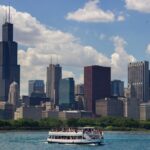
If you’ve only seen Chicago from the outside—maybe from a train window or a quick photo—you’ll like this part. You get the sense of scale. You see how buildings face the river. You notice sightlines that make the skyline look composed instead of random.
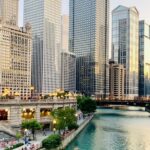
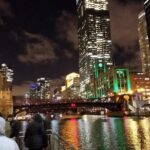
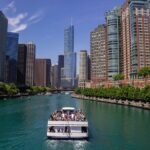
Then, weather permitting, you stroll the award-winning Chicago Riverwalk (about 20 minutes). This is where the views do the heavy lifting: you’ll enjoy skyline scenes with buildings like Marina Towers, plus a closer look at the Wrigley Building and Tribune Tower from the river area.
Two practical considerations:
- Riverwalk areas can feel windy and colder than you expect, even when downtown looks fine.
- If weather gets rough, you may not get the full outdoor portion, so don’t plan anything right after the tour finishes that depends on perfect conditions.
This stop is also where you’ll hear the tour’s “insider” tone most clearly—how the city’s design influences movement, and how daily life makes architecture feel lived-in.
Wrigley Building, Tribune Tower, and the Magnificent Mile Stretch

As you continue, you pass the Wrigley Building at 400 N Michigan Ave and the Tribune Tower at 435 N Michigan Avenue. Both are big, recognizable names, but your guide’s job here is to connect them to the bigger theme: Chicago’s love for landmark identity.
You also pass the Magnificent Mile on North Michigan Avenue. This district grew out of the 1909 Burnham Plan. That detail matters because it’s a reminder that Chicago wasn’t just building buildings—it was planning a retail and civic corridor where people would gather.
If you’re the type who likes architecture best when it’s anchored to a place in the city (not floating as abstract facts), this segment helps. You’re moving through real streets, not a museum gallery.
One reality check: this portion is still a walking tour, not a guided architecture lecture in a quiet room. If you want super in-depth architecture analysis at every stop, you might find some segments briefly touched and move on quickly.
Still, it’s a smart balance for a 2.5-hour experience.


Chicago Cultural Center: Step Inside a True Landmark
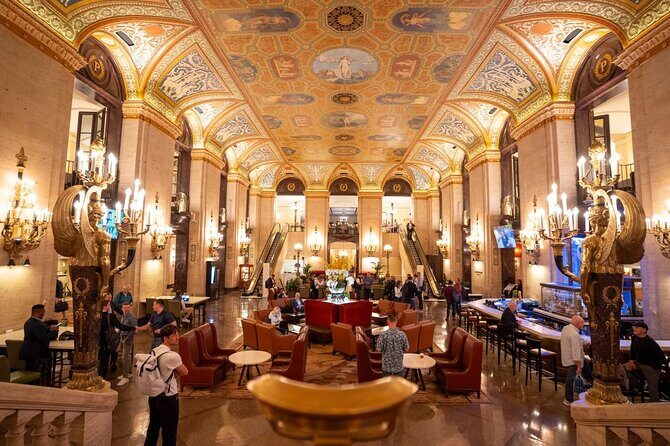
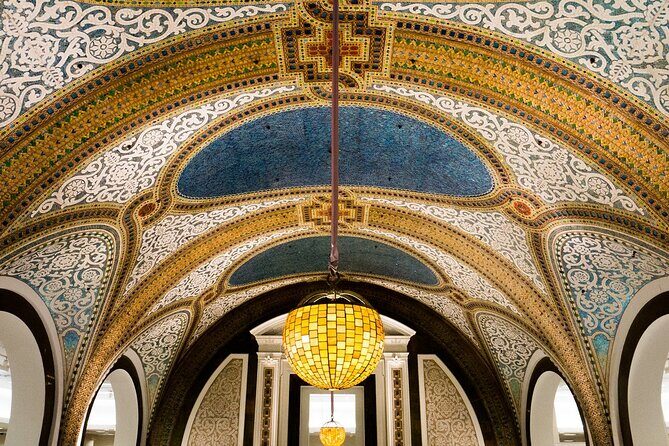
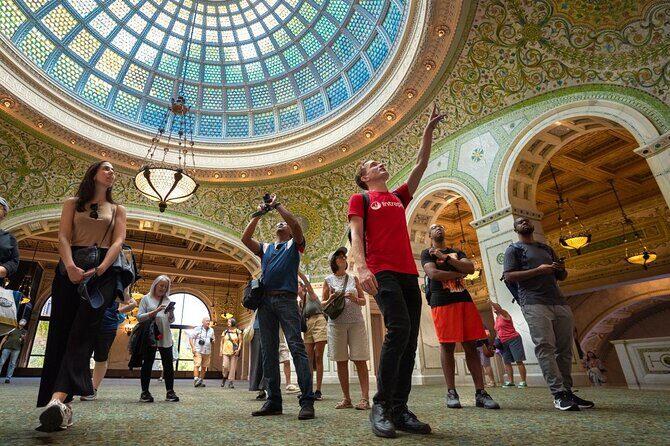
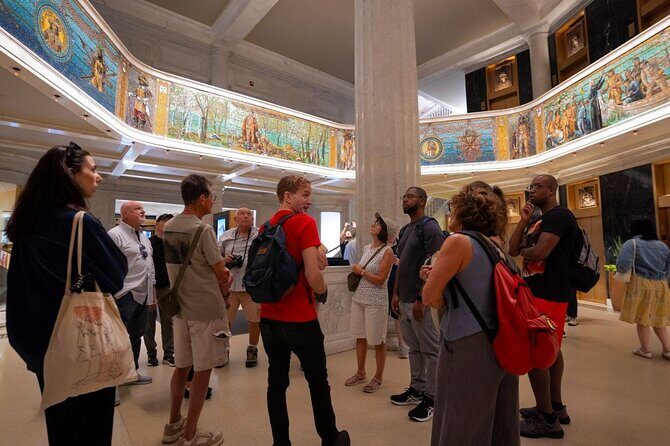
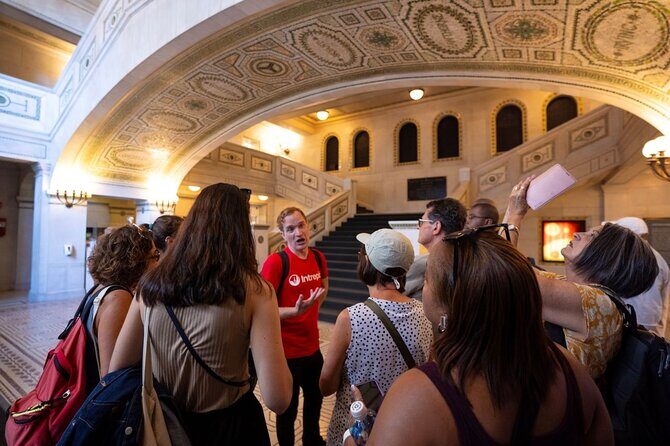
Next you reach the Chicago Cultural Center (about 15 minutes). This stop is the tour’s best “pause and look up” opportunity because it’s one of the few places where the itinerary explicitly includes stepping inside.
The Cultural Center is a Chicago Landmark, and the tour highlights its history as a venue where the mayor welcomed presidents, royalty, and dignitaries. Even if you don’t care about politics, that detail tells you this building has always been about public presence and civic importance.
This is also where ceiling and interior details tend to steal the show. One thing I like about guided stops like this is that the guide can point out what matters visually so you don’t miss it. You get more from 15 minutes here than you’d likely get from 30 minutes wandering without context.
Tip: if you like photographing interiors, this is a stronger bet than most exterior stops. Bring your patience for crowds—downtown landmarks can get busy.
Millennium Park and Cloud Gate: Timing Your Best Photo
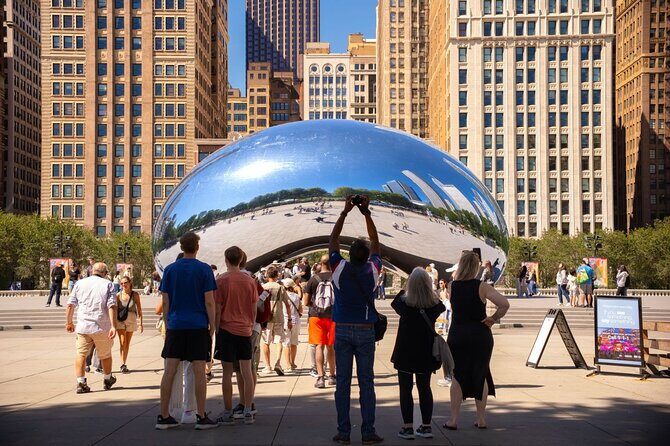
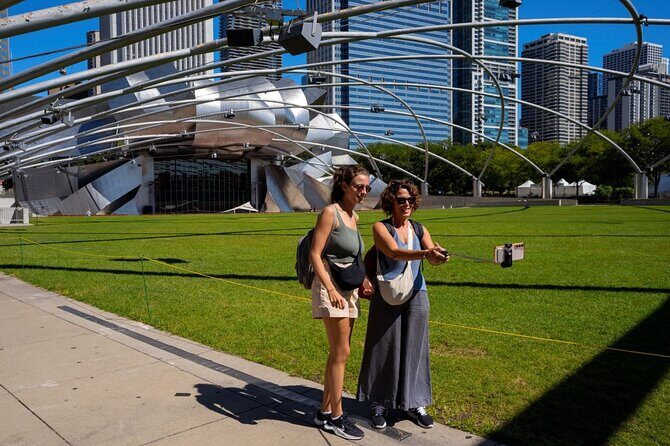
The finale is Millennium Park (about 20 minutes), ending at the Cloud Gate sculpture, also known as The Bean (about 10 minutes). The tour’s stop structure basically works like this: you start a final stretch with the park’s big skyline backdrop, then you land at the iconic centerpiece for the classic photo.
This is the part you’ll remember because it’s visual and immediate. The Bean’s reflective surface turns the surrounding skyline into a fun distortion. You’ll also see why Millennium Park is a natural finishing point: it’s central, scenic, and easy to build the rest of your day around.
Your guide ends there with tips on nearby sights, plus recommendations for lunch spots or drinks. That last bit is practical value. Chicago has a lot going on, and knowing where to go next saves time—especially if you only have a couple days.
If you’re planning lunch afterward, aim for spots nearby that are easy to walk to from Michigan Ave. You’ll stay in your momentum instead of starting from scratch.
Price and Value: Is $49.96 a Good Deal for 2.5 Hours?
At $49.96 per person, this tour sits in a mid-range pocket for a guided walking experience with multiple landmark stops and a tasting element. Here’s why that price can make sense:
- You’re paying for interpretation, not just transit. The whole point is tying Prohibition-era cultural context to architecture and city planning you can see.
- Small group size (max 15) reduces the “herding cats” problem. You’ll have a better chance to ask questions and get a specific answer instead of a generic one.
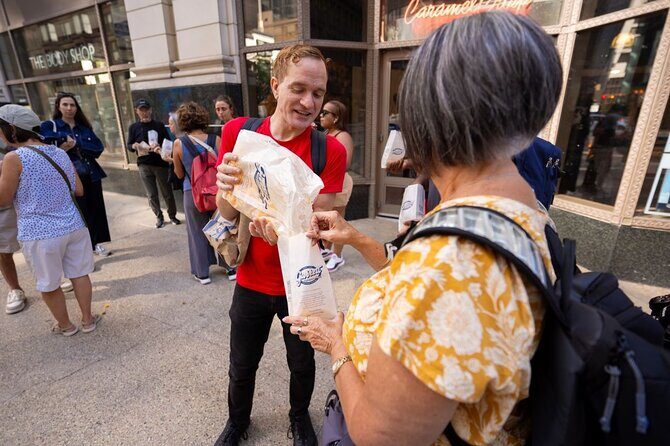
- Included snack element matters. Chicago-style popcorn is part of the experience, and there are surprise local treats along the way.
On the flip side, because it’s built around a compact Loop route, it’s not the cheapest way to cover a lot of ground. If you’re on a tight budget and only want a quick skyline loop, you might feel you could do some of this on your own.
But if you want context and guidance—especially for first-timers—this is a solid value. It’s the kind of tour you take early so you understand the city’s “logic” before you start picking neighborhoods.
Walking Realities: 3 Miles, Weather Flex, and a Pace You Should Plan For
The tour covers about 4.8 km (around 3 miles). That’s not marathon-level, but it does add up over 2 hours 30 minutes, especially with frequent stops and standing time.
The good news: it’s described as suitable for all ages and fitness levels, but you should wear shoes that handle uneven sidewalks and curb cuts. Also, plan for weather because experiences happen rain, shine, or snow.
A realistic pacing note based on the itinerary: there are multiple stops with short time windows, including outdoor sections. If you’re the type who likes long, slow tours with extended time in each place, you might feel rushed. If that’s you, consider booking a private option if available through the operator.
If you’re a “hit the highlights and keep moving” traveler, the timing makes sense. It helps you see a lot without wasting a day.
Food Stops: Chicago-Style Popcorn and Surprise Treats
You’ll enjoy Chicago-style popcorn during the tour, plus surprise local treats along the way. This is a small but smart inclusion. It turns the walk into something you experience with your senses, not just your eyes.
Just know this: the tour doesn’t promise a full meal. It’s more like a couple taste moments. If you have food allergies or strict dietary needs, you’ll want to plan ahead and be clear with the guide—your best bet is asking what’s included for the food portion.
Also, keep your expectations flexible. Some stops can involve snacking or quick breaks, and depending on the flow of the day, that can feel like part of the sightseeing. If you were hoping for more time strictly focused on architecture details, you might prefer focusing on photos and viewpoints while you snack quickly.
Who This Prohibition-Era Architecture Walk Fits Best
This is a good match if you want:
- A first-day tour to learn Chicago’s core landmark layout fast
- Prohibition-era context tied to the places you can actually see
- A guided walk that balances major stops with a few “wait, look at that” moments
- A small-group experience where you can ask questions
It’s also a decent option if you want a mix of exterior landmark viewing and one interior stop at the Cultural Center.
Here’s when it might not be your best choice:
- If you’re chasing deep, stop-by-stop architectural theory with lots of time at each building, the tour’s format may feel too short.
- If you’re specifically hoping for a wider spread of certain buildings beyond the Loop highlights, you may feel the route is concentrated.
In other words: it’s a strong “get oriented + learn the story” walk, not an architecture grad seminar.
FAQ
How long is the Chicago Prohibition Culture & Architecture tour?
It’s about 2 hours 30 minutes.
How much does the tour cost?
The price is $49.96 per person.
Where do I start and where does the tour end?
You start at the Chicago Theatre, 175 N State St, and the tour ends at Millennium Park.
Is this a large group tour?
No. It’s capped at about 15 travelers, and there’s also an option for private tours.
What’s included besides the guide and sightseeing?
You get included admission tickets where noted, Chicago-style popcorn, and the guide shares tips for more sights and places to eat.
Do I need to buy tickets for the stops?
The itinerary lists tickets as free for the specific stops included, and you’ll use the mobile ticket.
How much walking should I expect?
About 4.8 km, or roughly 3 miles.
Does the tour run in bad weather?
Yes. It runs rain, shine, or snow. Some outdoor segments are described as weather permitting.
Can children join?
Yes. Children under 6 join for free. Children ages 6–11 join at the adult rate.
Should You Book This Hidden Past Prohibition & Architecture Tour?
If you’re spending limited time in Chicago and want a guided Loop walk that connects Prohibition-era culture to architecture, this is an easy yes. The small group size, the mix of major landmarks, and the Millennium Park finish make it feel efficient without being rushed-exactly the right ratio for most short trips.
If you’re mainly hunting for deep architectural detail at every stop or a more expanded list of specific buildings, you may want to compare with other architecture-focused options. But for a first pass through the Loop with stories that make the city feel less random, this one does the job.