REVIEW · CITY TOURS
Chicago City Tours See It All No Time Wasted
Book on Viator →Bookable on Viator
Seeing Chicago in one whirlwind is the point. This tour strings together major sights without wasting your daylight, with door-to-door pickup at the Loop’s edge and heavy focus on big, camera-ready moments like the Cloud Gate area and the Willis Tower ledge. I like that it’s small (up to 10 people) and paced so you can still see a lot in one 4 to 8 hour block, but you should know time at each stop is tight, so you’ll need to choose what you want to linger on.
The day feels built for short stays: a guide/driver who keeps the flow moving, an air-conditioned vehicle, bottled water, and snacks in the mix. If you want a slow, “let’s soak in one neighborhood” style trip, this isn’t that. If you want the hits, it’s a strong match.
In This Review
- Key things to know before you go
- Entering the Loop: where this day actually starts
- Millennium Park: the fast hits (with real places to pause)
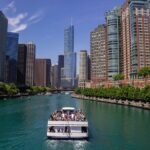
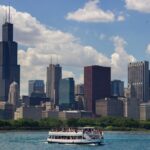
- Chicago Riverwalk: your easiest win for skyline views
- Willis Tower Skydeck: where you feel the drop
- Wrigley Field and Lincoln Park Zoo: sports energy and free air
- Grant Park and Buckingham Fountain: a night-friendly landmark
- Navy Pier and The Magnificent Mile: big city fun, easy choices
- Art Institute, Cultural Center, and Museum Campus: short stops, smart priorities
- Architecture on purpose: Marquette, Rookery, Palmer House, Union Station
- University of Chicago and Jackson Park’s Japanese Garden: a calm pivot
- North Avenue Beach and the Chicago Theatre: skyline, then culture seats
- How the day moves: comfort, timing, and what can surprise you
- Price check: is $150 worth your time?
- Should you book Chicago City Tours See It All?
- FAQ
- How long is the tour?
- Where does the tour start and end?
- Is pickup available?
- What’s included in the price?
- What vehicle will you ride in?
- What happens if the weather is bad?
Key things to know before you go
- Small group size (max 10) means less chaos at photo stops and easier coordination
- Air-conditioned vehicle plus snacks and water helps when you’re moving between far-apart landmarks
- Iconic stops packed into a single day: Millennium Park, Riverwalk, Skydeck, Wrigley area, and more
- Free-entry planning at many quick stops keeps your budget safer than a ticket-heavy day
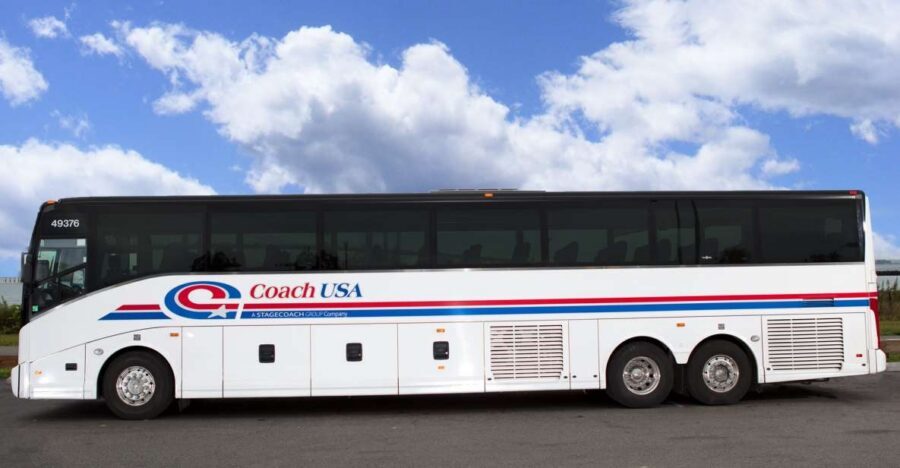
- Vehicle setup can vary (mini bus, van, or car depending on group size and availability)
- Good-weather dependent plan with an option to reschedule or get a refund if canceled for weather
Entering the Loop: where this day actually starts
You begin at the Palmer House Hilton area (17 E Monroe St), right in the Loop. That matters because Chicago’s highlights are scattered, and starting here saves you from spending your limited time commuting across the city.
Pickup is offered, but it comes with an add-on if you’re farther out. The tour asks you to be at your pickup point about 30 minutes early, which is smart. It also uses a mobile ticket, so have that ready before you step outside.
The tour price is $150 per person, and it’s pitched as a “see it all” day. The biggest value isn’t just the landmarks. It’s the way someone else handles the driving, the sequencing, and the timing so you can focus on photos, quick walks, and learning what to notice.
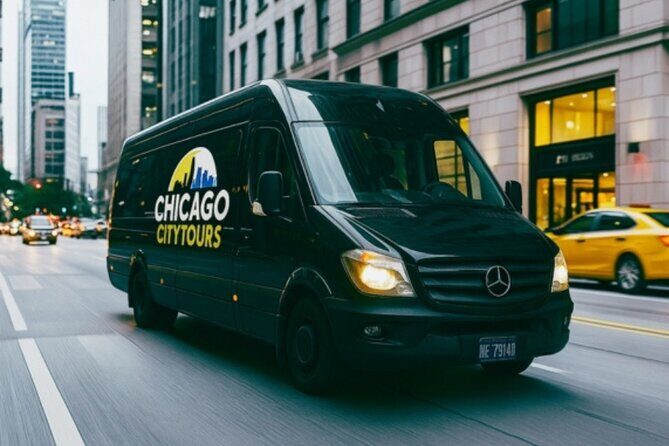
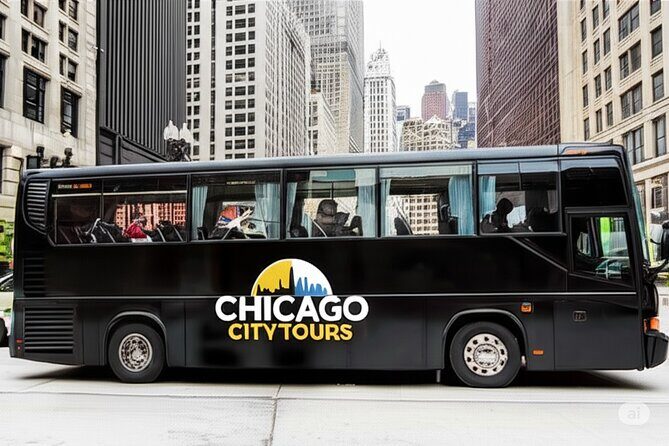
One practical note: the tour uses a “maximum of 10 travelers,” but the ride isn’t guaranteed to be one dedicated bus for everyone. The company may use mini buses, vans, or cars depending on what’s available and how your group size stacks up. That variability showed up in real experiences, so if you’re expecting a specific type of vehicle, it’s worth confirming what you booked.
You can also read our reviews of more city tours in Chicago


Millennium Park: the fast hits (with real places to pause)
The first stop centers on Millennium Park, and it’s a smart opener. This is where you get instant Chicago. You’ll see the reflective Cloud Gate (The Bean)—the kind of spot where you can waste 45 minutes just finding the right angle. That’s exactly why a guided, timed stop helps: you’ll get your photos, then move on before your day turns into Bean-centered standstill.
Next up is the Crown Fountain, an interactive water feature with video projections and playful water sprays. It’s fun even if you’re not the type to “do” interactive things all day. You’re also in a section of the park that’s easy to skim on foot while still feeling like you’re doing something special.
From there, you’ll pass the Jay Pritzker Pavilion, the big outdoor amphitheater that often hosts free concerts and events. Even when there’s no performance happening, the scale is impressive, and it’s a good place to understand why Millennium Park became a cultural magnet.
Finally, you’ll get time in Lurie Garden, a calmer pocket that gives your feet a break. This stop is useful because it balances the more attention-grabbing sights. You can sit, regroup, and take in the surrounding architecture without feeling like you’re rushing.
If you want one simple plan: at Millennium Park, do Cloud Gate first (for best photo energy), then Crown Fountain, then find a quiet moment in Lurie Garden. You’ll feel like you got the best mix.
Chicago Riverwalk: your easiest win for skyline views

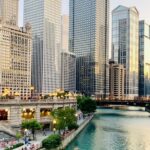
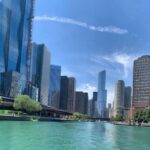
The Chicago Riverwalk stop is built for what Chicago does best: tall buildings, big views, and public spaces that make people actually hang around outdoors.
Expect a scenic walk along the water with iconic architecture layered over the river. This is one of those areas where a short stop can still pay off, because the skyline is always in view. There’s also a strong chance you’ll spot public art and installations along the path.
The Riverwalk section also works if you like options. Depending on season and what you feel like doing that day, the river area is where you’ll find opportunities like kayaking rentals or river cruises (those are typically things you’d do on your own, not necessarily included). If you’re the type who hates making decisions, a guided stop still helps because your guide can point you to what’s feasible.
One thing I like here: it’s less about one landmark and more about continuous views. Even if your time is short, you still get value.
Willis Tower Skydeck: where you feel the drop
Then you hit the big thrill factor: Willis Tower. You’ll be going to the high-level observation experience with a glass floor and two headline viewpoints.
At the 103rd floor, you’ll see the Ledge, a glass-floored balcony that extends outward. The point isn’t just the height—it’s the sensation of looking straight down.
On the 94th floor, you’ll have time at the viewpoint with the TILT experience, where you lean out over the city in a glass platform. This is the kind of thing that turns a “nice view” into a memory.
There are also interactive exhibits and landmark-learning displays. That’s helpful because you’re not just staring at buildings. You’re learning what you’re looking at, which makes your photos feel smarter later.
Photo ops are a major part of this stop, and that’s also where having a guide who’s willing to help with pictures can matter. In real experiences, guides like Ilyas have been praised not just for explanations, but also for being a hands-on photographer—especially helpful if you’re traveling solo.
Wrigley Field and Lincoln Park Zoo: sports energy and free air
Next is Wrigley Field, one of America’s most iconic baseball stadiums. The schedule can shape what you can do. You might catch a Cubs game if it’s on, or you might do a stadium visit/tour style experience depending on what’s running.
Even when there’s no game happening, the historic atmosphere is the draw. You’ll likely get to appreciate details like the ivy-covered outfield look and the stadium’s old-school identity. There’s also a museum/exhibit element in the stadium area where you can learn the Cubs’ legacy through memorabilia.
After Wrigley, you switch gears to Lincoln Park Zoo—and this is a major budget win because the tour plan lists it as free admission. It’s also a place that feels “real,” not just postcard. You get wildlife exhibits, including animals like lions, gorillas, and penguins, plus a historic conservatory and landscaped garden areas.
This stop works great if you want a reset. After skyscraper views, it’s nice to have something with space to walk and animals that keep you moving. It’s also family-friendly, but you don’t have to travel with kids to enjoy it.


Grant Park and Buckingham Fountain: a night-friendly landmark

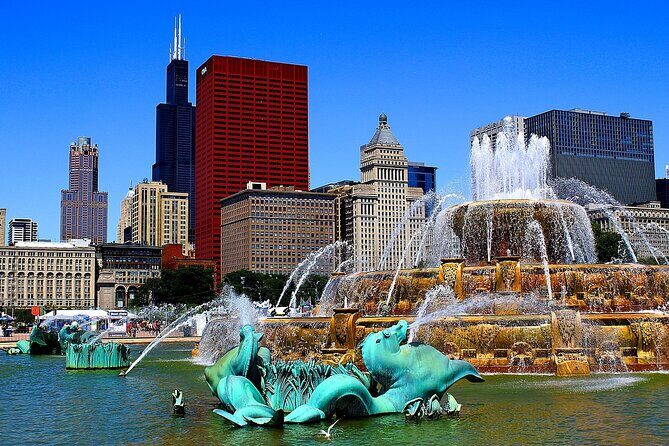
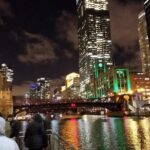
In Grant Park, you’ll get a visit to Clarence F. Buckingham Fountain, one of the largest fountains in the world. The scale is part of the reason this stop is so photogenic: it’s designed to be seen from the surrounding lakefront skyline.
The fountain’s water show is described as shooting up to about 150 feet, and it’s especially impressive at night with colorful lighting. Even if you’re visiting during the day, you’ll still get a strong sense of what makes it a Chicago staple.
Also note the details: it was built in 1927, designed in a Beaux-Arts style, and includes bronze sea horses. When you know those facts, your photos feel more grounded.
Navy Pier and The Magnificent Mile: big city fun, easy choices
Next comes Navy Pier. It’s a major entertainment hub with a 15-story Ferris wheel, plus theaters, restaurants, and seasonal events. The pier is known for massive visitor numbers each year, and you’ll likely feel that energy even with a short stop.
From there, you can shift to The Magnificent Mile, Chicago’s famous stretch along Michigan Avenue. This is where you get a taste of high-end shopping, classic landmarks, and well-known dining options.
If you want to keep this day moving without getting sucked into “one more shop,” set a simple goal for yourself at this point: pick one quick window-shop moment, grab a snack or drink, and then get back in the flow.
Art Institute, Cultural Center, and Museum Campus: short stops, smart priorities

This part of the day is a lesson in triage. The tour hits several major cultural locations with limited time at each, so you’ll want to go in knowing you’re not doing a full museum day.
The plan includes the Art Institute of Chicago. The tour time here is short, and the attraction is huge. If you’re an art fan, you’ll probably want to focus on what you most want to see rather than trying to cover everything. The tour plan lists this as an entry-free quick stop, so it’s more about getting oriented and choosing what to return to later.
Then you’ll visit the Chicago Cultural Center, a striking building that hosts free art exhibitions and public events. This stop is often easier to enjoy quickly because you can see the architecture and pick up on the exhibits without feeling like you must complete a whole ticketed experience.
The route also includes Museum Campus, the lakefront area with the Field Museum, Shedd Aquarium, and Adler Planetarium. If your schedule is tight, this is a useful stop because you get the feel for the cluster and can decide later whether you want a deeper, ticketed day elsewhere.
Architecture on purpose: Marquette, Rookery, Palmer House, Union Station
Chicago is at its best when you notice how buildings tell stories. This tour leans into that.
You’ll pass by the Marquette Building, known as an early skyscraper example and a piece of the city’s architectural heritage. Then you’ll get time at the Rookery Building, which people value for its old design character.
Next is the Palmer House Hilton Historic Lobby. You’re given a memorable historical framing: the hotel opened in 1871 as part of a wedding story, and it was rebuilt after the Great Chicago Fire. It’s also noted as North America’s longest-operating hotel. Even if you’re not a history buff, stepping into a space like this helps you understand Chicago’s resilience.
You’ll also visit Union Station, which is praised for combining function with architectural beauty—another place where photos are easy and the scale lands quickly.
These stops are short, but that’s the point. They help you get a “why Chicago looks like this” foundation so your later self-guided wandering feels more meaningful.
University of Chicago and Jackson Park’s Japanese Garden: a calm pivot
You get a detour that many first-time Chicago days skip: University of Chicago. The campus is highlighted for Collegiate Gothic architecture mixed with modern buildings, set in tree-lined quads and gardens. You’ll also hear about standout spots like the Rockefeller Memorial Chapel and the Harper Library.
There’s also a mention of Robie House, the Frank Lloyd Wright architectural masterpiece. Even if you don’t go inside for everything, just knowing it’s part of what you’re seeing helps you look at the campus with more context.
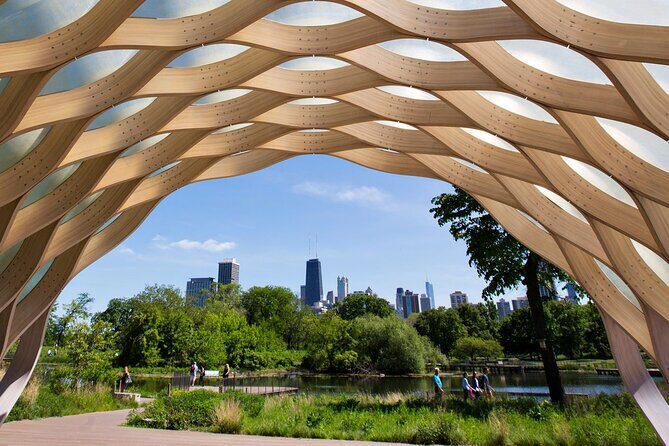
Then you go south to Jackson Park’s Japanese Garden. It’s described as a historic area with lagoons and ties into the broader Jackson Park setting, including the Museum of Science and Industry nearby. The key benefit of this stop is the mood shift. After big city centers and towers, it gives you open air and slower visuals.
If you’re traveling with limited time, these “breather” stops keep the day from feeling like nonstop concrete.
North Avenue Beach and the Chicago Theatre: skyline, then culture seats
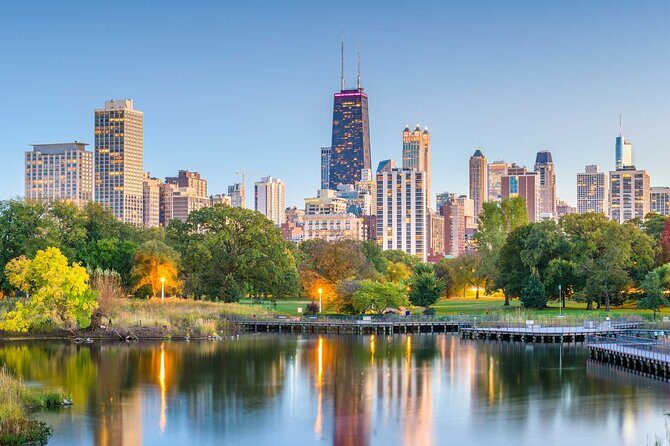
The tour includes North Avenue Beach, a popular spot for sunbathing, beach sports, and skyline views. It’s a great “last-mile” feeling stop because you’re near the water and your eyes can rest on the horizon before heading back toward the Loop area.
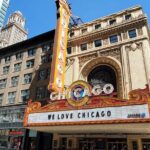
Then there’s The Chicago Theatre, an iconic venue known for hosting concerts, plays, and special events in a historic setting. Even if you don’t catch a performance that day, it’s one of the easiest places to recognize as unmistakably Chicago.
How the day moves: comfort, timing, and what can surprise you
You’re in an air-conditioned vehicle, and you’ll have bottled water plus snacks. Those small things matter more than you’d think when you’re touring for hours and bouncing between neighborhoods.
The duration is listed as about 4 to 8 hours, which is a big range. In practice, expect that the day will feel full. Each stop has a time window, and the highlights get prioritized. If you’re the type who wants long museum reading sessions or deep dives inside attractions, this tour will feel fast.
Language is English, and while many experiences praise clear explanations, you should also be aware that communication quality can vary. Some accounts note a driver/guides English was hard to follow. If you rely on perfect English for context, consider asking questions in writing-ready terms (like pointing at a building and asking what it is).
Also: vehicle type. The tour is flexible by group size and availability. In some cases, instead of one bus, you may ride in multiple cars or “Uber-style” vehicles. That can reduce comfort for groups that expected a single vehicle, especially for larger parties or people with tall stature. If that sounds like you, check with the operator after booking so you’re not surprised at pickup.
Price check: is $150 worth your time?
At $150 per person, this tour isn’t a bargain-basement deal. But it’s positioned for value in the one currency you can’t buy more of: time.
Here’s where the cost starts to make sense:
- You get roundabout sightseeing efficiency with an organized route across major areas
- You get built-in refreshment (water and snacks) rather than having to budget for it constantly
- You get a guide for the “what am I looking at?” layer, not just transportation
- Many of the stops are planned as quick hits, some explicitly listed with free admission, which helps keep spending controlled
Where the cost might feel less satisfying:
- You’re paying for coverage, not depth. If you want long hangs at museums or deep stadium time, you’ll likely want to plan a second, dedicated day.
- If the vehicle setup doesn’t match your expectations (for example, not a single bus), the experience can feel less comfortable than advertised.
My take: if you have limited time, want the big landmarks, and like photo stops with quick context, it’s good value. If you’d rather pick two neighborhoods and savor them, put your money toward a smaller walking tour or a museum-focused plan.
Should you book Chicago City Tours See It All?
Book it if you:
- have only a short stay and want the major names of Chicago in one day
- like guided photo stops and fast orientation to a lot of neighborhoods
- appreciate small groups and a ride plan that keeps you from thinking about routes
Skip or rethink it if you:
- hate tight time windows and want slow, sit-down museum time
- strongly prefer a specific vehicle type (like one dedicated bus)
- need lots of explanatory detail and are sensitive to communication barriers
One final practical tip: pack for variable weather. The tour depends on good weather, and if it gets canceled for poor conditions you’ll be offered a different date or a full refund. Keep that in mind if you’re booking near a shaky forecast.
If you want a single-day “Chicago sampler” that focuses on the skyline, icons, parks, and architecture, this is built for that job.
FAQ
How long is the tour?
It runs about 4 to 8 hours.
Where does the tour start and end?
It starts at Palmer House Hilton (17 E Monroe St, Chicago, IL 60603) and ends back at the meeting point.
Is pickup available?
Yes, pickup is available. You’re expected to be ready at least 30 minutes before departure. Hotel pickup has extra fees depending on how far you are from downtown.
What’s included in the price?
The tour includes an air-conditioned vehicle, bottled water, snacks, and a fuel surcharge.
What vehicle will you ride in?
The tour provides an air-conditioned vehicle, and it can involve mini buses, vans, or cars depending on group size and availability.
What happens if the weather is bad?
The experience requires good weather. If it’s canceled due to poor weather, you’ll be offered a different date or a full refund.