REVIEW · WALKING TOURS
Chicago Loop Walking Tour
Book on Viator →Operated by Wild Onion Walks Chicago · Bookable on Viator
Big buildings, better stories.
This small-group Chicago Loop tour turns downtown into something you can actually remember, starting with the Chicago Cultural Center and its famous mosaics and Tiffany glass. Two things I really like are the way the guide links architecture to everyday Chicago history, and the personal feel of a max-10 group where you can ask questions. One consideration: it’s not a good fit if you have mobility issues, since it’s a walking tour with a moderate fitness level.
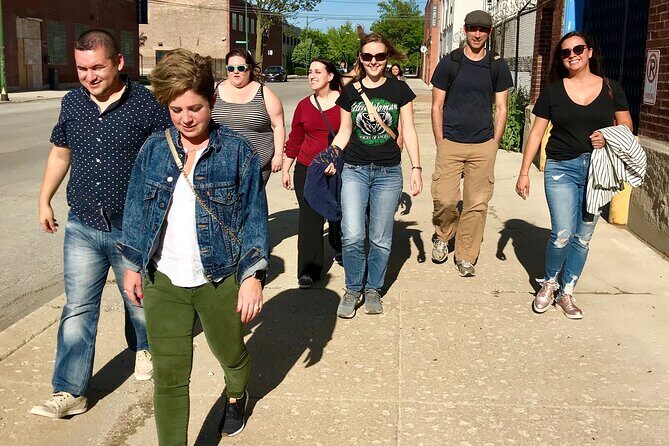
You’ll be on foot for about two hours, getting an orientation to the Loop that works well for first-timers and people short on time. The big payoff is that you don’t just see buildings—you get the why behind them, with guide stories that make the city feel less like a blur and more like a place with a timeline.
In This Review
- Quick hits
- Chicago Cultural Center and the Tiffany dome: why stop one matters
- A two-hour Loop walk that works when you’re short on time
- How the route turns big downtown blocks into a story
- Your guide in the real world: small-group storytelling that actually lands
- Price and value: why $60 can be fair for this Loop format
- Start at 11:00 am, end at the Marquette: the logistics that matter
- Weather, pace, and who should book (and who shouldn’t)
- Before you go: how to get more from every block
- Should you book the Chicago Loop Walking Tour?
- FAQ
- How long is the Chicago Loop Walking Tour?
- What’s the meeting point and where does the tour end?
- What time does the tour start?
- How big is the group?
- Is the tour in English?
- Is admission included for the Chicago Cultural Center stop?
- Does the tour run in bad weather?
- Who is the tour best suited for?
- What’s the cancellation policy?
Quick hits
- Chicago Cultural Center focus: the mosaics, art glass, and the world’s largest Tiffany dome make the first stop memorable
- Small-group feel (max 10): easier pacing, more Q&A, and a more personal tour vibe
- Architecture + social context: you learn what buildings meant to real people, not just what they look like
- Two-hour downtown reset: great for getting your bearings fast in the Loop
- Operates in all weather: bring the right layers and you’ll keep moving
Chicago Cultural Center and the Tiffany dome: why stop one matters
The tour kicks off at the Chicago Cultural Center, which is a clever choice. It’s not some random landmark you rush past. It’s a place that rewards slowing down for a moment, especially when your goal is to understand Chicago’s style and ambition.
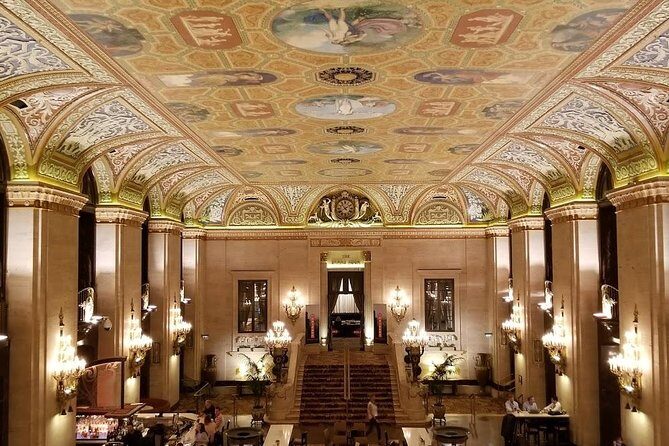
What makes the stop special is the mix of visual wow and craft details. You’ll get to take in mosaics and art glass tied to Healy and Millet, plus the largest Tiffany dome in the world. Even if you’re not an “art person,” you’ll still notice something: Chicago likes ornamentation, and it loves doing it at a serious scale.
This is also a practical win. The tour includes an admission ticket for this stop, and the entry is free. That means you can spend your energy looking and listening instead of worrying about tickets or timing. And since this is at the start, you get a visual anchor early—so when the guide later talks about how the Loop developed, the story has a setting you can picture.
You can also read our reviews of more walking tours in Chicago



A two-hour Loop walk that works when you’re short on time
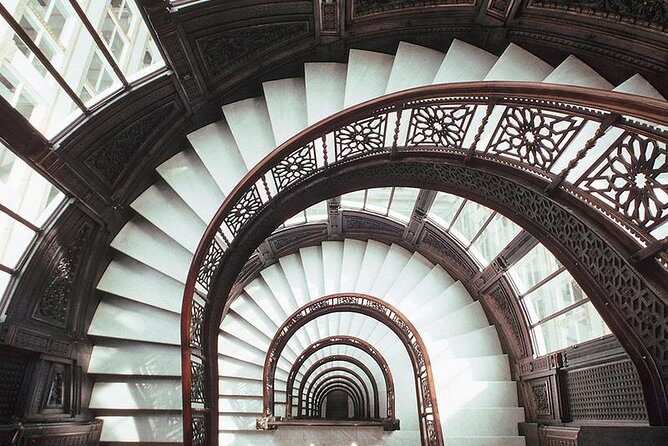
At about 2 hours, this tour is built for efficiency. It’s ideal if you only have a day (or two) in Chicago and you want more than a checklist of “see this, see that.” The Loop can feel like a concrete maze if you don’t have context. This format gives you that context without turning your day into a long expedition.
The walking pace matters here. It’s not described as gentle, but the tour is designed for moderate physical fitness. That typically means steady walking, short stops to look up close, and time for explanations along the way. You’re not just standing still waiting for a bus of tourists—you’re moving through the Loop while the guide points out what to notice.
For first-timers, it’s one of those experiences that quietly improves the rest of your trip. After the tour, you’ll know where you are and what you’re looking at. For architecture buffs, it helps you connect styles and eras instead of treating each building as an isolated photo.
One more smart detail: it’s small-group (max 10 guests). That size is big enough for a lively conversation, but small enough that the guide can adjust pacing. Several people in the tour’s history praised how the guide handled different interests and even hot or cold conditions by adjusting movement.
How the route turns big downtown blocks into a story
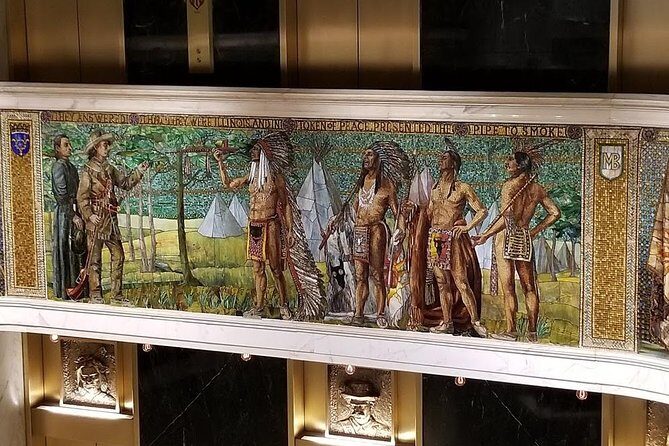
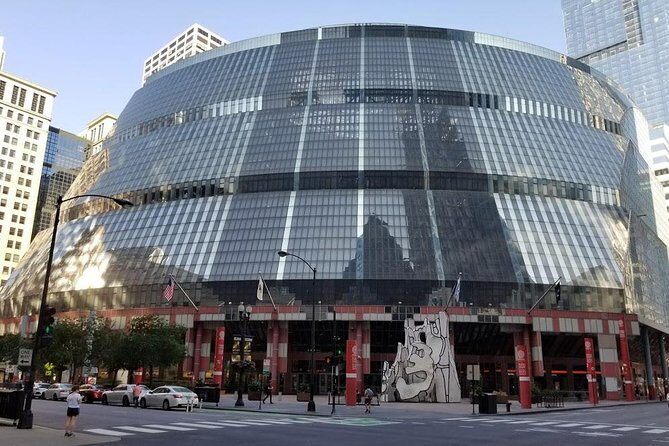
Even though the official itinerary calls out the Cultural Center as the main named stop, the real value is what happens between start and end. This tour travels through the heart of the Loop, from 78 E Washington St to the Marquette Building at 140 S Dearborn St.
That corridor is packed with evidence of how Chicago grew, rebuilt, and reinvented itself. As you walk, your guide ties the sights together with context: how architecture signaled priorities, how public spaces reflected the city’s ambitions, and how downtown design connects to social change. People repeatedly describe the tour as having both architecture and social history, which is exactly what you want for a city like Chicago, where buildings often carry meaning beyond looks.
What I’d look for as you go:
- Look up early and often. The guide’s stories work best when you pause and actually see details.
- Notice transitions. Downtown can shift from older styles to newer ideas quickly. The guide helps you spot those changes.
- Ask follow-up questions when something clicks. Many reviews mention the guide responding to questions and adjusting pace based on what the group wanted.
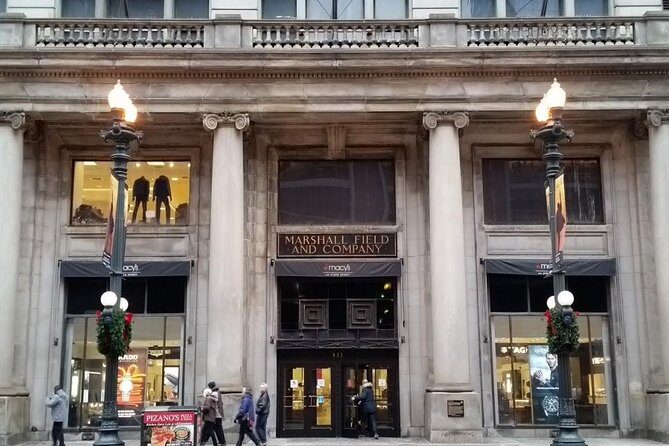
You’ll also learn what you’re likely passing that you might otherwise ignore. Several guide reviews mention specific Loop interiors and landmark buildings, like the former Chicago Public Library and the Marshall Fields building. You should treat these as examples of what the tour style can highlight—your exact sequence may vary—but the point is the same: you’ll get “what is that?” moments turned into “now I get it” moments.
And yes, you may hear references to the elevated train (the El) as part of the Loop story. That fits Chicago perfectly. The transit lines shaped where people lived, worked, and gathered, and the architecture followed.
Your guide in the real world: small-group storytelling that actually lands
This tour is priced the way it is for a reason: the guide’s role is central. A big-group bus tour can show you buildings. This one helps you understand why those buildings exist.
In multiple recent experiences, the guide is described as energetic, engaging, and very invested in Chicago. Names that show up include Kevin, Marlin, and Keith. Across these comments, one theme keeps repeating: the guide connects architecture and history to real human life—social and personal stories, not just dates and facts.
What makes that feel different is the mix of structure and flexibility. The tour runs about two hours, but guides repeatedly adapt to the group. One review described a pace adjustment during unusually hot weather. Another described an experience tailored to interest, including spending time on details when the guest wanted to focus on the finer points.
If you’re traveling with teenagers, couples, or solo, this kind of guide interaction is a plus. Teenagers often tune out long narration—but multiple people said their teenagers still took away something. That usually means the guide keeps explanations moving and ties visuals to something understandable.
And if you’re an English learner, you’ll likely appreciate the way guides explain in plain, clear terms. One review specifically noted that the guide was easy to understand, even with city noise.
Price and value: why $60 can be fair for this Loop format
At $60 per person, this isn’t the cheapest way to walk downtown. But it also isn’t trying to replace a self-guided day with a map app.
Here’s what you’re buying for the money:
- A licensed local guide doing the interpretation, not just walking you between points
- A small group (max 10), which makes it easier to ask questions
- A time-efficient route that aims to cover the Loop’s core story in about two hours
- Free entry at the Cultural Center as part of the experience
Also, the tour is designed for people who want value in attention. If you’re paying $60 and then spending the whole time staring at your phone, you won’t get your money’s worth. But if you’re the type who likes seeing details—mosaics, art glass, architectural eras—this price can feel like a bargain.
A detail worth noting: the tour is often booked about 49 days in advance on average. That’s a hint that demand is steady, and popular start times can fill. If your schedule is tight, book early so you have choices.




Start at 11:00 am, end at the Marquette: the logistics that matter
The tour lists a start time of 11:00 am and sets the meeting point at the Chicago Cultural Center, 78 E Washington St. The walk ends at the Marquette Building at 140 S Dearborn St, which is a very workable location for continuing your day—shopping, museum hopping, or just dropping into the Loop’s rhythm.
One small thing to watch: the operator also asks you to contact the local supplier prior to your tour to schedule the departure time on the day you selected. That doesn’t contradict the listed start time; it just means you should confirm the exact departure details for your date so you don’t arrive at the wrong moment.
Good news for logistics: the meeting point is near public transportation. And the tour uses a mobile ticket, which is convenient if you’re managing multiple bookings.
If you’re planning other activities the same day, treat this like a core “downtown foundation” block. Do it earlier rather than later. You’ll get more out of what you see after you learn what it all means.
Weather, pace, and who should book (and who shouldn’t)
This tour operates in all weather conditions. That’s not a threat; it just means you’ll dress for real Chicago days. If rain, wind, or cold shows up, you’ll still walk. So pack layers, wear shoes with grip, and bring a light rain shell if your forecast says wet.
The physical side is described as moderate fitness. That usually means you’ll be on your feet and walking between stops for roughly two hours. It’s also not recommended for those with mobility issues. So if you use a mobility aid or need frequent breaks, you may want to look for another format.
On the positive side, small-group size helps with comfort. Reviews include examples of guides adjusting pace for the group’s needs, and that’s exactly how it should work at this group size.
If you’re doing this with kids, it can work well because the storytelling approach keeps attention moving. Still, bring realistic expectations: you’re walking a downtown route, so plan a snack afterward.
Before you go: how to get more from every block
If you want to maximize the experience, do a little homework and a little attitude prep.
Wear the right shoes. The Loop sidewalks are long and mostly flat, but you’ll still cover distance. Comfortable footwear makes the difference between “I love this” and “I’m counting minutes.”
Bring curiosity. The tour is architecture and history, but the best moments come when you ask why something was built or how downtown life evolved.
Look up at the right time. Many of Chicago’s most impressive details are higher than eye level. When the guide calls out mosaics, art glass, and architectural features, pause and actually take it in. It makes the stories click.
Use the start point as a landmark. Before you leave, confirm you can find 78 E Washington St easily. Then use the end point (the Marquette Building) to plan the next stop on your day. That way, you’re not stuck figuring out where you are while everyone else heads off.
Should you book the Chicago Loop Walking Tour?
Yes—if you want a fast, guided way to understand the Loop. This tour works because it starts with a powerhouse interior at the Chicago Cultural Center, then builds momentum by connecting architecture to the social and historical “why” behind downtown.
I’d particularly book it if:
- You’re a first-time Chicago visitor who wants to get bearings fast
- You like architecture but don’t want a self-guided maze day
- You want a small-group experience where your questions matter
- You’re traveling with teens or a group that needs stories to stay interesting
I’d skip it if:
- Mobility is a challenge for you
- You prefer sitting, not walking
- You already know the Loop’s architecture deeply and want more specialized content
If you’re in that “I want a solid downtown foundation” mood, this is a strong bet for the price and time.
FAQ
How long is the Chicago Loop Walking Tour?
It lasts about 2 hours.
What’s the meeting point and where does the tour end?
The tour starts at 78 E Washington St, Chicago, IL 60602 (Chicago Cultural Center) and ends at 140 S Dearborn St, Chicago, IL 60603 (Marquette Building).
What time does the tour start?
The start time listed is 11:00 am.
How big is the group?
The tour is a small-group experience with a maximum of 10 travelers.
Is the tour in English?
Yes, it’s offered in English.
Is admission included for the Chicago Cultural Center stop?
The stop at the Chicago Cultural Center includes a free admission ticket.
Does the tour run in bad weather?
Yes, it operates in all weather conditions. You should dress appropriately.
Who is the tour best suited for?
It’s recommended for people with moderate physical fitness and it is near public transportation. It is not recommended for those with mobility issues.
What’s the cancellation policy?
You can cancel for a full refund up to 24 hours in advance. If canceled less than 24 hours before the start time, the amount paid is not refunded. If poor weather causes cancellation, you’ll be offered a different date or a full refund.