REVIEW · CRUISES & BOAT TOURS
Chicago Sightseeing River and Lake Cruise
Book on Viator →Operated by First Lady · Bookable on Viator
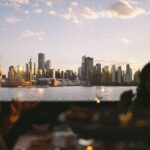
Skyline photos hit different from the water. This 90-minute Chicago cruise pairs the Chicago River with the Lake Michigan shoreline, so you get skyscraper views plus historic architecture in one ride. You also pass major sights without the hassle of hopping between neighborhoods.
I love the live narration. On my favorite runs, guides like Jacob and Mike kept the facts clear and the mood fun, with humor that makes the city feel easier to place.
One thing to plan for: it can be a bit of a photo and standing workout, and you might catch some waiting time before departure on busy days. Also, water spray is real, so bring a rain layer even if it looks calm.
In This Review
- Key highlights at a glance
- First steps at 112 E Wacker Dr: find the dock fast
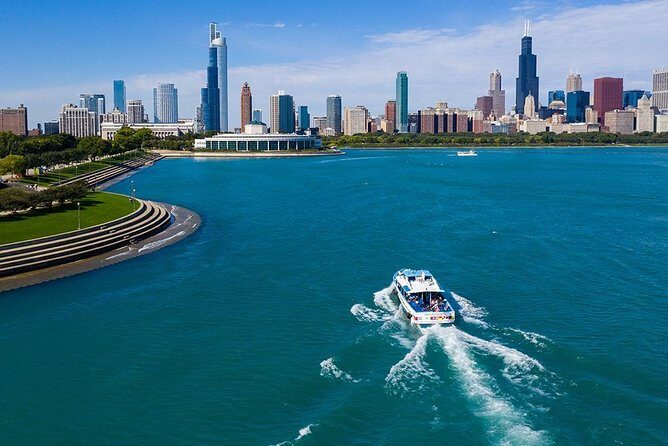
- Lake Michigan shoreline: where the skyline looks bigger
- The Chicago River main branch: architecture stories in motion
- Landmarks you glide past: Wrigley to John Hancock
- River level at the McCormick Bridgehouse: gears, then story
- Navy Pier plus Grant Park fountains: best for wide-angle photos
- Timing and weather: when to choose daytime vs late tours
- Price and value: why $45 can make sense
- Who this cruise fits best (and who might not)
- Should you book the Chicago River and Lake Michigan cruise?
- FAQ
- What’s the duration of the Chicago River and Lake Michigan cruise?
- Where is the meeting point?
- Is there a mobile ticket?
- What landmarks do you see during the cruise?
- Are food and drinks included?
- Does the cruise run in bad weather?
Key highlights at a glance
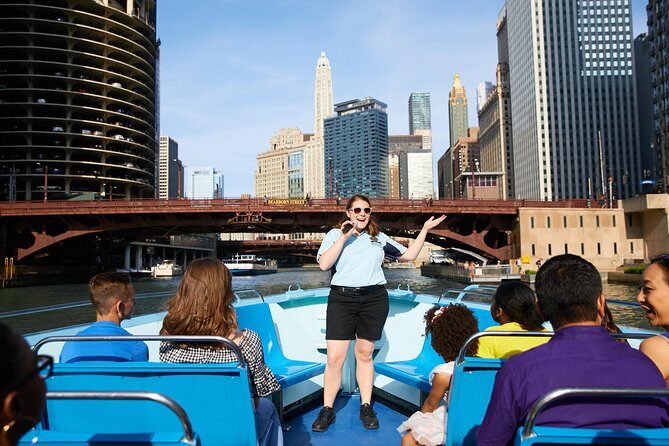
- Two water zones in one cruise: Chicago River plus Lake Michigan shoreline
- Live, on-board commentary: paced stories tied to what you can see
- Big skyline photo opportunity: you’re lower than street level for a different angle
- Major pass-bys: Navy Pier, Wrigley Building, Buckingham Fountain, museums, and Soldier Field
- Small-ish boat feel: capped at 115 people
- Evening lighting works well: late tours can show the skyline after sunset
First steps at 112 E Wacker Dr: find the dock fast
You start at 112 E Wacker Dr, Chicago, and the tour ends right back there. That round-trip setup matters: no second meeting point, no sprint across town, and less time wasted figuring out logistics.
You’ll use a mobile ticket, and the boat typically runs like a timed boarding process. The best practical tip from real-world experience is simple: arrive about 15 minutes early. It takes a little time to get to the boat dock area, especially if you’re navigating around other downtown foot traffic.
If you drive, there’s discounted parking at 111 E Wacker Drive, with validation at the dockside box office. And if you prefer transit, the meeting point is near public transportation, so you can skip the whole parking puzzle.
You can also read our reviews of more boat tours in Chicago
Lake Michigan shoreline: where the skyline looks bigger
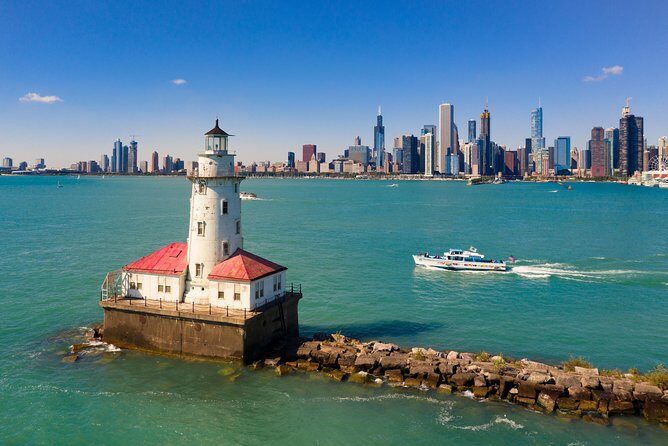
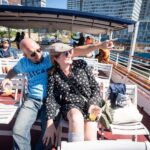
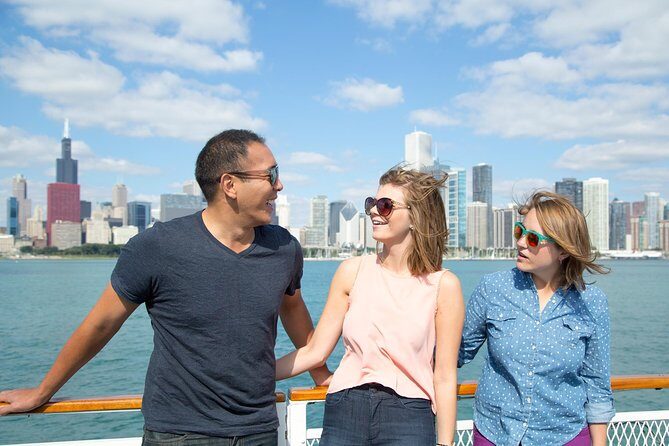
The cruise begins with a Lake Michigan run (about 45 minutes) that’s built for views. From here, the Chicago skyline doesn’t look like a postcard from street level. It looks tall, layered, and wider—because you’re seeing it across open water.
This is the part you’ll want for:
- skyline photos with less crowd pressure than the shore
- a calmer feel before the narration shifts into the river’s story
- an easy way to spot landmark shapes before you see them up close on the river stretch
Even if the weather isn’t perfect, this segment can still work. Light rain and mist don’t automatically ruin the photos; they can soften contrast and make the buildings glow a bit more. That said, you should dress for getting splashed. The boat sits low enough that lake spray can reach you.
The Chicago River main branch: architecture stories in motion
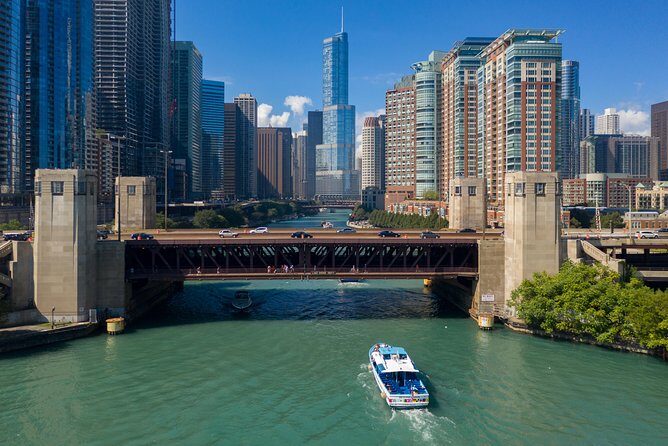
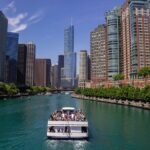
Next comes the Chicago River (also about 45 minutes), moving through the main branch where the city’s design story really comes alive. This is the section where the guide connects what you’re seeing—bridges, buildings, river curves—with how Chicago grew and how it rebuilt itself.
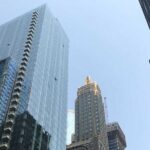
Why this matters for you: Chicago’s architecture can feel overwhelming from the sidewalk, because you don’t always know what to look for. On the water, you can watch facades unfold one by one. You also get a cleaner view of river-level landmarks than you do from a bridge or walkways.
If you’re into photography, the river stretch gives you:
- framed views between buildings
- angles that show height and depth at the same time
- a better sense of the city’s layout than you get from looping only around downtown streets
It’s also the portion with the most narrative density. Expect the guide to keep referring to city culture and history as you pass major structures.
Landmarks you glide past: Wrigley to John Hancock
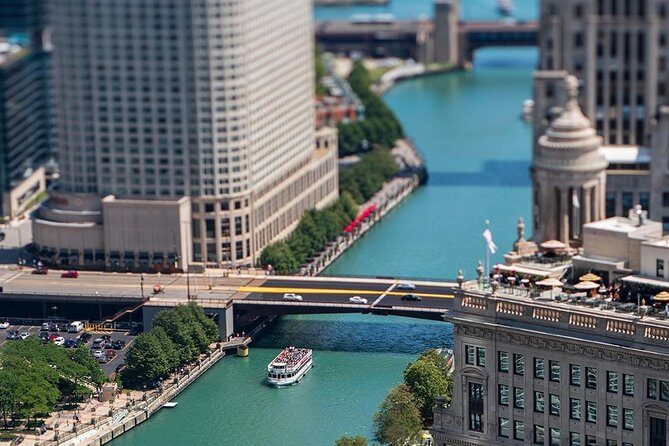
After the two main water segments, you’ll keep seeing big-name Chicago sights as pass-bys. These stops don’t mean you get off the boat, but it’s still a high-value way to cover ground fast.
Here are some of the landmarks you’ll see along the route:
- Wrigley Building: famous for its role as corporate headquarters for the Wrigley Company.
- Navy Pier: passed along with its 50 acres of gardens, promenades, shops, and eateries, plus the 15-story Ferris wheel visible in views.
- Clarence F. Buckingham Fountain: a major Grant Park centerpiece, dedicated in 1927.
- Field Museum: one of the world’s largest natural history museums.
- Shedd Aquarium: known for being the world’s largest indoor aquarium at one point.
- Adler Planetarium: a signature museum-camp landmark you’ll recognize immediately.
- Soldier Field: home to the Chicago Bears and a true Chicago identity marker.
- John Hancock Center: the 100-story skyscraper that dominates the skyline near the Magnificent Mile area.
What I like about this format: pass-bys let you keep moving without standing in line or waiting for slow crosswalk timing. You get a “greatest hits” loop plus enough context from the guide to make those buildings feel like more than random photos.
A small drawback: because the sights are pass-bys, you may need to be quick with photos if the boat is moving through traffic pockets. Plan to stand near the side that gives you the best angle rather than drifting around constantly.
River level at the McCormick Bridgehouse: gears, then story
One of the most interesting segments in the route is the McCormick Bridgehouse & Chicago River Museum area. At river level, you’ll be able to view the massive gears of Chicago’s movable bridge. Seeing that mechanical scale up close is a different kind of “wow” than pure skyline chasing.
The route also points you toward the bigger idea: the river isn’t just scenery. It’s part of how Chicago works—how ships and city life share space, and how the city managed movement through the waterway over time.
Practical note: this is the kind of moment where you’ll want to be ready to look left or right based on where you’re seated. If you’re serious about photos of the bridge mechanism, get to the best side early and don’t wait until the last second.

Navy Pier plus Grant Park fountains: best for wide-angle photos
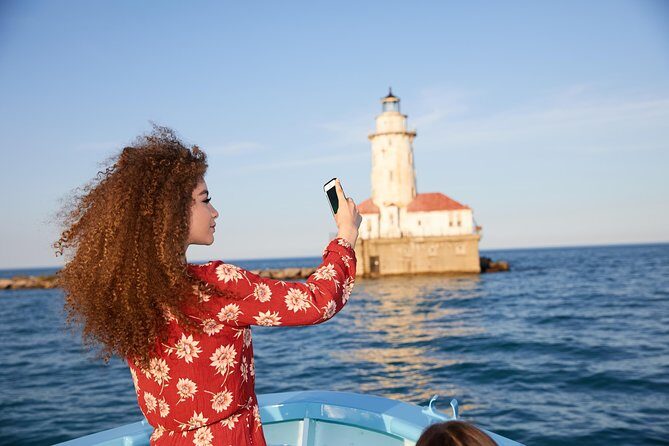
You see Navy Pier more than once during the cruise route. That’s helpful because Navy Pier is all about lines and angles—the pier extends out over the water, and the Ferris wheel gives you a clear vertical anchor for photos.
You also pass Buckingham Fountain in Grant Park. Fountains are hard to fully appreciate from a distance, but from the water you can still capture:
- the fountain’s position in the park layout
- surrounding museum and skyline context
- a clean, wide shot that includes water foreground
If you’re traveling with kids or anyone who likes visual landmarks more than facts, this is where the cruise keeps converting scenery into real “I know that place” moments.
Timing and weather: when to choose daytime vs late tours
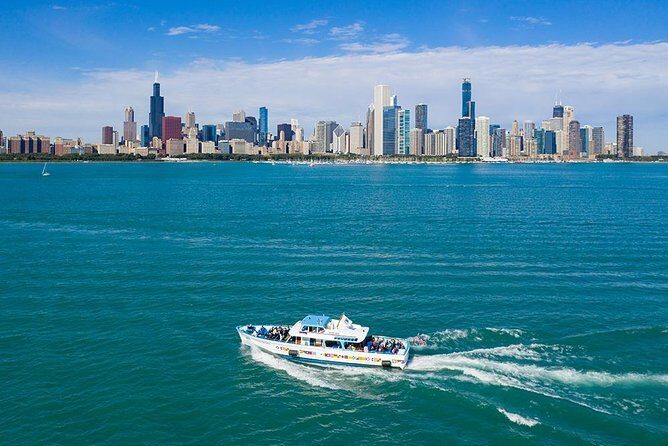
This cruise runs in all weather conditions, so you should dress like it’s partly a boat ride and partly a photo session. That means rain layer, water-resistant shoes, and something that won’t turn into a soggy mess after a few splashes.
If you have the option, I’d aim for a later departure. There’s a strong pattern in real experiences that the 6:15 pm timing is a sweet spot because you can catch the sun going down and the skyline starting to light up. Night city lights on Chicago’s buildings can look sharper from the water than you’d expect.
What if the weather is gloomy? You can still have a good time. Mist and light rain can reduce harsh contrast and make lights feel smoother. Just keep your expectations flexible: the goal is views plus stories, and both can still land even when the sky isn’t perfect.
Also, expect small pauses. A cruise like this sometimes stops briefly for safe navigation or operating reasons. It can feel like a lull for some people, so bring patience, not a stopwatch.
Price and value: why $45 can make sense
At $45 per person, this cruise has a few value drivers that go beyond the sticker price:
- You’re getting both a lake skyline view and a river architecture experience in one continuous outing.
- The tour includes live commentary on board, which helps turn “I see buildings” into “I understand what I’m seeing.”
- You’re covering a lot of famous Chicago real estate in about 1 hour 30 minutes (approx.), which is tough to replicate efficiently on foot or by hopping between destinations.
For families, the math often works because you’re buying one ticket for one ride that keeps interest moving: museums, stadium, skyline, bridges, and Navy Pier all in one loop.
One caution on value: it’s not a meal. Food and drinks aren’t included, so if you tend to snack during activities, plan for that cost. The upside is you’re not stuck with a bundled meal you might not want.
Who this cruise fits best (and who might not)
This is a strong pick if you want:
- a quick way to understand Chicago’s layout and standout architecture
- lots of photo angles without moving between multiple stops
- a family-friendly activity with a guided narration that keeps things understandable
It’s also a good choice for people who don’t love walking long distances in big-city heat or cold. The route is designed to keep you in motion while still delivering major sights.
I’d think twice if you hate boats or get easily seasick. The data doesn’t mention rough-water guarantees, and even when the ride is smooth, it’s still time on a vessel.
And if you’re the type who needs constant action with zero slow moments, know that pass-by pacing plus occasional brief pauses can create stretches that feel less exciting than the skyline highlights.
Should you book the Chicago River and Lake Michigan cruise?
If you want a practical first taste of Chicago that combines iconic views with guided context, I’d book it. At $45 for a ~90-minute loop that hits the river, the lake, and major landmarks, it’s a smart use of time—especially if you’re staying downtown.
Book it now if:
- you want the skyline from water level
- you like architecture and want it explained in plain language
- you want a family-friendly activity that still feels worth it for adults
Hold off only if:
- you’re not comfortable with any kind of weather (you’ll be outdoors on the boat)
- you’re tight on time and can’t tolerate possible short operational delays
FAQ
What’s the duration of the Chicago River and Lake Michigan cruise?
The cruise runs for about 1 hour 30 minutes (approx.).
Where is the meeting point?
You meet at 112 E Wacker Dr, Chicago, IL 60601, USA, and the tour ends back at the meeting point.
Is there a mobile ticket?
Yes, this activity uses a mobile ticket.
What landmarks do you see during the cruise?
You pass by major sights including Wrigley Building, Navy Pier, Clarence F. Buckingham Fountain, Field Museum, Shedd Aquarium, Adler Planetarium, Soldier Field, the McCormick Bridgehouse & Chicago River Museum area, and John Hancock Center.
Are food and drinks included?
Food and drinks are not included in the tour price.
Does the cruise run in bad weather?
It operates in all weather conditions. If it’s canceled due to poor weather, you’ll be offered a different date or a full refund.