REVIEW · WALKING TOURS
Chicago Walking Tour: A Walk Through Time
Book on Viator →Operated by Chicago Architecture Center · Bookable on Viator
Chicago answers back in steel and stone. On this fast 90-minute walk, you trace Chicago’s architectural timeline in order, with a guide doing the heavy lifting so you can focus on the buildings. You get steady photo stops and clear context for what you’re seeing.
I love the included Galleries at the Chicago Architecture Center, because it makes the ticket feel instantly useful. I also love the small group limit of 15, which keeps the pace brisk but still leaves room for questions and real conversation.
One possible drawback: most stops are exterior views, and not every building has admission included, so don’t expect a building-by-building interior tour.
In This Review
- Key things to know before you go
- A 90-minute Chicago architecture walk that actually fits your schedule
- Starting at the Chicago Architecture Center: the ticket you’ll actually use
- 177 N State St: that cast-iron front you’ll want to spot instantly
- Virgin Hotels Chicago and the Motor Club building area: how Chicago keeps changing
- Aqua Tower and Lakeshore East: skyline development you can read from street level
- NBC Tower: post-modern Art Deco energy in a modern office setting
- Carbide and Carbon Building: why a quick exterior stop still lands
- Guide style and pace: why it feels fun instead of rushed
- Price and value: $35 that includes the Chicago Architecture Center galleries
- What to expect at each stage of the walk
- Who this Chicago walking tour is for
- When you might want a different plan
- Should you book this Chicago Architecture Center walking tour?
- FAQ
- How long is the Chicago walking tour?
- How much does it cost?
- What does the price include?
- Where does the tour start and end?
- Is the tour group large?
- Are pets allowed?
Key things to know before you go

- Chronological route through Chicago’s architecture, so styles make sense instead of feeling random
- Chicago Architecture Center galleries included in the ticket, starting and ending at the same spot
- Small group (max 15), which helps the guide keep things moving without rushing
- Photo-friendly stops throughout, timed so you can take pictures without feeling stuck
- Professional, certified guide narration with time for questions and approachable explanations
A 90-minute Chicago architecture walk that actually fits your schedule
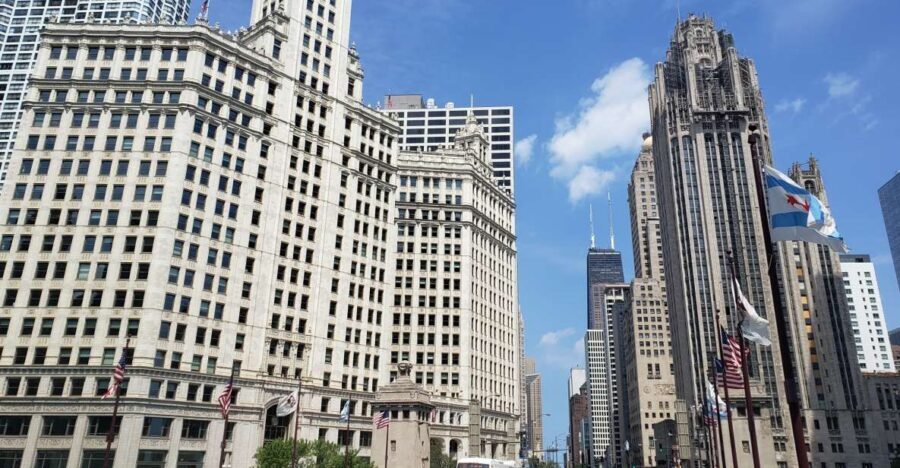
If you only have a day (or even just a chunk of an afternoon) and you want to understand Chicago architecture instead of just collecting photos, this tour is built for that. It’s designed as an express, walking route through famous buildings in chronological order. That matters more than you’d think.
When you see buildings out of order, you spend your brain sorting dates and styles. Here, the walk gives you a timeline. You move from earlier design moments to later ones, so details click as you go. And since the guide leads the group, you’re not managing maps, cross-streets, or route decisions while trying to look up.
The pace is also tuned for real people with limited time. With an approximate duration of 1 hour 30 minutes, you’ll get a solid city orientation while still feeling like you could carry on with your own plans afterward.
You can also read our reviews of more walking tours in Chicago



Starting at the Chicago Architecture Center: the ticket you’ll actually use
The tour begins and ends at the Chicago Architecture Center at 111 E Wacker Dr. Stop 1 is the Chicago Architecture Center itself, and that’s where the included part really earns its keep.
You get an admission ticket to the Galleries of the Chicago Architecture Center, with the time for entry built into the tour plan. This is valuable because it sets the frame before you hit the street. Instead of trying to figure out architectural terms mid-walk, you start with the context the center provides.
Even if you’re not a museum person, this first stop helps you understand what you’re about to notice: how architectural styles evolve, how materials and design choices reflect their era, and what to pay attention to when you’re looking at facades at sidewalk speed.
Also, returning to the same meeting point at the end is practical. No wandering, no backtracking, no stress.
177 N State St: that cast-iron front you’ll want to spot instantly
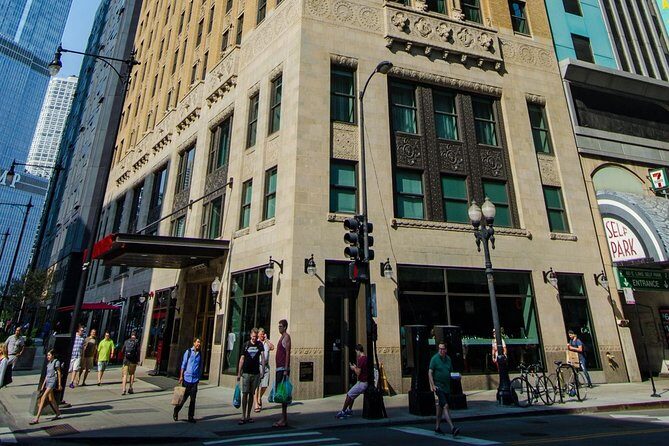
One of the first exterior stops is 177 N State St. This building dates to the late 1800s and is known for a distinctive cast-iron front. That’s the kind of detail you might miss if you’re just strolling.
On this tour, the guide’s narration gives you a way to look. Cast iron isn’t just an ornament—it helped make certain facade designs possible and allowed more intricate-looking exteriors during that period. So when you’re standing close enough to see the facade details, you’re not just thinking, That’s old. You’re thinking, Here’s what the era made possible.
There’s a short photo window here, and because the tour is structured, you won’t feel like you’re holding up the group or stuck waiting for others to catch up. This stop is a great early “aha” moment for first-timers.
One note: the admission for this stop is listed as free, but you should treat the tour as a walking experience focused on seeing buildings from the outside.
Virgin Hotels Chicago and the Motor Club building area: how Chicago keeps changing
Next you’ll view Virgin Hotels Chicago. This is an exterior look, but it’s positioned to keep your timeline moving forward. Even when you’re not going inside, the value is in what it represents—how the city’s architectural story continues into more recent decades.
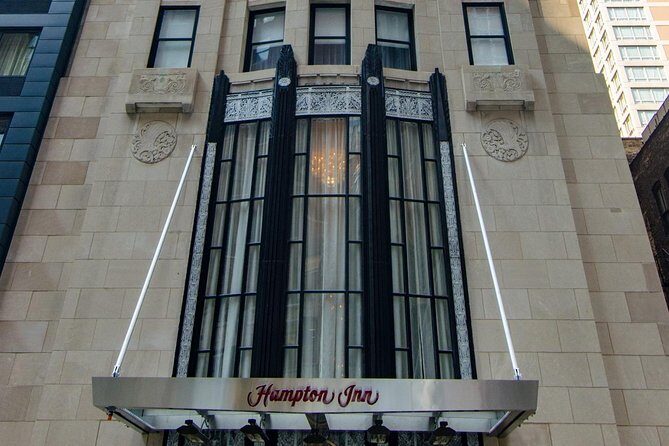
Then you move to the Hampton Inn Chicago Downtown / N Loop / Michigan Ave area to view the renovated Chicago Motor Club. This part is interesting because it ties architecture to reuse. You can see how older city structures get a second life, which is one of the most practical ways cities preserve character without freezing themselves in time.
As you walk through these stops, keep an eye on how proportions, materials, and facade rhythm change over time. That’s the pattern the chronological route is helping you catch.
Also, ticket notes matter here: the information you have indicates these specific stops do not include admission. Since you’ll mostly be viewing from the sidewalk anyway, that’s not a big deal—but it does reinforce the idea that the galleries at the Architecture Center are the main included “indoor” component.
Aqua Tower and Lakeshore East: skyline development you can read from street level
There’s an additional stop where you view Aqua Tower and the entire Lakeshore East development. This is one of the moments where the tour’s “timeline” approach helps you connect the dots across modern Chicago.
Aqua Tower is the kind of building people recognize fast, but what you often don’t notice until someone points it out is how it fits into the broader redevelopment story around it. The Lakeshore East development isn’t just one building—it’s a cluster of changes, and seeing that “whole” matters.
From a street-level walking tour, you don’t get the same scale as standing at a distance. Still, this stop is useful because you’re in an ideal position to compare what earlier design eras looked like with what newer planning and construction aimed for.
If you’re the type who likes skyline photography, you’ll probably use this segment to grab a wider shot and then come back later for close-ups. The route is structured so you’re not stuck in the same spot forever. You’ll get the view, then move on.






NBC Tower: post-modern Art Deco energy in a modern office setting
Next up is the NBC Tower. The tour description highlights that it houses NBC’s Chicago offices and that it’s a Post-Modern interpretation of Art Deco style.
That detail is a big clue for what to look for. Art Deco is often associated with clean geometry, stepped forms, and bold styling. Post-Modern takes those cues and reframes them, often with a more playful or referential approach. When you hear that in context, the exterior stops feeling like random shapes. You start seeing the design language.
This is another exterior view with a short time window and a free admission note. On a tour like this, a “free admission” tag is mostly telling you not to worry about an extra paid entry for this specific stop. Your main ticket value remains the Chicago Architecture Center galleries.
If you’re a fan of broadcast-history trivia, this stop also has an easy hook: modern media companies shaping Chicago’s office skyline. Even if you’re not into TV, it’s still a practical way to connect architecture to what happens inside buildings.
Carbide and Carbon Building: why a quick exterior stop still lands
The Carbide and Carbon Building is the final exterior view on your run. You’ll see the exterior of the Carbide and Carbon Building, with a short photo time and free admission listed.
This stop can feel quick on paper, but quick doesn’t mean pointless. Buildings like this are often famous because their exterior design carries a lot of identity. And on a chronological walk, the payoff is when you can compare it with what came right before.
Even if you only catch part of the facade from where the group is positioned, you’ll have enough context from the guide’s narration to know what to notice. Think about style cues, ornament, and how Chicago’s architecture has moved through different eras of taste and technology.
Also, since the tour ends back at the Architecture Center, the Carbide and Carbon stop is a clean wrap-up: one last signature facade, then you return to the starting point without the stress of figuring out how to get back.
Guide style and pace: why it feels fun instead of rushed
The biggest theme in the feedback you can count on here is the guide experience. This tour consistently lands well because the guide keeps things moving without making it feel like you’re being chased.
I like when a walking tour does two things at once: explains the buildings clearly, then makes it easy to ask questions. Here, the narration is described as in-depth, and the guide is approachable—meaning questions don’t feel like an interruption. That’s a big deal on a small group walk, where the guide can actually respond and keep the thread of the story going.
It also helps that the route is timed so it doesn’t drag. A common complaint about city walking tours is that they become long and monotonous. This one is built to stay tight: about 1 hour 30 minutes, multiple quick photo stops, and no extended detours.
And since it covers Chicago’s architectural history in chronological order, you’re not just listening to random facts. You’re building a mental timeline while you walk.
Price and value: $35 that includes the Chicago Architecture Center galleries
At $35 per person, this tour isn’t priced like a casual stroll, but it also isn’t heavy-duty compared to doing separate paid activities.
Here’s why it can be a strong value: your price includes admission to the Galleries of the Chicago Architecture Center, and the tour starts and ends there. That means part of what you pay doesn’t disappear the moment you step outside. You get a museum-style component right away, and then you use that context while viewing the city’s major architecture.
Some building stops have admission noted as free, and some are listed as not included (like Virgin Hotels Chicago and the Hampton Inn / Motor Club view). That’s normal for a walking tour focused on exterior viewing. The key is that your included indoor value is anchored at the Architecture Center.
Group size also plays into value. With a maximum of 15 travelers, you’re less likely to get the “everyone for themselves” vibe. The guide can manage questions and keep explanations audible. For many people, that’s what makes a mid-priced tour feel worth it.
Booking timing is another small planning advantage. The tour is typically booked about 11 days in advance on average, so if you’re traveling in peak periods, it’s smart to reserve sooner rather than later.
What to expect at each stage of the walk
Here’s the rhythm you’ll likely feel as you go:
- You start at the Chicago Architecture Center, then take in the Galleries with admission included.
- You move through a chain of famous buildings, each tied to a specific architectural moment in Chicago’s timeline.
- You get short stops that are long enough for a few photos and quick viewing from the sidewalk.
- The tour ends back at the Architecture Center, making it easy to continue on with dinner, transit, or another self-guided exploration.
This flow is especially good if you’re juggling multiple plans. You can still do a museum later, or find a river walk, or shop in the Loop without wondering how to connect it all.
Who this Chicago walking tour is for
This tour is a great fit if you are:
- Visiting Chicago for the first time and want a quick orientation
- Short on time and want architecture context fast
- Interested in how buildings reflect their era, not just how they look
- Traveling with someone who likes photos but also wants explanations that make the skyline readable
- Looking for a small-group experience where you can ask questions and feel included
It’s also ideal if you want a guided day that doesn’t require planning every turn. The guide leads, and the route is set up for maximum efficiency.
When you might want a different plan
This isn’t the right choice if your main goal is interior access across multiple buildings. Most stops are described as views of buildings, not full inside visits. Also, admission at some stops is listed as not included, which means you shouldn’t expect to gain extra access beyond what the Architecture Center galleries already cover.
If you want a long, in-depth museum day only, you might find you want more time at the center. If you want a pure exterior-photo marathon, you might also prefer a self-guided route with longer time at your top picks. But if you want the balance of learning plus sightseeing without burning a whole day, this hits the sweet spot.
Should you book this Chicago Architecture Center walking tour?
I’d book it if you want Chicago architecture explained in a format that respects your time. The combination of included Galleries admission, a small group, and a chronological route means you come away understanding what you saw, not just spotting famous buildings.
Skip it only if you’re hoping for lots of building interiors beyond the Architecture Center or if you’re the kind of traveler who wants to wander slowly without structure. For most first-timers and time-pressed visitors, this is a smart, efficient way to get oriented and learn the skyline story quickly.
FAQ
How long is the Chicago walking tour?
The tour lasts about 1 hour 30 minutes.
How much does it cost?
It costs $35.00 per person.
What does the price include?
The price includes a walking tour of Chicago Architecture, narration by a professional and certified guide, and admission to the Galleries of the Chicago Architecture Center.
Where does the tour start and end?
It starts at the Chicago Architecture Center, 111 E Wacker Dr, Chicago, IL 60601, and it ends back at the same meeting point.
Is the tour group large?
The tour has a maximum of 15 travelers.
Are pets allowed?
Pets are not allowed. Service animals are allowed.