REVIEW · WALKING TOURS
Chicago Walking Tour: Must-See Chicago
Book on Viator →Operated by Chicago Architecture Center · Bookable on Viator
Chicago can feel like a lot at first. In this tight 90-minute walk, you get a clear mental map of the city through Chicago architecture and a small group feel, plus included time inside the Chicago Architecture Center galleries. Two things I especially like: you learn what you’re looking at right away, and you walk away with spots you can return to later. One possible drawback: it moves fast and it’s mostly about building exteriors and views, so it is not the deep-dive museum day some people want.
This is a practical way to start a trip, especially if your schedule is tight. The tour is guided by a professional, certified guide, and the stories can really change how buildings feel in your head. I’ve seen guides named Claudia Winkler, Rich, and Maurice mentioned for being upbeat, focused, and good at making the skyline make sense.
You meet at the Chicago Architecture Center (111 E Wacker Dr), then head out on foot for about 1 hour 30 minutes. The group tops out at 15 people, which helps you ask questions and keeps the pace comfortable for most walks.
In This Review
- Key Highlights You’ll Actually Care About
- Entering The Chicago Architecture Center Base Camp
- Price and What $35 Buys You (Plus What It Doesn’t)
- Wrigley Building and the Terra Cotta Look of Chicago
- Chicago Riverwalk View: A Quick Shot of the City’s Lifeline
- Aqua Tower: Why Lakeshore East Became a New Star
- Tribune Tower: A Competition Winner With Serious Swagger
- Art Institute of Chicago Exterior: Modern Wing Without the Museum Time
- John Hancock Center at 875 N Michigan Avenue
- Millennium Park and Cloud Gate: The Bean Photo Moment
- How the Tour Pace Helps You Get Your Bearings
- Best-Fit Travelers: Who Should Book This
- Should You Book This Chicago Walking Tour?
- FAQ
- How long is the Chicago walking tour?
- How much does the tour cost?
- What’s included in the tour price?
- Where does the tour start?
- How large is the group?
- Are pets allowed, and are service animals allowed?
Key Highlights You’ll Actually Care About
- A fast overview that helps you plan the rest of your Chicago days without guessing where everything is
- Chicago Architecture Center galleries included so you’re not just looking at buildings from the sidewalk
- Small group size (max 15) for better questions and smoother pacing
- Icon stop-by-stop views, from the Wrigley Building to the skyline at John Hancock Center
- Millennium Park’s Cloud Gate (The Bean) stop with no separate ticket cost for that visit point
Entering The Chicago Architecture Center Base Camp

The tour starts at the Chicago Architecture Center at 111 E Wacker Dr. This matters more than it sounds, because you begin with context before you start walking past landmarks. It’s one of those smart “start here, then wander better” setups.
You’ll also get admission to the Galleries of the Chicago Architecture Center as part of the experience. That included access is a big value point: for $35, you’re not just paying for a walking route. You’re getting a quick dose of architecture background that helps you spot patterns as you move downtown.
If you’re the type who likes to connect streets and buildings to a bigger story, this is your kind of tour. And if you’re not sure where the must-sees are clustered, it helps you build a route you can follow later.
You can also read our reviews of more walking tours in Chicago



Price and What $35 Buys You (Plus What It Doesn’t)

At $35 per person for about 90 minutes, this is an affordable way to see a lot of Chicago fast. The key is that your money buys three practical things: a guided route, expert narration, and included gallery admission at the Chicago Architecture Center.
What it does not cover is also important. There’s no coat check, and there’s no listed storage for luggage or strollers. If you have bulky items, you’ll want to plan accordingly so you aren’t stuck carrying them during the walk.
Also, plan on being outside and walking. The itinerary is built around a downtown skyline route, so wear shoes you’d actually trust for a city stroll. And if you drove in, I’d give yourself extra time for parking stress; some people find downtown parking a challenge.
Wrigley Building and the Terra Cotta Look of Chicago
The first stop is the Wrigley Building, a famous landmark with a Spanish Colonial Revival style. You’ll notice the distinctive white terra cotta facade, and this is where the tour’s theme starts to click: Chicago isn’t just big buildings, it’s a mix of styles, eras, and bold design choices stacked over time.
This is a great early stop because it sets the “visual vocabulary” for what comes next. When you can recognize a facade style, you start seeing how architects signal identity—what they want you to think and feel when you look up.
The drawback at this point, like many exterior stops: you get a view from the street, not a full up-close architectural walkthrough. Still, it’s a strong opening because it gets you oriented quickly.
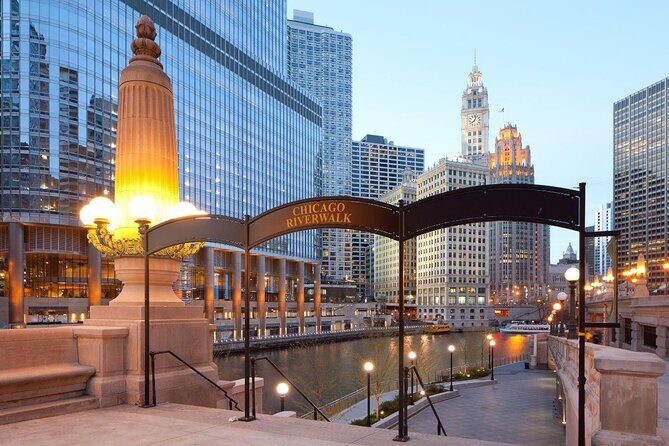
Chicago Riverwalk View: A Quick Shot of the City’s Lifeline
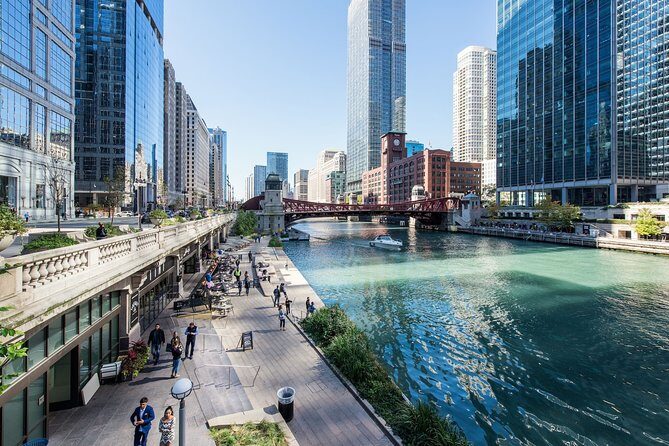
After the Wrigley Building, you’ll get a view of the Chicago Riverwalk. This stop is short, but it’s useful for understanding Chicago’s geography. The river isn’t just scenery—it’s a big part of how the city developed and how people think about the downtown core.
Even if you don’t spend hours here, a river view helps your brain place the rest of the route. It also gives you a photo moment that feels distinctly Chicago, because you’re seeing the city’s architecture tied to water.
If you’re the kind of person who later wants to linger, this stop gives you a reason to return. And if you’re short on time, it delivers a high-value look without turning your day into a detour.
Aqua Tower: Why Lakeshore East Became a New Star
Next up is Aqua Tower, the kind of building that turns a skyline photo into a headline. Aqua was completed in 2009, and it helped put Lakeshore East on the map for many people—this is one reason the tower became such a conversation starter.
The guide will connect the dots to architect Jeanne Gang’s design work. Even if you only have a few minutes here, this is the stop where Chicago’s modern era starts to feel real. It’s not just an object; it’s a marker of how the city keeps evolving and attracting attention.
A quick timing note: this is a brief stop, so if you want a slow, detailed look at the facade, plan to come back later. The value here is learning what you’re looking at in a way that makes your own later photos better.






Tribune Tower: A Competition Winner With Serious Swagger

Then you’ll stand near the Tribune Tower, designed by Howells & Hood. This building is tied to an international design competition, and the idea was to create the most beautiful building in the world.
That context changes how you see the structure. Instead of treating it as a pretty landmark, you start reading it as a statement: Chicago didn’t just build tall. It wanted to build with ambition—and it wanted to be judged.
This stop is also short, so you won’t get a long architectural analysis. But you will get enough background to understand why the Tribune Tower is one of those “you should know it” Chicago addresses.
If you’re chasing iconic photos, this is a good one to capture early, before the crowd flow builds around other hotspots.
Art Institute of Chicago Exterior: Modern Wing Without the Museum Time

The tour includes a view of the exterior of the Art Institute of Chicago’s Modern Wing. That’s a nice choice when you’re doing a quick city overview because it gives you a hit of major cultural Chicago without requiring a full museum commitment.
You’re seeing the building’s look and feel, and then you can decide later if you want more time inside. Some people love that flexibility. If you’re trying to pack a lot into a short stay, this makes sense.
A minor limitation: because it’s an exterior view, you’re not getting the interior experience. But as part of an overview tour, it’s a smart way to cover more ground.
John Hancock Center at 875 N Michigan Avenue
Next is the John Hancock Center, now listed at 875 N Michigan Avenue. This is another skyline anchor, and seeing it from the street gives you a sense of scale.
This stop works well if you’re the kind of visitor who wants to connect Chicago landmarks to where they sit along the downtown grid. When the building location clicks in your mind, it’s easier to plan day trips later—especially if you’re mixing walking with transit.
Again, time is brief. This isn’t a “stand here for ages and study every detail” tour. The strength is in covering major anchors fast while the guide turns your attention to what matters.
Millennium Park and Cloud Gate: The Bean Photo Moment
Millennium Park is next, and you’ll visit the area around Cloud Gate, known as The Bean. This stop is listed as free, so you’re not paying extra just to reach this iconic viewpoint.
Cloud Gate is famous for a reason: the reflective surface makes the skyline warp in a way that feels fun and visual, even if architecture isn’t your main interest. The guide’s narration also helps you understand why the sculpture became such a symbol for modern Chicago.
One thing to keep in mind: access or visuals can vary based on park conditions. There’s at least one note from a past visitor about The Bean being closed for construction. That’s not something you can plan around perfectly, so I’d treat this stop as “worth a look” even if it doesn’t always work out exactly the way you imagine.
How the Tour Pace Helps You Get Your Bearings
The full walk takes about 1 hour 30 minutes, and the route is structured so you see a chain of major landmarks rather than bouncing randomly around the city. That’s a huge win for first-timers. After the tour, you’re less likely to waste time asking where things are, because you’ve already walked the connective tissue.
The group size helps, too. With a maximum of 15, you don’t feel like you’re in a long conga line. You can typically ask questions and get answers that match what you’re standing near.
Some guides are more conversational than others. One earlier comment mentioned a guide who relied heavily on printed notes and didn’t add extra detail beyond the script. That’s rare with a certified professional, but it’s a fair reminder: the experience can feel more or less lively depending on your guide’s style.
Best-Fit Travelers: Who Should Book This
This tour fits best if you:
- Want a quick, guided way to understand Chicago’s architecture without committing to a full-day museum plan
- Like walking routes that make later planning easier
- Prefer seeing major landmarks in a short window and getting ideas for where to return
You might skip or look for something different if:
- You want long stops, deep interior access, or lots of time at one museum
- You have bulky luggage that you’ll struggle to carry during a downtown walk
In general, it’s a great match for first-time visitors and also for repeat visitors who want a fresh way to see familiar buildings.
Should You Book This Chicago Walking Tour?
If you’re visiting Chicago for the first time and you want order in your first day, I think this is an excellent booking. The value isn’t only the $35 price tag; it’s the combination of guided narration plus included Architecture Center gallery access. You’ll leave with a clearer sense of the city’s layout and a better eye for architectural style.
Book it if you want a high-signal overview: Wrigley Building, Aqua Tower, Tribune Tower, the Art Institute exterior, John Hancock Center, and Millennium Park all in one efficient pass. Skip it if you’re looking for a slow, detailed architectural study or a full museum day. For everyone else, this is a practical start that makes the rest of your Chicago trip easier and more fun.
FAQ
How long is the Chicago walking tour?
It runs for about 1 hour 30 minutes.
How much does the tour cost?
The price is $35.00 per person.
What’s included in the tour price?
You get narration by a professional, certified guide, a walking tour featuring major Chicago buildings, and admission to the Galleries of the Chicago Architecture Center.
Where does the tour start?
The tour starts at the Chicago Architecture Center, 111 E Wacker Dr, Chicago, IL 60601.
How large is the group?
The tour has a maximum of 15 travelers.
Are pets allowed, and are service animals allowed?
Service animals are allowed, and pets are not allowed.