REVIEW · ARCHITECTURE RIVER CRUISE
Chicago Architecture Walking Tour: What’s New
Book on Viator →Operated by Chicago Architecture Center · Bookable on Viator
Chicago’s new buildings come with a guide. This 90-minute Chicago Architecture Center walk focuses on the River-adjacent area so you can spot what’s changed (and why) without trying to chart the whole city on your own. You’ll start indoors at the CAC, then move outside for street-level views of recent work and a few big-name classics getting updated.
I especially like the CAC galleries stop, because admission is built into your ticket. I also like the way the narration turns buildings into stories, with hosts who can connect design choices to the community—like Paul S., Paula, Karen, and Mary Jo, whose tours are noted for clear explanations and strong Q&A.
One consideration: you might not always see every featured interior. Access to building interiors featured on the tour may change without notice due to weekend/holiday schedules or unforeseen closures, so plan to treat exterior views as the dependable part of the experience.
In This Review
- Quick highlights you’ll feel right away
- Getting your bearings at the Chicago Architecture Center
- Walking the River-adjacent Loop in 90 minutes
- Stop-by-stop: Pioneer Court to the Apple Store on Michigan Avenue
- Stop 1: Chicago Architecture Center (intro + galleries)
- Around Pioneer Court: what the guide points out changes the view
- The Historic Tribune Tower updates: renovations and additions
- Small urban rental apartment trends: design choices with real-life impact
- 465 N Park Drive and the St. Regis view: luxury as a design language
- Stop 3: Apple Michigan Avenue (a quick, practical view)
- Stop 4: Chicago Architecture Center (closing remarks)
- Price and logistics: what $35 buys you (and why it’s fair)
- What the guides are good at: stories, not just trivia
- What’s included (and what to plan around)
- Who should book this Chicago architecture walk
- Should you book Chicago Architecture Walking Tour: What’s New?
- FAQ
- How long is the Chicago Architecture Walking Tour: What’s New?
- Where does the tour start?
- How much does the tour cost?
- What’s included with the tour ticket?
- How large is the group?
- Can I bring a pet?
- Are service animals allowed?
- Can I cancel for a refund?
Quick highlights you’ll feel right away

- Small group (max 15) so your questions don’t get lost in the shuffle
- CAC galleries included to set context before you hit the streets
- New-build and renovation focus rather than a general “look at that tower” walk
- River-adjacent route keeps it concentrated near the Chicago Architecture Center
- Street views on Michigan Avenue and other downtown hot spots without a long commute
Getting your bearings at the Chicago Architecture Center
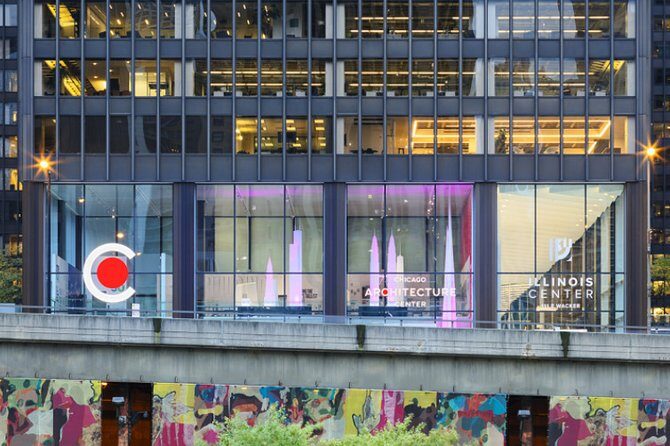
If Chicago architecture feels like too much, the CAC start point is the practical fix. You meet at 111 E Wacker Dr, and the tour begins with introductory remarks that give you a map in your head before you’re standing under steel and glass wondering what matters.
The tour also includes admission to the Galleries of the Chicago Architecture Center, which is a nice value play. Even if you’re only at the galleries briefly, it helps you understand how Chicago grew, how buildings get shaped by the city’s rules and culture, and what “new” can mean—new construction, renovation, additions, and design trends.
That combo—orientation + a timed walk—keeps you from wandering. You come away with a clearer sense of how the Loop and the riverfront relate, and you’re not guessing what to look for on each block.
You can also read our reviews of more walking tours in Chicago



Walking the River-adjacent Loop in 90 minutes

This is a concentrated architecture walk built around the area around the CAC, beside the Chicago River. The goal isn’t to cover everything in downtown; it’s to focus on important newer buildings and design directions so you can compare “past vs present” without overheating your brain.
The walking time is about 1 hour 30 minutes total, and stops are kept tight. Expect a mix of short commentary and view-based moments rather than long detours inside buildings—especially since access to interiors can change with schedules and closures.
The pace is also friendly for people who want structure. A guide is telling you what to look at as you move, which matters because Chicago buildings often reward slow observation—corners, setbacks, façades, and the way a tower meets the street.
Stop-by-stop: Pioneer Court to the Apple Store on Michigan Avenue
Here’s what your route is built around, stop by stop, and what each one is really doing for you.
Stop 1: Chicago Architecture Center (intro + galleries)
You start at the CAC with introductory remarks and admission included to the galleries. That first block of time matters because it frames the rest of the tour: you’re not only looking at buildings, you’re learning how to interpret them.
Think of it as your decoder ring. When you later hear design terms or explanations about why certain choices were made, you’ll have context instead of just collecting random facts.
Around Pioneer Court: what the guide points out changes the view
Next comes Pioneer Court, with time to discuss the buildings surrounding it. This isn’t just a “pretty square” stop. It’s a chance to learn how downtown spaces get shaped by their neighbors—massing, street edges, and how new work sits alongside older styles.
The time here is about 15 minutes, so the best strategy is to listen closely and watch what the guide is emphasizing. For most people, this stop is where architecture stops being abstract and becomes readable.






The Historic Tribune Tower updates: renovations and additions
One of the most interesting turns in the walk is a discussion of recent renovations and additions to the Historic Tribune Tower. This kind of stop is valuable because it breaks the idea that historic buildings are frozen in time.
You’ll hear how preservation and modernization can work together—usually meaning upgrades that keep the building relevant while protecting what makes it important. Even if you’ve seen the tower from outside before, this kind of guided framing helps you notice what’s changing and why.
Small urban rental apartment trends: design choices with real-life impact
The tour then looks at trends in recent designs of small urban rental apartments. This is a smart addition because architecture isn’t only about famous towers. It’s also about how people actually live in the city and what new building types are doing for affordability, flexibility, and livability.
If you’re interested in design for daily life—floor plans, window sizes, layouts, and how space is used—this section gives you a lens you can carry into other Chicago neighborhoods.
465 N Park Drive and the St. Regis view: luxury as a design language
After that, you’ll discuss 465 N Park Drive, then you’ll view the St. Regis Chicago building. These stops are focused on reading design language at the street level and understanding what different projects signal.
This is also where the guide’s storytelling helps. A building’s height and materials tell you something, but the reasoning behind the choices tells you more. You start to see how luxury developments compete—on branding, on details, and on how they present themselves from the public realm.
Stop 3: Apple Michigan Avenue (a quick, practical view)
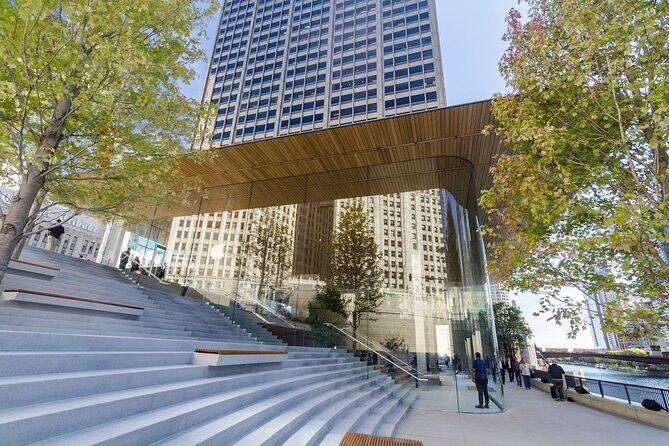
You finish the exterior run with Apple Michigan Avenue and the Apple Store view. This stop tends to be short—about 10 minutes—but it’s useful because it shows how major brands use architecture to shape the experience of a corner.
Even if you’re not shopping, it helps you connect retail design to city design: entrances, sightlines, crowd flow, and how a building creates a destination.
Stop 4: Chicago Architecture Center (closing remarks)
You return to the Chicago Architecture Center for closing remarks, with admission included already handled earlier. The closing part is where things click. You can ask a final question, connect the dots between the older and newer examples, and decide what you want to chase on your own afterward.
Price and logistics: what $35 buys you (and why it’s fair)
At $35 per person for about 1 hour 30 minutes, this tour can be a strong value—mainly because the ticket includes narration plus admission to the CAC galleries.
If you’re visiting Chicago for a few days, that’s key. People often pay separately for museum entry and then separately for a guided walk. Here, the format bundles the context (inside the CAC) with the street-level architecture.
The tour also caps at 15 travelers, which is a big deal for a topic like architecture. Smaller groups mean your guide can actually adjust. You’ll likely get more direct answers instead of hearing only a stream of info aimed at the average person.
One practical note: you’ll want to know what’s not included. There’s no coat check, and there’s no hotel pick-up or drop-off. You also shouldn’t expect storage for luggage or strollers—so keep your trip light and plan to arrive without needing extras.
What the guides are good at: stories, not just trivia
The most praised part of the experience is how the guide teaches you to see. Names like Paul S., Paula, Karen, and Mary Jo show up in the guide notes, and the common theme is clear explanations with depth across architects, buildings, and community spaces.
You can also expect a Q&A-friendly tone. One of the nicest surprises in these kinds of walks is when the guide can answer different types of questions—about materials, about design intent, about sustainability, and about how communities shape development.
There’s also a practical realism to how the tour handles less-than-ideal conditions. One rainy outing with Paul S. is noted as still engaging, which matters because Chicago weather can turn fast. The point is: you’re not stuck watching a screen. You’re guided through the city outside, even when the sky isn’t cooperative.
What’s included (and what to plan around)

Here’s the essentials, without the fine-print fluff:
Included:
- Narration by a professional and certified guide
- Admission to the Galleries of the Chicago Architecture Center
Not included:
- Coat check
- Hotel pick-up or drop-off
- Storage for luggage or strollers
Small-group cap:
- Maximum 15 travelers
Access note:
- Building interiors featured on the tour may change without notice due to schedules, weekends/holidays, or unexpected closures. Exterior viewing and guided discussion are the reliable constant.
If you’re the type who wants to photograph details, bring a camera strap you can manage while walking. If you wear anything slick-soled, swap to shoes with grip. You’ll be on city sidewalks, and Chicago can be windy and damp.
Who should book this Chicago architecture walk
This is a great fit if you fall into any of these categories:
- You want a structured way to understand modern Chicago design without getting lost
- You like architecture that connects to real living and real neighborhoods, not just landmark icons
- You’re a designer, architect, student, or simply someone who cares about how cities build for people
- You’re a Chicago visitor who wants a focused “new and updated” tour near the River
It’s also a strong choice for locals who feel like they’ve seen the old standards but never got a clean explanation of what’s happening right now in downtown design.
The small-group size helps most people feel included. If you ask questions, you’ll likely get answers that match what you actually care about.
Should you book Chicago Architecture Walking Tour: What’s New?
Book it if you want a short, smart route that focuses on new construction, renovations, and design trends with a guide who explains the why. At $35, the included CAC gallery admission makes it less of a “just a walk” experience and more of an architecture primer you can reuse later.
Skip it (or choose a different format) if you’re only interested in guaranteed interior access. Since building access can change, you shouldn’t plan on a lineup of guaranteed indoor stops.
My take: if you’re drawn to the idea of seeing how Chicago is updating itself—while learning how to read those changes—this one is worth your time. It’s tight enough to enjoy on a limited schedule, and guided enough that you won’t feel like you’re looking at buildings through a fog of guesswork.
FAQ
How long is the Chicago Architecture Walking Tour: What’s New?
It runs for about 1 hour 30 minutes (approx.).
Where does the tour start?
The meeting point is Chicago Architecture Center, 111 E Wacker Dr, Chicago, IL 60601, USA.
How much does the tour cost?
The price is $35.00 per person.
What’s included with the tour ticket?
Your ticket includes narration by a professional and certified guide and admission to the Galleries of the Chicago Architecture Center.
How large is the group?
The tour has a maximum of 15 travelers.
Can I bring a pet?
No. Pets are not allowed on this tour.
Are service animals allowed?
Yes. Service animals are allowed.
Can I cancel for a refund?
Yes. You can cancel for a full refund if you cancel at least 24 hours before the experience starts. If you cancel less than 24 hours before, the amount paid won’t be refunded.