REVIEW · CHICAGO
Chicago Loop: Art, Skyscrapers, Millennium Park & “The Bean”
Book on GetYourGuide →Operated by Tours by Foot · Bookable on GetYourGuide
The Loop makes downtown feel like a living classroom. You’ll start at the Chicago Theatre and walk past serious architecture, major public art, and the city’s big symbols—then land in Millennium Park to see why people come back for photos of The Bean.
Two things I love about this tour are the chance to see public art in real locations (not just in pictures) and the way you get inside downtown lobbies and public buildings when the weather turns.
One possible drawback: it’s still a walking tour, so if you’re not into cold wind (or you dislike crowds at photo spots like Cloud Gate), you’ll want to plan for weather and patience.
In This Review
- Key highlights worth your time
- Where the Loop starts: Chicago Theatre to the train that shaped downtown
- Marshall Field’s to Macy’s on State Street: architecture you can still feel
- Public art in downtown lobbies: Tiffany glass and the surprise of getting indoors
- Daley Plaza and Picasso: when art turns a corner into a story
- Millennium Park: Crown Fountain and the real reason people chase The Bean
- The Great Fire and the built-again message in Chicago
- The L and Route 66: why Chicago’s infrastructure belongs in your photos
- Art Institute of Chicago: reaching a world-class anchor
- Price and weather reality: what $49 buys you in a 2-hour loop
- Who should book this Loop and Millennium Park tour (and who should skip)
- Should you book this Loop & Millennium Park tour?
- FAQ
- Where do I meet the guide for the Chicago Loop tour?
- How long is the tour?
- What does the tour cost?
- What’s included in the price?
- Is gratuity included?
- Does the tour change depending on the weather?
- What major stops and sights are part of the tour?
- Is the tour guided in English?
- Can I cancel if my plans change?
- Do I have to pay right away?
Key highlights worth your time
- The Loop name explained via Chicago’s elevated train system
- Tiffany glass public art moments plus other art you can actually look at up close
- Marshall Field’s to Macy’s on State Street: department-store architecture with real downtown context
- Picasso’s steel sculpture in Daley Plaza and what it signals about the city
- Millennium Park hits including Crown Fountain and the reflective stainless-steel Cloud Gate
- Transportation and infrastructure stops like The L and the Route 66 start marker downtown
Where the Loop starts: Chicago Theatre to the train that shaped downtown
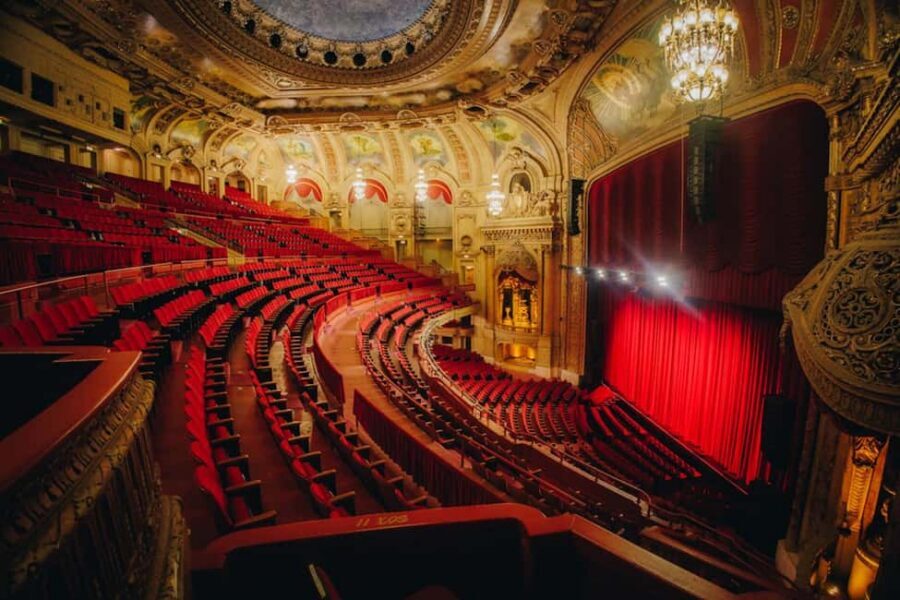
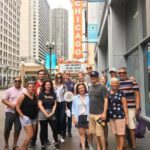
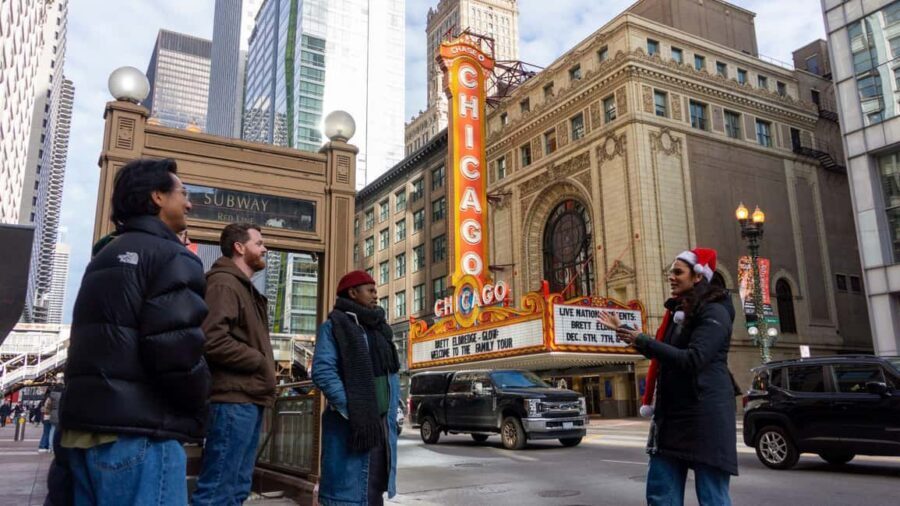
You’ll meet at the Chicago Theatre, right at State and Lake. It’s a smart start point because it puts you immediately in the thick of the Loop—walkable, central, and easy to orient yourself.
From there, the tour connects the dots between streets and the elevated train system. You’ll learn how the elevated tracks helped shape the Loop identity and how Chicago’s transit culture shows up even when you’re just looking up at buildings.
This is where the tour gets more useful than a typical sightseeing stroll. Instead of only naming landmarks, it helps you understand why this area looks the way it does. Once you get that, the skyscrapers and civic buildings feel less random and more intentional.
You can also read our reviews of more tours and experiences in Chicago.

Marshall Field’s to Macy’s on State Street: architecture you can still feel
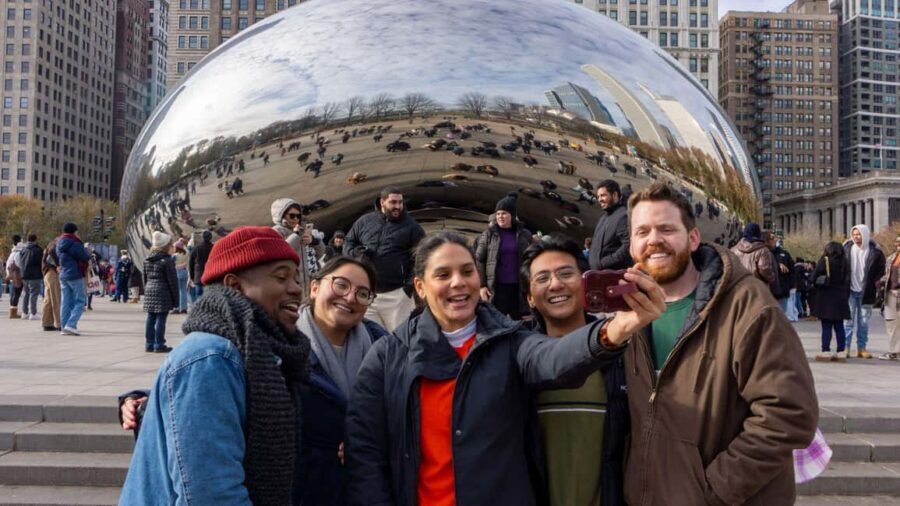
One of the first major stops is Marshall Field’s—now Macy’s—on State Street. The point isn’t just that it used to be a famous store. It’s that you’re seeing a major slice of downtown’s architectural personality, the kind of building that tells you how Chicago wanted to present itself.
You’ll also get a window into how department stores helped define street life. These were more than retail. They were public spaces, status symbols, and city landmarks all at once.
I like that the tour uses this kind of stop to teach you a practical skill: noticing details. When you learn to look for design cues, you’ll recognize styles faster as you move.
Public art in downtown lobbies: Tiffany glass and the surprise of getting indoors
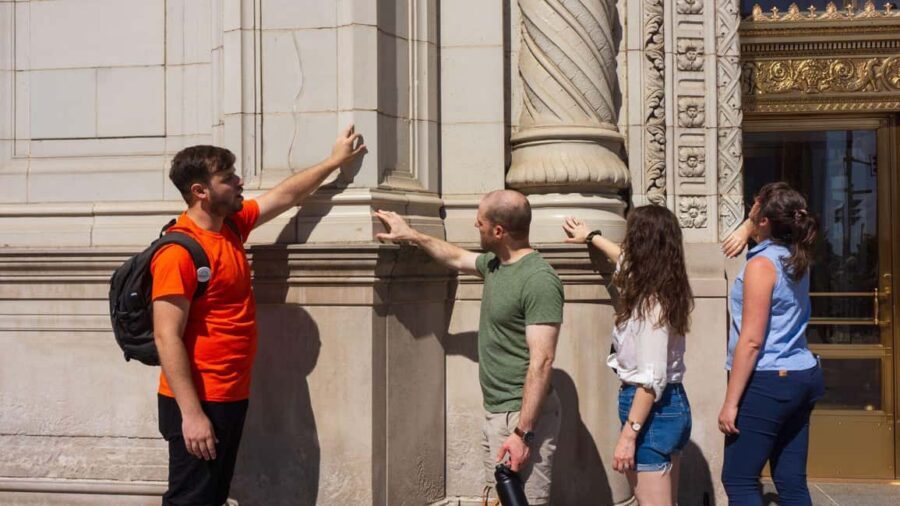
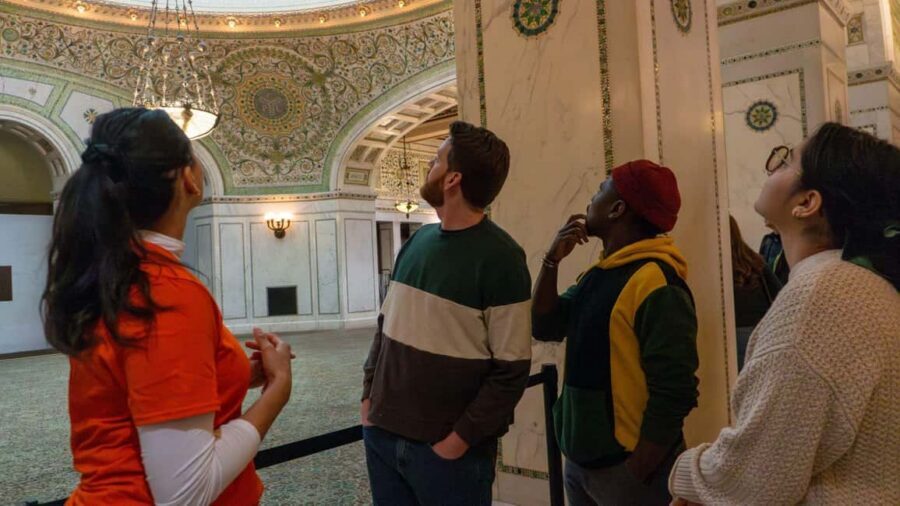
A highlight of this experience is time spent viewing art made with Tiffany glass. You’ll see how carefully colored glass can brighten a city street scene—especially in indoor lobbies and public building spaces the tour is willing to enter.
This matters because Chicago weather can be blunt. In warmer months, you’ll spend more time outside in Millennium Park. In cold or rainy conditions, you’ll get more indoor moments, which keeps the tour from turning into a nonstop shiver.
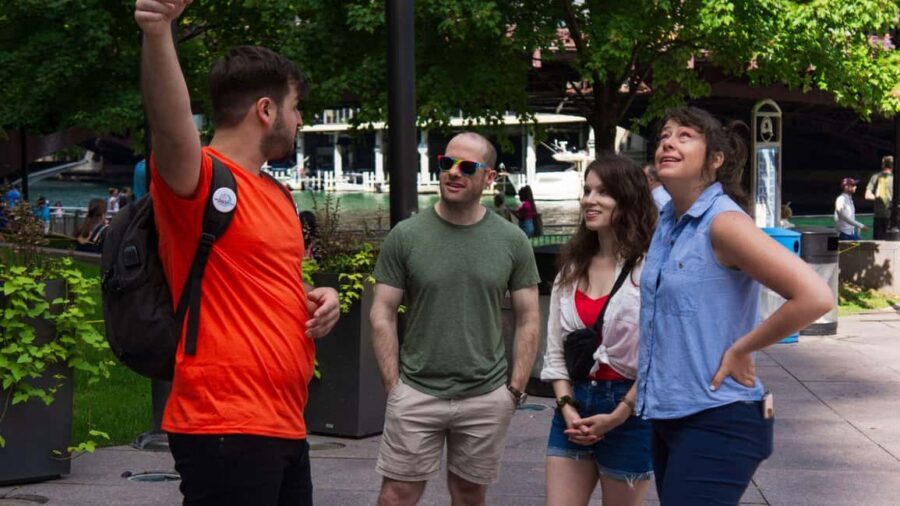
There’s also a small-group feel. One of the best parts of a walking tour is not being one more face in a crowd, and the way the guide involves everyone helps keep the momentum going.
Daley Plaza and Picasso: when art turns a corner into a story
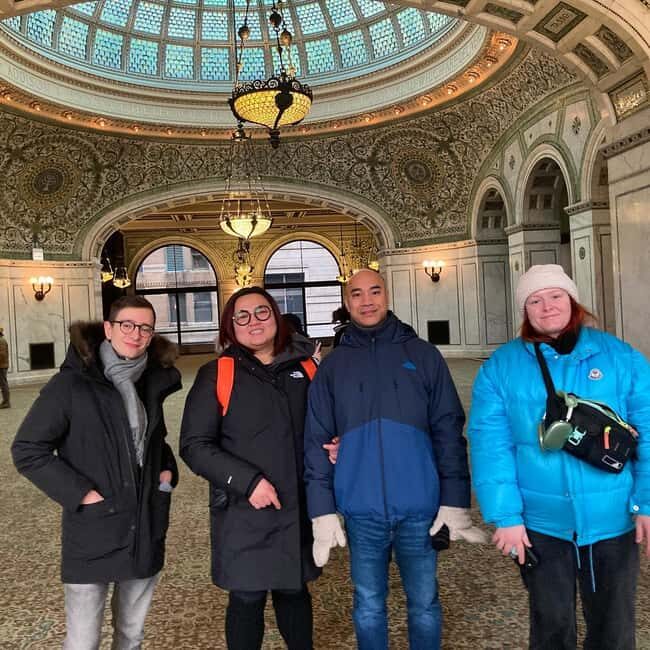
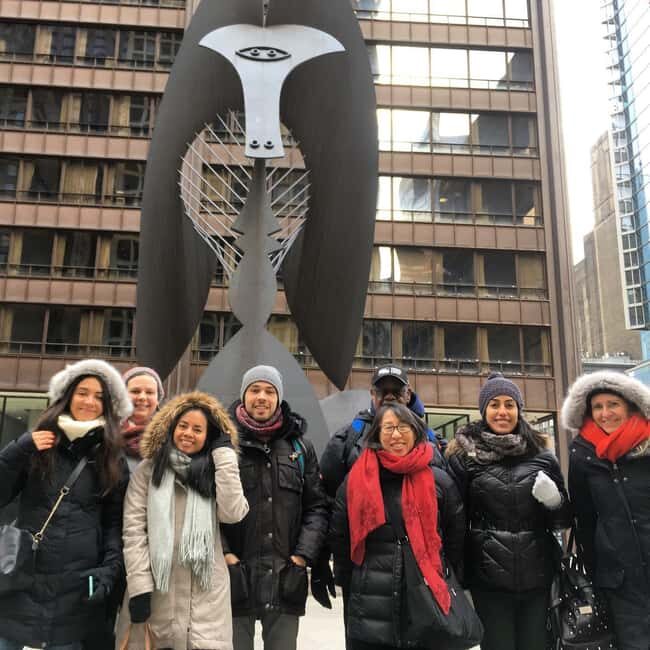
Next up is the Picasso in Daley Plaza. This steel sculpture—gifted to Chicago by Pablo Picasso himself—is the kind of landmark you remember even if you can’t describe it perfectly right away.
The tour uses this stop to explain what public art communicates. It’s not just decoration. It’s a message about modern art, civic identity, and the city’s willingness to put ideas in open space where anyone can see them.
And it’s a good pacing break. Between big buildings and big parks, you get a compact moment that’s easy to process. It also makes a nice change from staring up at skyscrapers.
Millennium Park: Crown Fountain and the real reason people chase The Bean
This is the heart of the outing. Millennium Park is the kind of place where you can wander without getting lost, and the tour keeps you anchored to the highlights without turning it into a rushed checklist.
You’ll see Crown Fountain, with video projections of Chicagoans’ faces that cycle as water cascades. It’s interactive in a way that doesn’t require skill or rules—just look, watch, and enjoy the playfulness of it.
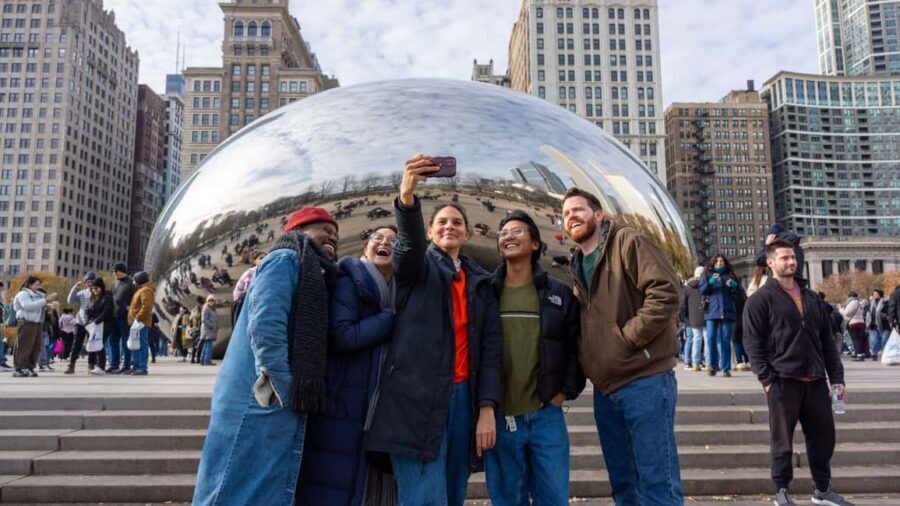
Then comes Cloud Gate, the reflective stainless-steel sculpture affectionately known as The Bean. Yes, people flock here for photos. But the value on this tour is that you learn how it fits into Chicago’s modern identity, and you get a guided moment that makes the stop feel meaningful rather than just crowded.
If you’re coming in winter, this park segment is a good reminder to dress smart. You’ll want layers, because while the tour may shorten time outside depending on conditions, you’re still walking the downtown grid to reach these iconic spots.




The Great Fire and the built-again message in Chicago
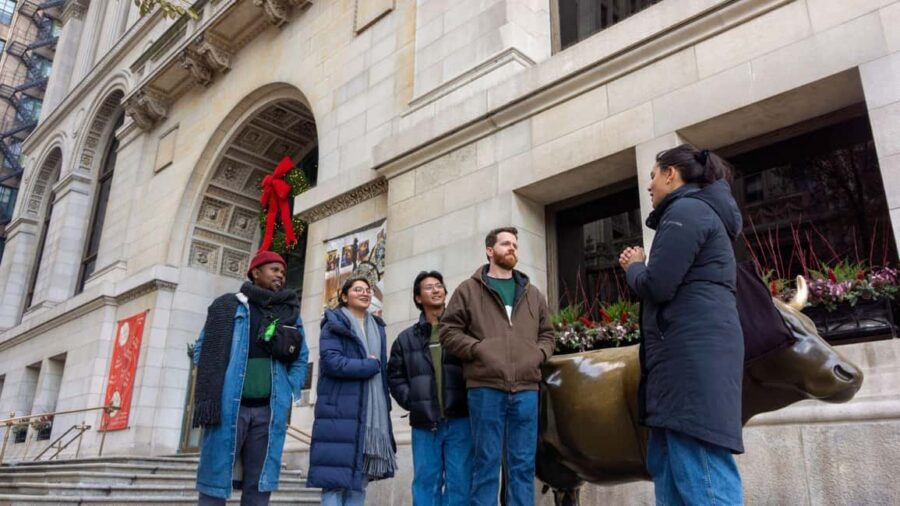
Along the way, you’ll pass landmarks connected to the Great Fire of 1871. This is one of those Chicago facts that’s easy to hear and harder to feel—until you’re standing in a part of downtown shaped by rebuilding.
The tour points out how those post-fire years influenced what you see later: resilience, engineering decisions, and the way Chicago kept moving forward instead of rebuilding timidly.
This section is useful because it changes how you interpret the skyline. You start to notice that architecture isn’t only about style. It’s also about survival, ambition, and problem-solving.
The L and Route 66: why Chicago’s infrastructure belongs in your photos
No Loop tour should ignore transit, and this one doesn’t. You’ll glance at The L and learn why the elevated trains matter to how the city functions and how downtown feels.
Then you’ll see the start of Route 66, marked with a downtown sign. This is another stop that works because it’s both symbolic and practical: Chicago is the launch point for a road-trip myth, and you get the reminder that people have long used this city as a starting line.
I like that the tour treats infrastructure as part of culture, not just transportation. It’s a reminder that cities are built by movement—people, trains, and the constant motion of everyday life.
Art Institute of Chicago: reaching a world-class anchor
Toward the end, the tour reaches the Art Institute of Chicago. Even if you don’t go deep into museum galleries on this specific walk, the stop matters because the Art Institute is one of the city’s cultural centers.
This works well as a closing move. After you’ve seen public art outdoors and architecture all around you, the Art Institute helps connect that street-level creativity to a bigger art world.
And it gives you an easy next step. If the tour has you thinking about art again, you’re already positioned to continue on your own.
Price and weather reality: what $49 buys you in a 2-hour loop
At $49 per person for a 2-hour walking tour, the value comes from three things you actually feel during the experience.
First, you get a professional guide with live commentary from a local. That means you’re not just looking at buildings—you’re learning how to read them.
Second, the tour adapts to weather. The fact that you go to some indoor stops in winter or rain is a real quality-of-life upgrade. It helps keep your time from evaporating into unpleasant conditions.
Third, the format seems designed for attention. The guide engages guests in a way that keeps the pace right, so the 2 hours don’t feel like a blur of random stops.
If you hate walking, this probably won’t be your best match. But if you can do light-to-moderate strolling, it’s a solid use of a morning or afternoon when you want concentrated downtown highlights.
Who should book this Loop and Millennium Park tour (and who should skip)
This is a great fit if you:
- Want architecture plus art, not one or the other
- Like public spaces—parks, plazas, lobbies—where you can pause and look
- Are visiting in winter and want built-in indoor options
- Prefer a guided walkthrough with stories, not just self-guided photos
You might want to skip it or choose another format if you:
- Know you won’t enjoy walking for a full two hours in Chicago conditions
- Prefer a museum-only day without stepping through downtown neighborhoods on foot
In plain terms: this tour is for people who enjoy cities at street level, with context added.
Should you book this Loop & Millennium Park tour?
Book it if you want the fastest way to understand the Chicago Loop: why the train shaped the district, what downtown architecture signals, and why Millennium Park remains a must-see stop.
I’d particularly recommend it for first-timers and winter visitors, because the guide’s plan accounts for cold and rain by adding indoor moments. And if you’re the type who likes photos, you’ll finish with the right payoff: Crown Fountain and Cloud Gate.
If you’re more of a museum-only person, you may prefer a different kind of Chicago day. But for most people, this is a high-impact downtown walk that helps you see Chicago with your brain switched on.
FAQ
Where do I meet the guide for the Chicago Loop tour?
You’ll meet your guide in front of the Chicago Theatre at 175 N. State St., at the corner of State and Lake.
How long is the tour?
The tour lasts 2 hours.
What does the tour cost?
The price is $49 per person.
What’s included in the price?
Included are a professional tour guide, live commentary from a Chicago local, and a 2-hour walking tour that can be customized to Chicago weather with some indoor stops when it’s cold or rainy.
Is gratuity included?
No, gratuity is not included.
Does the tour change depending on the weather?
Yes. It’s customizable to Chicago weather, and you’ll go to some indoor stops when it’s cold or rainy.
What major stops and sights are part of the tour?
You’ll cover the Loop and downtown area, including Marshall Fields (now Macy’s on State Street), Picasso in Daley Plaza, Millennium Park (including Crown Fountain), landmarks connected to the Great Fire of 1871, The L elevated trains, the start of Route 66 downtown, the Art Institute of Chicago, and Cloud Gate (The Bean).
Is the tour guided in English?
Yes, the tour is conducted in English.
Can I cancel if my plans change?
Yes. Free cancellation is available up to 24 hours in advance for a full refund.
Do I have to pay right away?
You can reserve now and pay later, keeping your travel plans flexible.