Your phone turns the Gold Coast into a storybook. This self-guided audio walk mixes local historian narration with real Chicago landmarks, so you’re not just looking at pretty buildings—you’re learning what happened there. Two things I like a lot: the offline GPS maps/audio (so you can keep moving even when signal gets weird) and the lifetime access, which means you can redo the route when you’re back in town.
You’ll start at the Chicago History Museum and work your way toward the evening payoff at Zebra Lounge. The first part is packed with vivid “how did this city get here” moments—dioramas, historic transit tech, and even Abraham Lincoln’s deathbed display—then the tour shifts gears to medicine at the International Museum of Surgical Science. One consideration: the GPS can be a little fussy at certain stretches, so if the screen seems unsure, you’ll want to take a minute to correct it and continue.
In This Review
- Key Things to Know Before You Hit Start
- Why This Gold Coast Audio Walk Works So Well
- Price and What $7.99 Really Buys You
- Starting at the Chicago History Museum: Dioramas, Rail Power, and Lincoln
- The International Museum of Surgical Science: 1917 Mansion Meets Medical Stories
- Gold Coast Side Stories You’ll Notice While Walking
- Zebra Lounge Ending: Piano Nights and a Classic Gold Coast Lobby
- Using VoiceMap and Offline GPS Without Getting Stuck
- Timing: 50 Minutes on Paper, 1.5 Hours in Real Life
- Who Should Book This (and Who Might Skip It)
- FAQ
- FAQ
- How long is the Gold Coast Hidden History audio walk?
- How much does it cost?
- Is the tour available in English?
- Do I need tickets to museums along the route?
- Do I need my own smartphone?
- Will I be able to use the tour offline?
- Is it refundable if I cancel?
- Final Call: Should You Book This Audio Walk?
Key Things to Know Before You Hit Start

- Offline-first navigation: audio and maps download ahead so you can walk without constant data use.
- Local historian voice: the stories are tied to what you can actually see on the street.
- Lifetime access: one purchase, repeat walks whenever you want.
- Three main stop areas with extra story prompts along the route.
- Time budget flexibility: plan around 50 minutes, but give more time if you stop to look.
Why This Gold Coast Audio Walk Works So Well
This is a smartphone walking tour that feels like having a guide, without the schedule pressure. You pick up a route, press play at each section, and keep going at your pace. For me, that’s the point: the Gold Coast is beautiful, but it can also be easy to skim past details. An audio track gives those details a reason to matter.
The setting helps too. You’re in one of Chicago’s most story-rich neighborhoods, and the route ties together civic life, strange-but-fascinating science, and a classic late-night music stop. The best part is that you don’t need special tickets just to learn. The audio is the main event.
This tour is offered in English and designed for most people to participate. It’s also limited in size (max 10), which matters for peace of mind if you’re sharing the experience space with other people at the start/end points.
You can also read our reviews of more walking tours in Chicago



Price and What $7.99 Really Buys You

At $7.99 per person, this is priced like a budget museum add-on—but it’s actually more useful than a one-off entry. You get lifetime access to the specific Gold Coast audio walk, plus the VoiceMap application with offline access to audio, maps, and geodata.
That “lifetime” detail is important. You’re not paying only for one afternoon. You’re paying for a repeatable route you can do in pieces: once for quick orientation, another time when you want to linger, or a later revisit when you want to match the stories to whatever you’re already curious about.
You should also know what you’re not paying for. You’ll bring your own smartphone, and museum or attraction tickets along the way are not included. That’s fine, because the audio still stands alone—but it helps to plan if you want to go inside any places.
Starting at the Chicago History Museum: Dioramas, Rail Power, and Lincoln
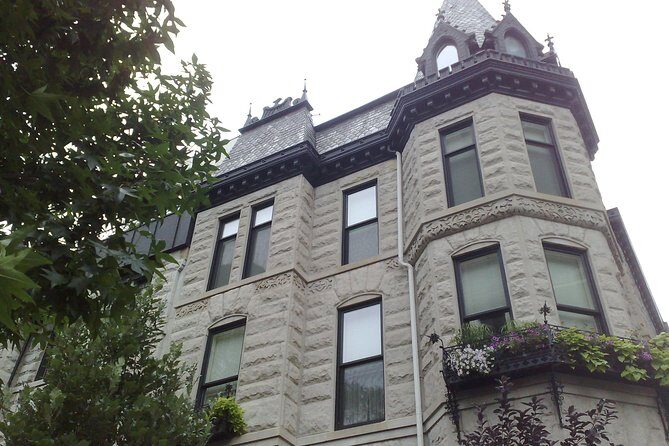
Your walk begins at Chicago History Museum, 1601 N Clark St. This is a strong launch point because it gives you context immediately. You’re set up to understand how Chicago went from early frontier outpost to the city people recognize today.
Inside (or at least right at the doorstep experience), you’ll want to focus on a few standout story triggers:
- Newly restored dioramas that show Chicago’s rise over time.
- The story of the first-ever overhead rapid transit line in Chicago and how it moved people to the World’s Columbian Exposition.
- The museum’s Lincoln connection, including Abraham Lincoln’s deathbed display.
Even if you don’t plan to spend hours inside, the audio helps you look smarter. You’re not wandering; you’re connecting a landmark to a bigger pattern—transportation, power, and politics. That makes the neighborhood walk feel less random and more like a guided path through cause-and-effect.
A practical note: if you’re the type who likes to read everything, you’ll blow past the suggested time quickly. The best approach is to treat the museum as your “orientation checkpoint,” then commit to moving.
The International Museum of Surgical Science: 1917 Mansion Meets Medical Stories
Next, the route shifts from civic history to something that can send a chill up your spine. The International Museum of Surgical Science is housed in a 1917 mansion built as a Chicago-style interpretation of the Petit Trianon idea from Versailles. That mix matters: you get a fancy architectural shell, then the subject matter turns very practical and very human.
This is where the audio really earns its keep. The exhibits focus on medicine from both Eastern and Western perspectives, so the stories aren’t just about one worldview. If you’re interested in how people tried to heal before modern tech, you’ll appreciate the way the tour’s tone changes here—from big-city growth to the body and its care.
What to watch for: the location is part of the story. Since the mansion has a specific design inspiration, it adds a second layer to what you’re seeing: not only the museum content, but the way Chicago adapted European style for its own ambitions.
If you want to go inside for real (not just listen), plan extra time. The audio can carry you through the exterior story beat, but the full effect is better once you spend time with the exhibits.
Gold Coast Side Stories You’ll Notice While Walking
The tour doesn’t only rely on “three big stops.” It also encourages attention to details you’d otherwise miss—especially the kind of stuff you spot at the curb, in adjacent buildings, or in nearby architectural corners.
Along the route, the audio connects you to:
- the idea of Chicago’s public graveyard history and the Couch Mausoleum, described as something that survived the Great Chicago Fire,
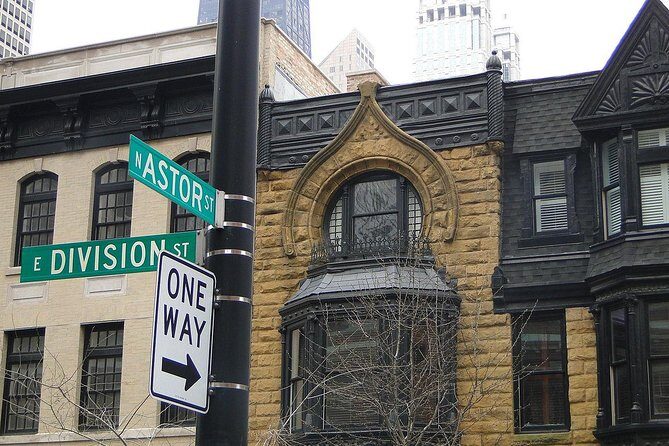
- a wood plank street experiment on Astor, which is the kind of early urban-innovation detail that explains why streets and foundations evolved the way they did,
- and the Three Arts Building as part of the neighborhood’s 19th- and 20th-century growth.
From the same route flow, you also get gentle prompts to take breaks in places that feel part museum, part hangout—like the 3 Arts Cafe inside Restoration Hardware (the idea being that you can rest without breaking the learning mood). This works especially well if you’re walking solo. You’re not stuck with a strict meal plan.
If you’re into music, the audio also sets you up for the last stop so the ending doesn’t feel like a random bar choice. It feels like the final chapter.
You can also read our reviews of more guided tours in Chicago





Zebra Lounge Ending: Piano Nights and a Classic Gold Coast Lobby
Your tour ends at Zebra Lounge, Canterbury Court Apartments, 1220 N State Pkwy. Ending here makes sense because the Gold Coast is about more than architecture. It’s also about the lifestyle—especially the kind of place where music is a daily ritual.
Zebra Lounge sits in the lobby of a vintage apartment building, and it has live piano players seven nights a week since 1929. That’s the kind of continuity that makes a city walk feel real. Even if you don’t stay long, it’s a fun payoff to hear the audio story lead into an atmosphere that’s been around for decades.
The audio also leans into the mood: think singing along and ordering something like a Lemondrop. One practical thing to keep in mind: this is a bar/lounge, so go with the assumption that your experience may depend on the night’s setup. The tour ending time frame is flexible, though, since the location listing shows late hours daily (12:00 AM–11:59 PM).
Using VoiceMap and Offline GPS Without Getting Stuck
This is the section that can make or break a DIY walk. The tour’s big promise is that offline access covers audio, maps, and geodata. In practice, that means you should set yourself up before you leave Wi-Fi.
Here’s how to make this smoother:
- Download the tour content in the VoiceMap app while you still have signal.
- Bring a charged phone and a way to keep the screen on (battery drains faster when you’re using GPS).
- Use earbuds or keep volume low if you’re in a crowded museum area.
Now, the honest part: GPS tracking can occasionally lose your exact position. When that happens, you don’t need to panic or redo anything. The fix is usually simple: zoom in on the map, figure out which way to continue, and then restart the flow from the correct spot. This kind of correction is quick if you’re paying attention as you walk.
If you want a confidence boost, use landmarks. Don’t rely only on the dot on the map. Street signs, building corners, and museum frontage are your best “reality checks.”
Timing: 50 Minutes on Paper, 1.5 Hours in Real Life
The tour is listed at about 50 minutes, but that’s a baseline for moving steadily. If you want to pause, look up, and actually take in what the audio is pointing at, plan more time.
A good rule of thumb: if you treat it like a walking tour with brief glances, you can likely stay near the time estimate. If you stop inside at least one place, or you want photos and detours, give yourself around 90 minutes.
Also, don’t underestimate the “at the start” effect. If you spend even 10–15 minutes orienting at the Chicago History Museum trigger points, you’ll feel the time add up quickly. Better to over-allocate than to rush at the end when Zebra Lounge is where you’re aiming to land.
Who Should Book This (and Who Might Skip It)
Book this if you:
- like history that’s tied to specific buildings and street-level details,
- want a budget-friendly way to connect multiple neighborhood highlights in one walk,
- prefer self-guided pacing over group tours,
- and enjoy the idea of revisiting later thanks to lifetime access.
Skip it if you:
- hate tech-based tours and don’t want to manage an app,
- only want “all-in-one” museum tickets included in the price,
- or you only have a tight schedule where a navigation hiccup would feel stressful.
This tour is best for couples, solo walkers, and anyone who wants to learn without committing to a full guided tour day.
FAQ
FAQ
How long is the Gold Coast Hidden History audio walk?
It’s listed at about 50 minutes.
How much does it cost?
It costs $7.99 per person.
Is the tour available in English?
Yes, it’s offered in English.
Do I need tickets to museums along the route?
Tickets or entrance fees are not included, so you’d need to pay separately if you want to enter any museums or attractions.
Do I need my own smartphone?
Yes. A smartphone is not included.
Will I be able to use the tour offline?
Yes. The download includes offline access to audio, maps, and geodata.
Is it refundable if I cancel?
No. It’s non-refundable and cannot be changed for any reason.
Final Call: Should You Book This Audio Walk?
Yes, if you want a low-cost way to turn Gold Coast streets into a guided story route. The pricing is hard to beat for lifetime access, and the lineup—Chicago History Museum context, surgical science in a 1917 mansion setting, and a piano-night finish at Zebra Lounge—gives your walk variety without feeling scattered.
The main reason to hesitate is app navigation stress. If you know you’ll be patient when GPS glitches happen, you’ll probably love this. If you need everything to be dead simple with zero correction time, consider a fully guided option instead.