REVIEW · WALKING TOURS
Retro River North Walking Tour
Book on Viator →Operated by Tours by Doorways Of Chicago · Bookable on Viator
River North changes fast, but the past stays put. This tour stitches together vintage neon and serious architecture in a tight, easy loop.
I like that the walk mixes big-name landmarks with “wait, how did I miss that” storefronts. I also love the guide’s focus on design details and the way each stop connects to Chicago’s story, from Lincoln-era worship to Tiffany-made bronze doors.
One thing to plan for: parts of the route are music-and-shopping stops where admission and alcohol aren’t included, so you’ll need to decide on the fly how much spending you want.
In This Review
- Key things I’d watch for on this walk
- Starting on LaSalle, ending by the Chicago River
- What makes this tour feel like time travel
- Stop 1: St. James Cathedral and the Lincoln connection
- Stop 2: The Richard H. Driehaus Museum in the Nickerson House
- Stop 3: The Murphy Auditorium and the Tiffany doorways
- Stop 4: Tree Studios Complex and the Ivy Room story
- Stop 5: P.O.S.H. and the Paris-like flea market vibe
- Stop 6: Redhead Piano Bar and its vintage neon sign
- Stop 7: Hard Rock Cafe Chicago and the guitar-lit exterior
- Stop 8: House of Blues Chicago and the Unity in Diversity idea
- Price and value: why free can still be a smart buy
- Tips to make the most of the 2-hour window
- Who this tour is best for
- Should you book the Retro River North Walking Tour?
- FAQ
- How long is the Retro River North Walking Tour?
- What time does the tour start and where is it located?
- Where does the tour end?
- Is the tour free?
- What’s included with the tour?
- Which stops are not included for admission?
- Are alcoholic beverages included?
- Do I need a printed ticket?
- Is the tour group small?
- What if the weather is bad or the tour can’t run?
Key things I’d watch for on this walk
- Vintage signs you can actually photograph across River North streets
- Small group size (max 8) that keeps the pace conversational
- Museum and mansion stops that are free to enter
- Murphy Auditorium’s cast bronze Tiffany doors plus interior photos during the tour
- Tree Studios and the Ivy Room legacy, tied to more than 500 artists
- Music venues in one route, with costs depending on what you choose to do inside
Starting on LaSalle, ending by the Chicago River
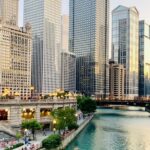
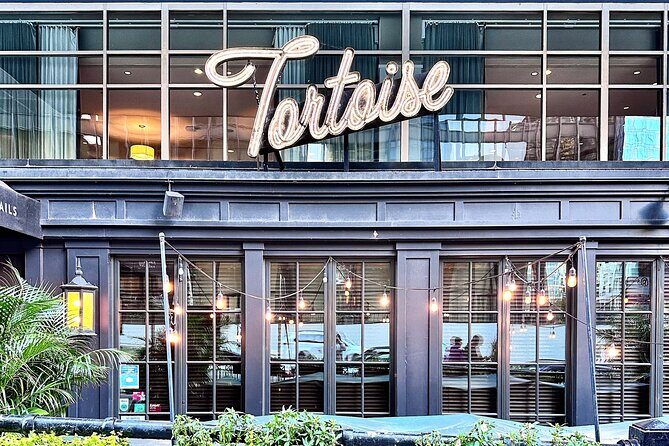
This Retro River North walk is built for an evening vibe. You start at 731 N La Salle Dr at 6:00 pm, then finish at Tortoise Supper Club, 350 N State St, near the Chicago River by Marina City.
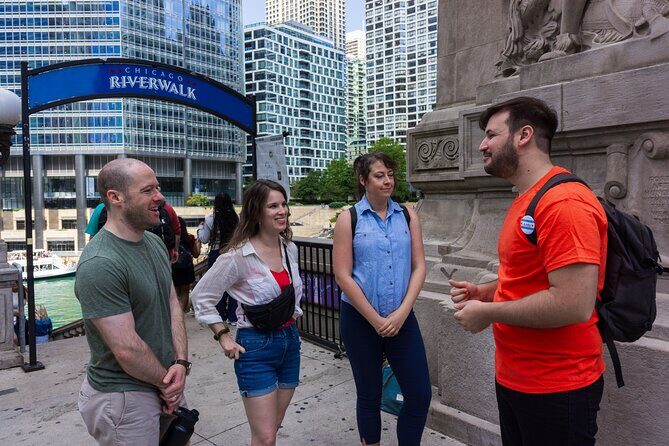
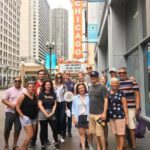
The tour runs about 1 hour 40 minutes to 2 hours, and the group is capped at 8 people. That matters here: you get time at each stop for photos and for the guide to point out what most people miss when they’re just passing through.
You’ll also use a mobile ticket, and you get access to historical photos of each stop in a free app. That’s a smart bonus, because Chicago buildings can look different depending on the angle and the decade you’re imagining.
You can also read our reviews of more walking tours in Chicago

What makes this tour feel like time travel
The core idea is simple: don’t separate architecture from neon. One moment you’re learning how a church endured disaster; the next you’re looking at a vintage sign that locals actually still use.
This tour also leans hard into stories tied to place. Even when a stop isn’t famous for a sign, the guide ties it back to Chicago’s growth, setbacks, and big-building eras—so your route feels like a guided timeline, not a list of photos.
If you care about design, you’ll be in the right place. The guide on these walks (often Ronnie) is known for a sharp eye for unique buildings and for connecting history to architecture in plain language. You end up looking up more than usual.
Stop 1: St. James Cathedral and the Lincoln connection
St. James Cathedral is your opening “time machine.” The big hook is that you can pray in the same space as Abraham Lincoln, who worshipped at St. James shortly after being elected President in 1860.
After the Civil War, the church grew and expanded its look—growth that led to a larger, redecorated building. Then came the Great Chicago Fire. A few weeks after the redesigned church was formally rededicated in 1871, the fire erupted and left nothing but the stone walls and the bell tower.
One vivid detail to listen for: the bell tower’s bells gave warning to the neighborhood as the fire spread. You’re not just seeing an old building—you’re learning how it served the city in real time.
Practical note: this is a free stop with an admission ticket (free) and about 15 minutes. If you’re photographing, be respectful of the worship space.
Stop 2: The Richard H. Driehaus Museum in the Nickerson House
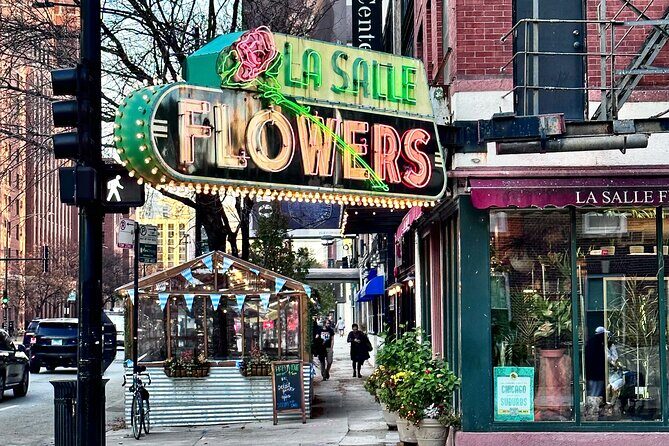
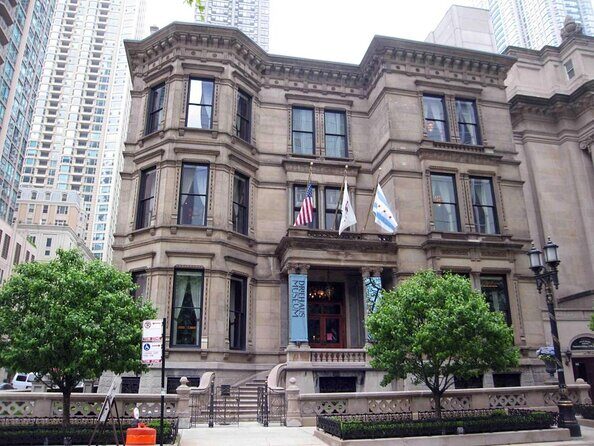
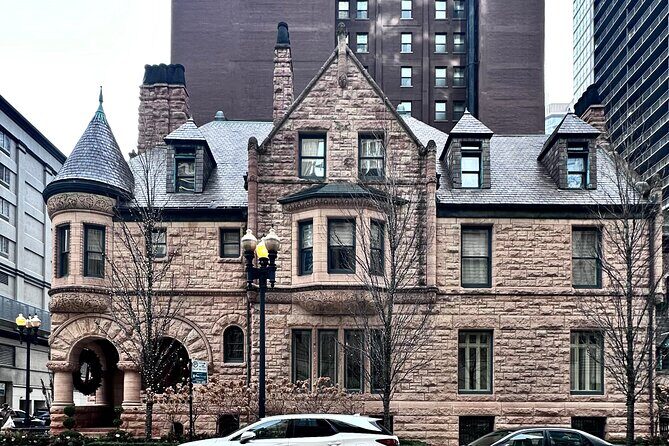
Next you step into the Richard H. Driehaus Museum, which is housed inside the Samuel M. Nickerson House. This mansion was built in 1883 for Nickerson, a wealthy Chicago banker.
The design credit is a nice architecture payoff: it was designed for Nickerson by Edward J. Burling of Burling & Whitehouse. Construction took four years and cost $450,000—reported as the most expensive and elaborate private residence in Chicago when it was completed in 1883.
What I like about making this a walking-tour stop is that it changes your sense of scale. Outside, River North can feel commercial and fast. Inside, the Nickerson House interior shifts to marble, onyx, carved woods, glazed tiles, and stained glass—and you’ll be able to spot original furnishings from the Nickerson era during the time you’re there.
Practical note: another free entry stop (about 15 minutes). Don’t rush: even a quick look at the materials helps you understand why Chicago elites invested so heavily in homes during that era.
Stop 3: The Murphy Auditorium and the Tiffany doorways
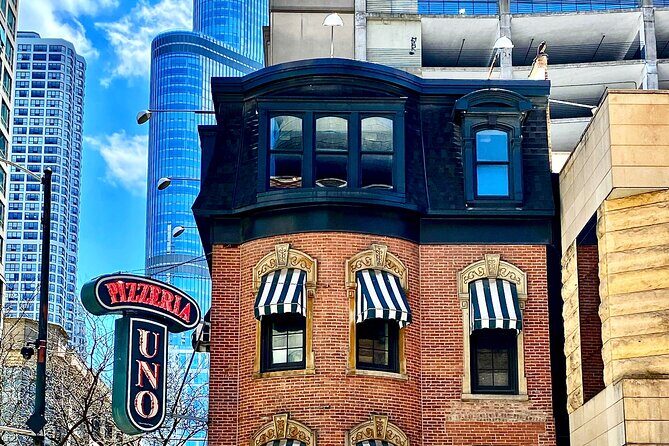
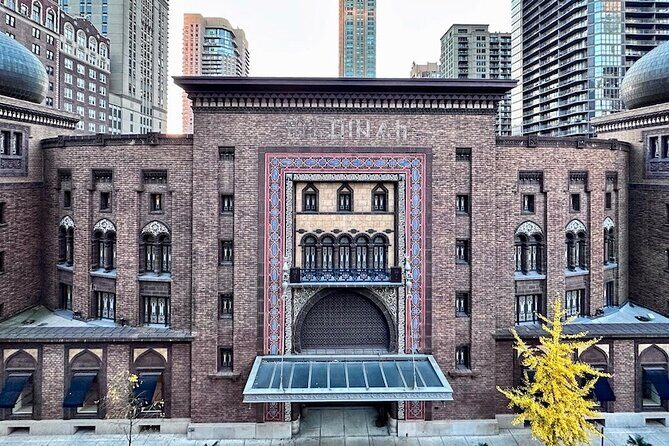
From the mansion world, you pivot to a performance-and-public-building masterpiece: The Murphy Auditorium. This six-story building spans about 32,000 square feet, built between 1923 and 1926 by the American College of Surgeons.
Architects here were Benjamin Marshall and Charles E. Fox—and their name pops up elsewhere. The same duo also designed the Edgewater Beach Apartment building, often called the Pink Palace.
You’ll also get a “recent-history” detail: Murphy Auditorium was added to the Driehaus Museum’s footprint in 2022. So this isn’t only about old Chicago; it’s about how institutions keep re-using and re-framing historic spaces.
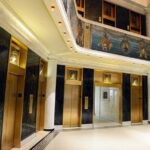
The big attention grab: the building features a pair of cast bronze doors made by Tiffany Studios. It’s the kind of detail that makes you stop mid-walk and stare, even if you’re not a museum person.
You’ll also hear that photos of the interior will be accessible during the tour. That’s useful when you’re on a schedule—Murphy becomes a visual story, not something you only get if you planned a separate visit.
Practical note: this is another free stop with about 15 minutes. Expect the real value to be in the doorways and the architecture talk.


Stop 4: Tree Studios Complex and the Ivy Room story
Tree Studios Complex is where River North gets artistic. These studios were commissioned in 1894 by philanthropist and arts patron Judge Lambert Tree and his wife Anna Field Tree, daughter of Marshall Field.
The idea wasn’t just to build something pretty—it was to create a working home. Tree Studios were designed as artists’ residences, and they’ve housed over 500 artists over time.
Inside this complex is the Ivy Room, which is especially famous as an event venue—particularly for weddings. Even if you never book a wedding here, hearing how a space like this became a social hub helps you understand why artists’ neighborhoods matter to city life.
One fun way to picture the creative output: the studios have been home to artists including Albin Polasek, John Storrs, illustrator J. Allen St. John, muralist John Warner Norton, painters Ruth Van Sickle Ford, John Singer Sargent, and Pauline Palmer, plus actors Peter Falk and Burgess Meredith.
Practical note: this is another free stop (about 15 minutes). If you like art history, you’ll probably want just a bit more time—so let yourself soak in the scale while you can.
Stop 5: P.O.S.H. and the Paris-like flea market vibe
The tour then shifts into retail that feels like a story. P.O.S.H. opened in 1997 with a mission to offer something different from mass-produced stuff.
Instead of “same same everywhere,” the shop focuses on authentic pieces—especially vintage hotel and estate silver, restaurant china, and dinnerware. There’s also an ever-changing mix of European flea market finds.
What makes this stop work on a walking tour is the atmosphere. You step inside and get a Parisian-type flea market feel, plus you can catch a glimpse toward the courtyard of the Tree Studios from the back.
This is a good moment to slow down for photos and for browsing, but keep in mind you’re still on a timed route. If you see something you truly want, consider what you’d do with it afterward—this kind of shopping is fun on the day, but not always easy to carry.
Practical note: this stop is free and runs about 15 minutes.
Stop 6: Redhead Piano Bar and its vintage neon sign
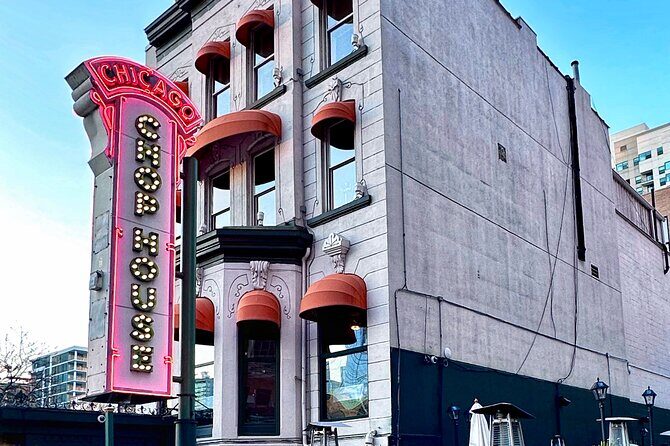
Now you hit the neon-and-music part of the route. Redhead Piano Bar is known for a cool vintage neon sign and for being a neighborhood mainstay on Ontario Street since 1993.
This is a cocktail piano bar with a strong old-school personality, dressed in yesteryear memorabilia. The big practical point: it features nightly live piano music, which means the bar isn’t just visual—it’s a sound experience too.
If you want your tour to feel more like an evening plan than a museum hop, this is where you start thinking about lingering.
Costs to watch: admission is not included here. The tour price is free, but anything you do inside is on you. Also, the tour doesn’t include alcoholic beverages.
Stop 7: Hard Rock Cafe Chicago and the guitar-lit exterior
Next is Hard Rock Cafe Chicago, recognizable from a block away by the giant iconic guitar that illuminates the parking lot.
For decades, Hard Rock Cafe locations have combined dining, shopping, and live music history under one roof. Here, you’ll also see the brand’s “music memorabilia” angle: Hard Rock International is described as the world’s largest curator of music memorabilia, and the cafe walls are lined with pieces linked to artists including Billy Joel, Buddy Guy, Jimi Hendrix, and Prince.
This stop is a different kind of architecture study. Instead of cornices and stonework, you’re looking at how a big entertainment company builds a themed environment—and how that fits into River North’s identity.
Costs to watch: admission is not included here. If you’re staying purely with the tour for sights, you can still enjoy the exterior and photo moments without turning it into a full dining stop.
Stop 8: House of Blues Chicago and the Unity in Diversity idea
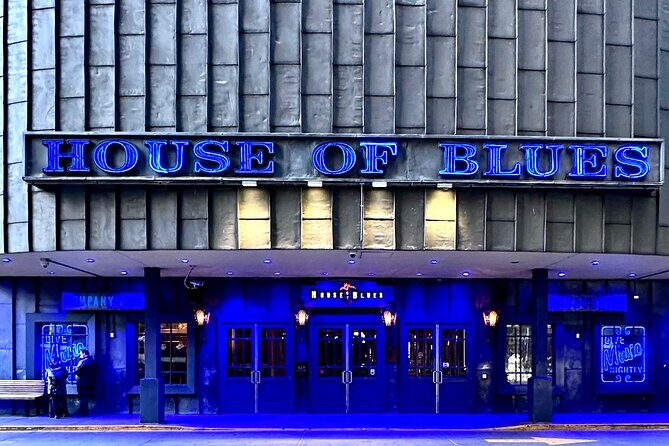
You finish the big “entertainment” stretch at House of Blues Chicago. The venue has a backstory centered on its mantra: Unity in Diversity.
The information here isn’t about marketing fluff. The tour framing emphasizes how the organization’s cultural development has been guided by ideas like peace, love, community, and acceptance—and how those themes keep gaining meaning.
The venue also has a stated commitment to advocate for human expression, racial equality, and spiritual harmony, using its venues and platform to push those messages forward.
If you like your nightlife with purpose, this stop adds a moral lens to the neon-and-music mood. If you’re more into design and signs, it still works as a “how a building becomes a message” stop.
Costs to watch: admission is not included.
Price and value: why free can still be a smart buy
The tour is listed at $0.00 per person, which is hard to beat. The value comes from how much you get that would normally cost you time and money: you get a string of major Chicago landmarks, including free entry spots like St. James Cathedral and the Driehaus Museum and the mansion it occupies.
Even the “not included” stops are part of the River North vibe. You’re not paying to see them in the first place—you’re paying with your time, which is the point of a walking tour. If you skip the places where entry or purchases matter, you still come away with the architecture and neon story.
Just plan for one reality: the tour doesn’t include alcoholic beverages, and admission for the entertainment venues at the end isn’t part of the included value. So the price is free, but your final spending depends on how long you want to stay inside each spot.
Tips to make the most of the 2-hour window
- Wear comfortable shoes. This is a walking route with about 1h40–2h total time and a moderate fitness level.
- Use your phone early. The tour includes historical photos in a free app, and it’s easiest to refer to them as you move.
- Focus on details during each 15-minute stop. Most of the best photo angles come from small changes in perspective—especially around signage and doorways.
- If you’re the type who wants nightlife after, know the ending is at Tortoise Supper Club. If you go for jazz afterward, food and beverages are not included with the tour ticket.
Who this tour is best for
This is a great fit if you want River North without doing a solo research project. It’s especially good for people who:
- love vintage neon and storefront character
- enjoy architecture with story context
- want an evening plan that blends museum-style stops with real Chicago night energy
- prefer small groups, not herd movement
It’s also a nice choice if you’re not sure which “Chicago must-sees” are worth your time. This route uses free entry stops to let you sample several kinds of landmarks in one evening.
Should you book the Retro River North Walking Tour?
I’d book it if you like your Chicago in layers: neon signage, historic interiors, and building design details tied to real events. The free price makes it easy to try, and the structure keeps it from turning into a long slog.
I would hesitate only if you strongly prefer fully paid-included attractions where nothing costs extra at the end. Here, a few entertainment stops have admission not included, so your budget depends on whether you want to step inside and order something.
If you can line up decent weather, you’re set. The experience requires good weather, and if it’s canceled due to poor weather you’ll be offered a different date or a full refund.
FAQ
How long is the Retro River North Walking Tour?
It runs about 1 hour 40 minutes to 2 hours.
What time does the tour start and where is it located?
The tour starts at 6:00 pm at 731 N La Salle Dr, Chicago, IL 60654.
Where does the tour end?
It ends at Tortoise Supper Club, 350 N State St, Chicago, IL 60654, near the Chicago River on State Street by Marina City.
Is the tour free?
Yes. The price is listed as $0.00 per person.
What’s included with the tour?
You get historical photos of each stop in a free app.
Which stops are not included for admission?
Redhead Piano Bar, Hard Rock Cafe Chicago, and House of Blues Chicago list admission ticket not included.
Are alcoholic beverages included?
No. Alcoholic beverages aren’t included.
Do I need a printed ticket?
No. The tour uses a mobile ticket.
Is the tour group small?
Yes. It has a maximum of 8 travelers.
What if the weather is bad or the tour can’t run?
It requires good weather. If it’s canceled due to poor weather, you’ll be offered a different date or a full refund. It’s also subject to a minimum number of travelers; if that minimum isn’t met, you’ll be offered a different experience/date or a full refund. The experience is non-refundable and can’t be changed for any reason.