REVIEW · GUIDED
Chicago Riverwalk Self-Guided Walking Tour
Book on Viator →Operated by History with Action · Bookable on Viator
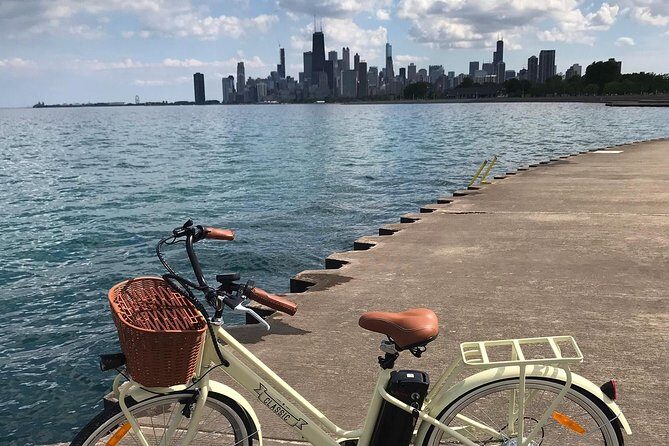
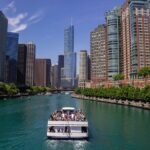
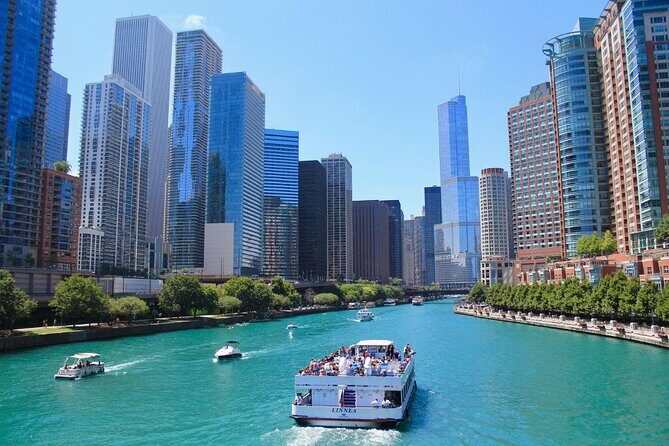
Chicago’s Riverwalk feels like a moving museum. This self-guided smartphone tour strings together bridges, skyscrapers, and memorials into one easy walk. You get stories at each spot, with offline GPS maps so you’re not stuck hunting for the next stop.
What I like most is how it keeps things hands-free. The audio plays on its own when you reach each location, so you can focus on the river views instead of tapping your phone every minute. I also like the value angle: lifetime access with no expiry means you can reuse it on future Chicago trips.
One thing to think about: you’ll be walking. The route is designed for a relaxed pace, but it’s still an outdoor stroll from stop to stop, so wear good shoes and plan to spend real time outside.
In This Review
- Quick hits on the Chicago Riverwalk audio experience
- Price and value: $14.99 for a year of river-level narration
- Offline GPS and hands-free listening with Action’s Tour Guide App
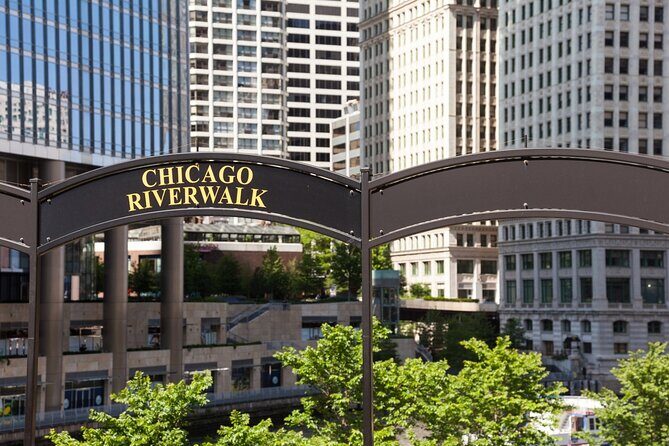
- Your exact walking plan: start at 99 Chicago Riverwalk
- Stop-by-stop: 12 landmarks from the Wrigley Building to NBC Tower
- Stop 1: Wrigley Building
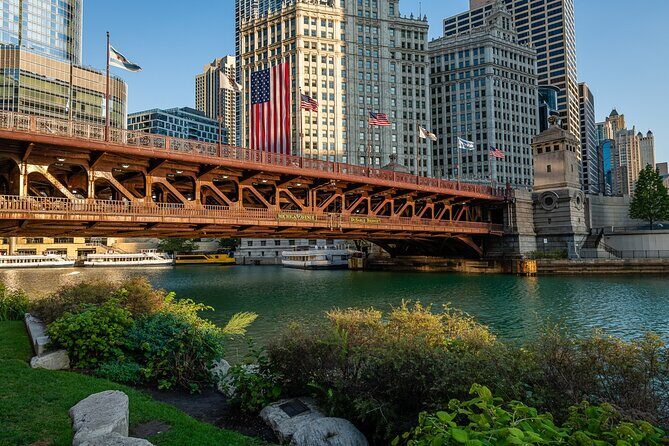
- Stop 2: Michigan Avenue Bridge (DuSable Bridge)
- Stop 3: 401 N Wabash Ave
- Stop 4: Vietnam Veterans Memorial
- Stop 5: Marina Towers Condominum Association
- Stop 6: Dearborn Street Bridge
- Stop 7: 325 N La Salle Dr (Encyclopedia Britannica headquarters)
- Stop 8: Merchandise Mart
- Stop 9: The McCormick Bridgehouse & Chicago River Museum
- Stop 10: Tribune Tower
- Stop 11: William P. Fahey Bridge (Columbus Drive Bridge)
- Stop 12: NBC Tower
- Themes you will hear: bridges, engineering, and city memory
- Timing tips: when to walk and how long to spend
- Who should do this Chicago Riverwalk tour
- Should you book this self-guided Riverwalk tour?
- FAQ
- How much does the Chicago Riverwalk self-guided walking tour cost?
- How long does the tour take?
- Does it work offline?
- Where does the tour start and end?
- Do I need to buy tickets for the stops?
- What do I need to run the tour on my phone?
- What is the daily time window for the tour area?
Quick hits on the Chicago Riverwalk audio experience
- Offline GPS maps so the tour keeps working when cell service gets spotty
- Location-based audio that starts as you arrive at each landmark
- Lifetime access, no expiry for the one-time purchase price
- A clean 12-stop route from Wrigley to NBC Tower with easy photo opportunities
- Free-to-view stops listed along the walk, so you usually skip ticket hassles
Price and value: $14.99 for a year of river-level narration
For $14.99 per person, this is really about buying time and context. You’re paying for a guided-feeling experience without paying for a live guide, and without needing any timed entry tickets for the landmarks described.
The best value detail is the access policy: your purchase includes new, lifetime access, no expiry. That changes the math. If you’re the type who likes to return to a city for different seasons (summer river lights, spring photos, winter skyline looks), you’re not re-buying the tour next time.
Duration also helps value. The loop is roughly 1 to 2 hours, which is perfect for packing into a day where you also want to explore on your own. If you finish quickly, you can just keep wandering beyond the last stop.
You can also read our reviews of more walking tours in Chicago

Offline GPS and hands-free listening with Action’s Tour Guide App
This tour runs through Action’s Tour Guide App. After booking, you get an email and a text with setup instructions and a password, and you’ll use that password inside the app to unlock the tour. The key practical tip: you must download the tour while you’re on strong Wi‑Fi/cellular. After that, it’s designed to work offline.
On the walk, you don’t fight with screens. You open the app on-site, choose the correct tour direction if prompted, and then go to the starting point. After that, audio cues kick in automatically as you reach the next story.
You’ll get the best results with headphones/earbuds. If you’re traveling with someone, you can even share the experience by splitting headphones and running the tour on one device, which is a nice cost-saver for couples.
The phone requirements are spelled out for navigation: iPhone iOS 15+, Android version 9+, or an iPad/tablet with GPS and cellular connectivity.
Your exact walking plan: start at 99 Chicago Riverwalk
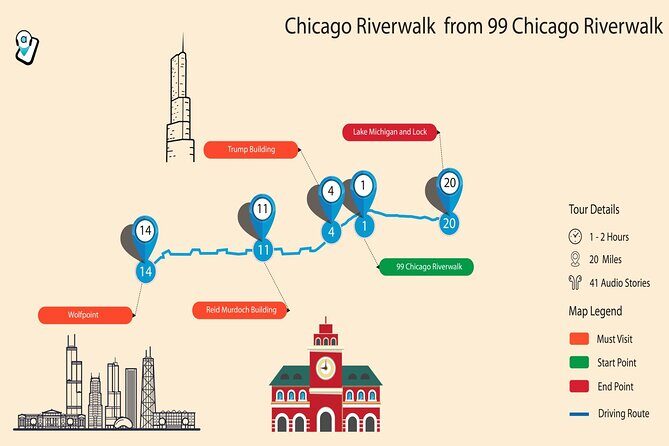
The tour starts at 99 Chicago Riverwalk and ends at the River Esplanade. There’s no meeting person at the beginning; you just arrive, start the app, and begin at the first audio point.
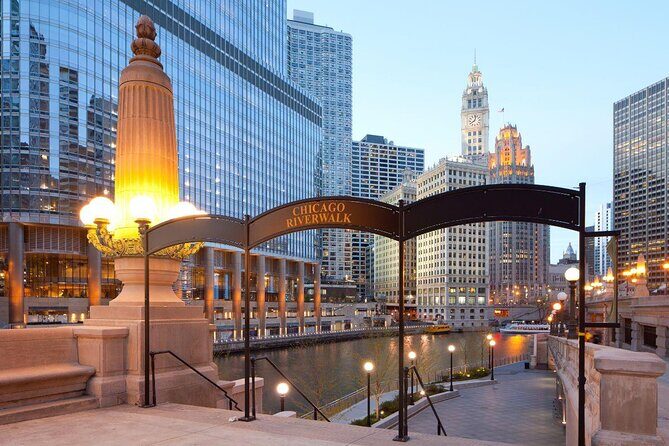
You also get a wide daily window: 6:00 AM to 9:00 PM. That matters because the Riverwalk changes a lot through the day. Early morning gives calmer views. Later in the evening, the skyline and bridge lines look sharp for photos.
Because the audio is location-based, your best move is to follow the route and speed limits. If you drift far off course, your phone may lose the connection between where you are and the next story cue. Staying on track keeps the timing smooth.
Stop-by-stop: 12 landmarks from the Wrigley Building to NBC Tower
You’ll hit 12 stops, with about 5 minutes per stop. That’s not a strict rule, but it’s a good pacing guide for photos, quick looks up and down the river, and moving on when the story ends.
Stop 1: Wrigley Building
The Wrigley Building is the kind of Chicago landmark you spot even before you get close. It’s a landmark terra cotta building with a huge clock tower, named for William Wrigley, Jr., who made his fortune off chewing gum. It’s one of those stories that makes a skyline detail feel human.
Right nearby, the tour also points you toward the Hotel InterContinental area, which includes an observatory inside. Even if you don’t go up, the audio helps you understand why this stretch is such a classic first stop for architecture lovers.
Practical tip: take a minute to look across and up. The building’s details reward standing still for a moment before you move on.
You can also read our reviews of more guided tours in Chicago






Stop 2: Michigan Avenue Bridge (DuSable Bridge)
This is where the Riverwalk starts feeling more like a transportation corridor and less like a promenade. The Michigan Avenue Bridge, also called the DuSable Bridge, is architecturally beautiful, but the tour goes beyond the postcard view.
You’ll hear about the flags on the bridge and why they matter historically. If you care about how cities remember people and events, this is a neat “wait, look closer” moment.
Quick drawback: bridges mean open sightlines and wind. If it’s chilly or windy, bring layers even in shoulder season.
Stop 3: 401 N Wabash Ave
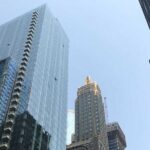
Next up is the enormous glass tower at 401 N Wabash Avenue. The audio frames it with real scale: 1,399 feet tall and 98 stories, making it one of the tallest buildings in the country.
The story also connects architecture techniques across the world by pointing out that it uses the same building technique as the Burj Khalifa in Dubai. That kind of connection is great for turning skyline facts into a bigger understanding of engineering.
Practical tip: keep your eyes moving. This stop is best as a “look up, then back down at the river line” moment.
Stop 4: Vietnam Veterans Memorial
Not every stop is about steel and glass. The Vietnam Veterans Memorial is a sunken rectangular pool and fountain, designed as a memorial for Illinois residents who died in the Vietnam War.
It can feel quietly surprising right along a walking route. The shape is simple, but the mood shifts fast. This is a good pause stop—take a minute, then let the walk continue.
Consideration: this is a somber setting. If you’re in full photo mode, slow down and keep your tone respectful.
Stop 5: Marina Towers Condominum Association
These twin towers can look like giant corn cobs at first glance, but the tour helps you appreciate why they’re iconic on Chicago’s skyline. The key idea is how they function like a self-contained world.
The audio highlights features that create that city-within-a-city feel, including an in-house theatre, gym, pool, ice-rink, bowling alley, a 360-degree roof deck, and a marina.
Practical tip: even if you can’t access every amenity, you can still enjoy the way the building shape ties into the river’s activity.
Stop 6: Dearborn Street Bridge
The Dearborn Street Bridge, built in 1962, is one of the newer bridges on this stretch. The story here is about planning mistakes and what locals did about them.
The audio explains that it replaced a badly-planned bridge that residents disliked intensely. That’s a reminder that city design doesn’t just happen. People fought for what they wanted.
Practical drawback: bridge views can feel repetitive if you’ve already seen a few bridges close together. This stop works best when you listen to the reasoning, not just the scenery.
Stop 7: 325 N La Salle Dr (Encyclopedia Britannica headquarters)
This building is easy to spot: big signage energy, a tall glass-and-stone presence, and history in the name. Built in 1914, it’s now home to the Encyclopedia Britannica headquarters.
The audio addresses an important mindset for this stop: it may look small beside newer skyscrapers, but that’s exactly why it’s worth your time. It shows what Chicago looked like during earlier waves of growth.
Practical tip: stand back enough to take it in. Tight shots miss the context.
Stop 8: Merchandise Mart
The Merchandise Mart is the “how is this real?” stop. The tour describes it as so large it has its own zip code, and it notes the art-deco design plus a staggering four million square feet.
If you like scale, this one will satisfy you fast. But even if you don’t, it’s useful because it explains how Chicago used massive buildings to support commerce and show off architectural ambition.
Quick consideration: it’s large, so don’t feel like you need to see everything in one glance. Get the overall shape, then move on.
Stop 9: The McCormick Bridgehouse & Chicago River Museum
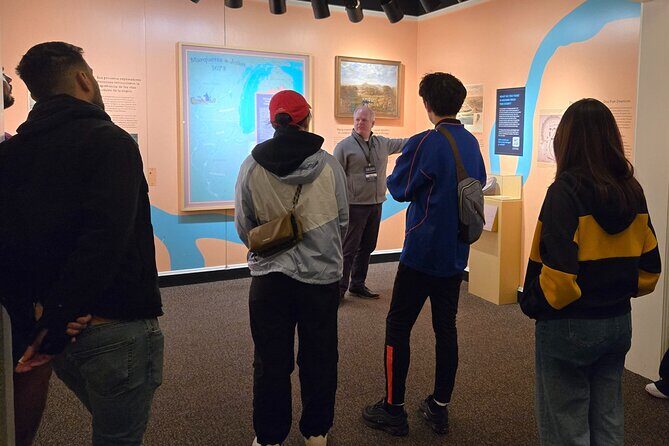
This is your education-and-views stop. The museum covers exhibits about the river and why it matters to the city, and the audio also points out the birds-eye views from the top floor.
Even without going deep into the museum, you can appreciate how the river shapes Chicago’s identity. The river isn’t just scenery here. It’s part of the city’s working story.
Practical tip: this stop is a great place to pause for a photo and then decide whether you want to add more time inside the museum.
Stop 10: Tribune Tower
The Tribune Tower is one of those buildings that makes you look twice. The tour explains that it comes from a competition held by the Chicago Tribune for their 75th anniversary, aiming to create the most beautiful and distinctive office building in the world.
Even if you don’t know the details, you’ll feel the neo-Gothic style in the lines and details. That’s the kind of landmark you want your audio to frame, because otherwise it’s easy to just walk past.
Photo tip: aim for angles that show the tower shape and nearby buildings for scale. A straight-on photo is fine, but side angles often look more “Chicago.”
Stop 11: William P. Fahey Bridge (Columbus Drive Bridge)
The story here is about change over time. The William P. Fahey Bridge is described as Chicago’s newest river-spanning bridge, and the audio notes that it’s also called the Columbus Drive Bridge.
Instead of focusing on a long-ago history, this stop looks at how construction technology and philosophies changed across decades. It’s a useful contrast after stops that focus on older architecture and earlier eras.
Practical tip: keep your eyes on the bridge structure. It’s a “how they built it” moment.
Stop 12: NBC Tower
The final stretch leans into pop culture and art deco styling. The NBC Tower is described as modelled after New York’s 30 Rockefeller Center and as a picture-perfect example of art deco style.
The audio also connects it to TV history by noting it was a former recording spot for the Jerry Springer Show and the Steve Harvey Show.
When you reach the end near the River Esplanade, this makes a good capstone: you started with classic Chicago icons and ended with a tower that’s both architecture and media.
Themes you will hear: bridges, engineering, and city memory
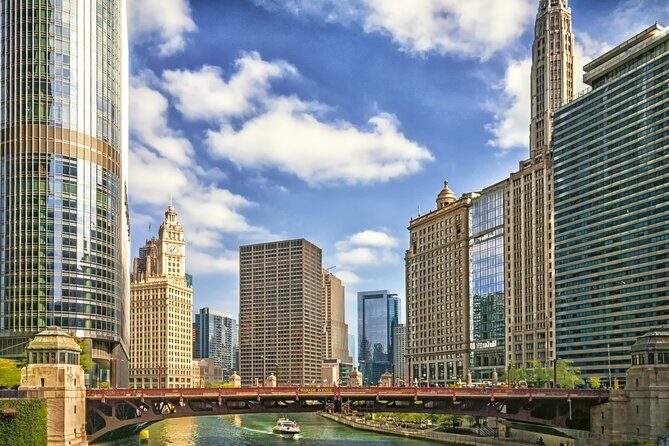
What makes this tour work isn’t just the list of famous buildings. It’s the way the stories connect major themes:
Architecture as a clue to the city’s priorities. You go from early-20th-century grandeur (1914 Britannica headquarters) to art-deco power (Merchandise Mart, NBC Tower) and later skyscraper engineering (401 N Wabash and its connection to Burj Khalifa techniques).
Bridges as civic debate. Several bridge stories focus on design and community reaction—especially the Dearborn Street Bridge replacing something residents strongly hated.
Memory built into public space. The Vietnam Veterans Memorial shifts the tone. It reminds you the Riverwalk isn’t only about views; it’s also about honoring people.
If you like learning the story behind what you’re seeing, this is the kind of self-guided tour that feels more like a slow conversation than a history lecture.
Timing tips: when to walk and how long to spend
Plan on about 1 to 2 hours. That range gives you room for quick photos and small pauses without turning it into a half-day project.
If you’re choosing time of day, use the Riverwalk’s hours: 6:00 AM to 9:00 PM. Early on, the walk tends to feel calmer. Later, you’ll often get more dramatic light across the water and better skyline drama.
My pacing advice: give each stop roughly the designed time, and only stretch when the story grabs you. The tour is built so you don’t have to linger at every landmark, which is ideal if your day is packed.
Who should do this Chicago Riverwalk tour
This works best if you want:
- A self-guided walk where you control pace and timing
- Architecture and skyline context without paying for extra entries
- Offline reliability so your phone doesn’t become a stress ball
It’s also a good fit for people who hate group tours with a clock hovering overhead. Since it plays automatically based on location, you can step aside for photos, then resume without rewinding.
It may be less ideal if you hate walking outdoors or want a lot of indoor time. This is a viewing-first route, and the stops are described as free to visit in the sense that you’re not buying ticketed attractions to enjoy the landmark stories.
Should you book this self-guided Riverwalk tour?
I’d book this if you want a smart way to understand the Riverwalk beyond the obvious photos. The $14.99 price is reasonable for a one-time download that you can reuse later, and the offline GPS + location-based audio makes it easy to follow without constant phone fiddling.
I’d skip it only if you’re looking for a guided, narrated walkthrough inside lots of ticketed sites. This is about seeing Chicago’s major points along the river and learning what they mean while you walk.
If you’re visiting once and want a good “first story” of the area, this is a very solid choice.
FAQ
How much does the Chicago Riverwalk self-guided walking tour cost?
The price is $14.99 per person.
How long does the tour take?
It takes about 1 to 2 hours.
Does it work offline?
Yes. It includes offline GPS maps, and the tour works without cellular or wifi after you download it.
Where does the tour start and end?
It starts at 99 Chicago Riverwalk, Chicago, IL 60601, and ends at River Esplanade, Chicago, IL 60611.
Do I need to buy tickets for the stops?
The tour lists the stops with admission ticket free, and it does not include attraction passes or entry tickets.
What do I need to run the tour on my phone?
You download Action’s Tour Guide App, then use the password sent by email and text. The app should be downloaded while you have strong Wi‑Fi/cellular, and it will work offline after that.
What is the daily time window for the tour area?
The hours listed are Monday through Sunday, 6:00 AM to 9:00 PM.