REVIEW · ARCHITECTURE RIVER CRUISE
Private Chicago Architecture Walking Tour
Book on Viator →Operated by ForeverVacation · Bookable on Viator
Chicago architecture in one smart stroll. This private 3-hour walk strings together the Loop’s big-name buildings and the specific details that made them famous, with an English guide and a pace that keeps you from feeling lost in the city maze. I love the included admission at key stops, and I love how many places you get to see in a short window instead of doing a slow, random wandering day.
One thing to keep in mind: access can be limited. On some days (especially weekends), you may not go inside every building, and lunch has had at least some confusion for past bookings—so I’d confirm what’s actually provided when you book.
In This Review
- Key highlights you’ll care about
- A 3-hour Loop walk that feels like a real architecture tour
- How the private format changes your Chicago day
- Stop-by-stop: what each building teaches you
- Marquette Building: speculation turned into a high-stakes office dream
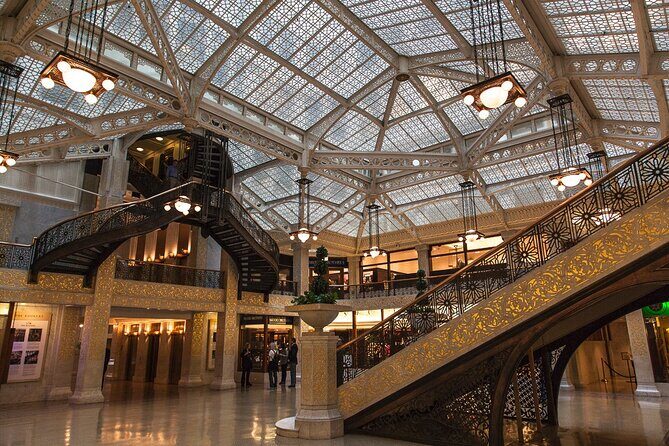
- The Rookery Building at LaSalle and Adams: elegance in the financial corridor
- Palmer House Hilton lobby: a hotel where new tech arrived early
- Sullivan Center (former Carson Pirie Scott): Chicago School in brick
- Chicago Athletic Association hotel: from private club to modern digs
- Chicago Cultural Center: Tiffany’s dome and a block devoted to culture
- Tribune Tower: Gothic spires and a lobby that acts like a shrine
- Wrigley Building: French Renaissance flair and a clock tower you can’t miss
- What’s included (and how it affects the value)
- Lunch included: the one detail I’d double-check
- Inside access: enjoy the buildings, but don’t assume every door opens
- Pace, comfort, and the walking reality
- Who should book this private architecture walk
- Should you book it?
- FAQ
- How long is the private Chicago Architecture Walking Tour?
- Where does the tour start and where does it end?
- What is the price per person?
- Is the tour private or shared?
- What language is the guide?
- Is lunch included?
- Are admission tickets included for the stops?
- Do I need a printed ticket?
- Can I cancel for a full refund?
Key highlights you’ll care about
- Marquette Building: a major 19th-century speculative office project, built to profit from Chicago’s early boom
- Rookery Building: an elegant LaSalle Street–area landmark, long considered one of America’s finest office buildings
- Palmer House Hilton lobby: one of North America’s longest continuously operating hotels, plus notable tech firsts
- Sullivan Center (former Carson Pirie Scott store): Chicago School architecture from 1899–1903
- Chicago Cultural Center: the world’s largest Tiffany stained glass dome, plus lots of programs (many free)
- Tribune Tower and Wrigley Building: Gothic-style Tribune Tower and a prominent clock tower on a Wrigley-era skyscraper
A 3-hour Loop walk that feels like a real architecture tour
This is the kind of tour I like: focused, walkable, and designed so you actually see the city’s architectural ideas—not just the street addresses. You’re in the Loop area most of the time, and the stops are chosen to show how Chicago went from rapid growth in the late 1800s to the skyscraper era and cultural institutions downtown.
The duration is about 3 hours, and it’s run as a private tour for your group only. That matters because the guide can adjust pacing to questions and small detours, instead of herding everyone like a school bus.
You can also read our reviews of more walking tours in Chicago
How the private format changes your Chicago day
With a private walking tour, you get a smoother rhythm. You don’t have to wait for a crowd, and you can linger when something grabs your attention—like a lobby detail, a façade feature, or an architectural trick that only shows up when you’re standing close.
The tour uses a mobile ticket, which is handy if you’re managing multiple confirmations on your phone. It’s also in English, and the meeting point is clearly pinned at the Fine Arts Building (410 S Michigan Ave), with the walk ending at the Wrigley Building (400–410 Michigan Ave).
If you’re the type who hates rushing, this format usually helps. If you’re planning to do museums later, ending near the Wrigley Building gives you an easy jump-off to keep exploring downtown.
Stop-by-stop: what each building teaches you
Below is what you can expect at each key stop, and what to look for while you’re there.
Marquette Building: speculation turned into a high-stakes office dream
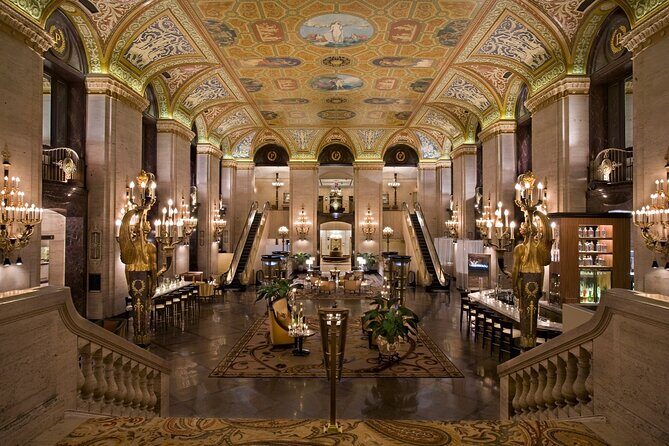
The tour starts at the Marquette Building, a standout example of Chicago’s 19th-century building boom. The key idea here is speculative development: investors took a gamble on Chicago’s growth, and the building was created as a set of high-end office spaces meant to attract businesses and fatten returns.
What I love about starting here is that it sets the theme early. Before you even hit the more famous later-era giants, you learn how the city’s financial ambitions shaped what got built.
Expect your time at this stop to be around 20 minutes, and the stop includes admission/ticket access.
The Rookery Building at LaSalle and Adams: elegance in the financial corridor
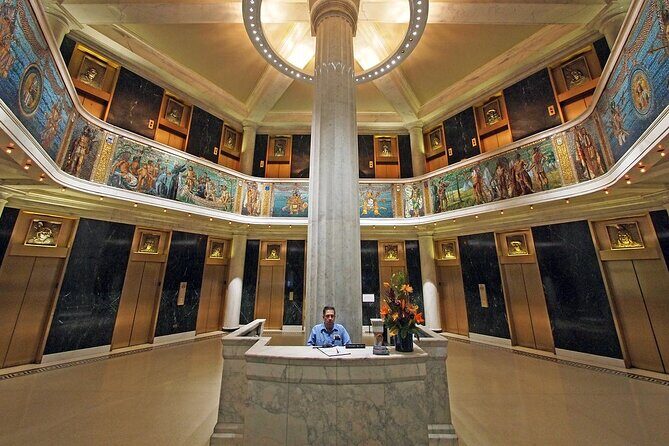
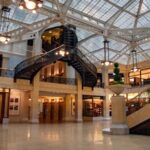
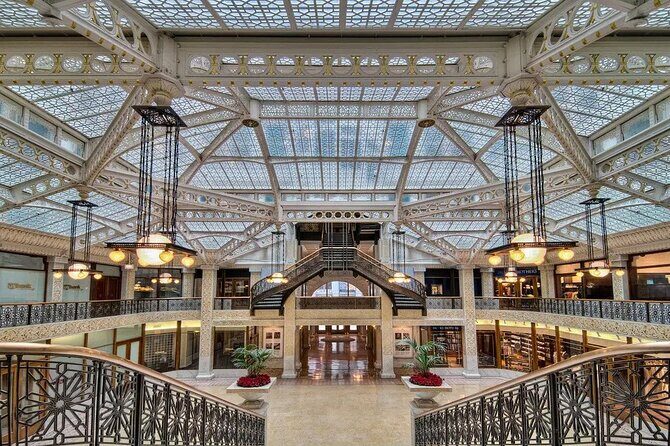
Next comes the Rookery Building, located at LaSalle and Adams. When it was completed, it was expected to be the largest and finest office building in the United States—an enormous claim that tells you Chicago wasn’t playing small.
This is one of those buildings where you benefit from an architecture guide. You’ll be able to connect street-level presence with the interior importance that made the Rookery a star of the LaSalle Street financial corridor.
Plan about 20 minutes, and this stop also includes an admission ticket.
You can also read our reviews of more private tours in Chicago




Palmer House Hilton lobby: a hotel where new tech arrived early
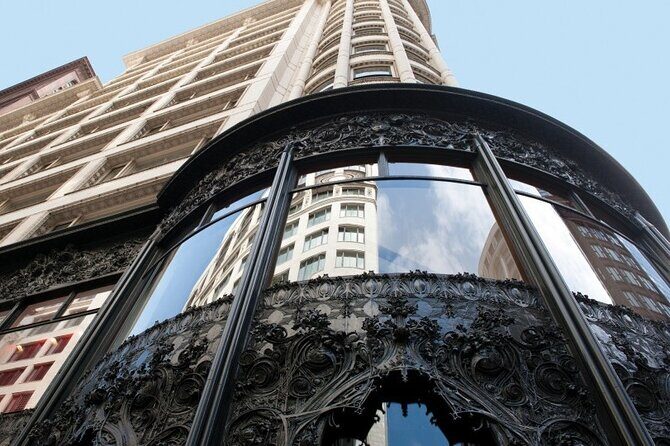
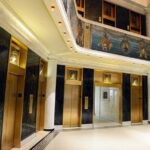
The tour then shifts from office buildings to hospitality at the Palmer House Hilton Historic Lobby in the Loop. The Palmer House is described as the longest continuously operating hotel in North America, and it’s also tied to early tech firsts: it was the city’s first hotel with elevators, plus the first with electric light bulbs and telephones in guest rooms.
Even if you’re not a hotel-history buff, lobbies are great for architecture because they show how buildings welcome people. You get a sense of design priorities: how light works, how visitors circulate, and how the space communicates status.
This is a shorter stop (about 10 minutes) and the admission is free for the lobby experience.
Sullivan Center (former Carson Pirie Scott): Chicago School in brick
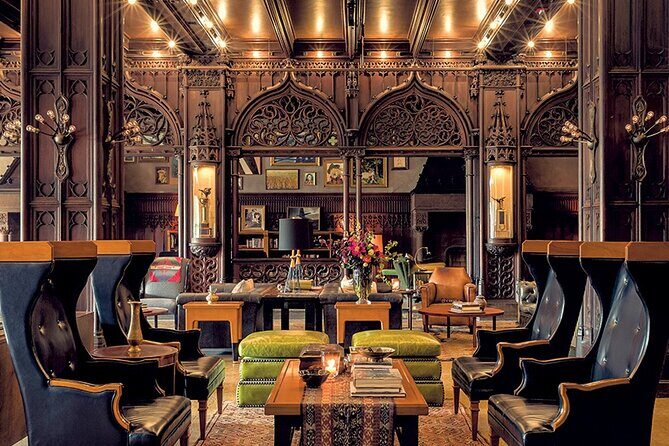
Now you’re at the Sullivan Center, also known as the former home of the Carson Pirie Scott store. This stop is tied to one of Chicago’s most important architectural concepts: the Chicago School, and the story of tall building history.
The building was constructed between 1899 and 1903, and it’s been used for retail trade throughout its life. In 1975, it was declared a Chicago milestone—so you’re looking at a downtown landmark that has stayed relevant through changing uses.
This stop runs about 20 minutes and includes admission.
What to look for: the combination of store-scale purpose with skyscraper-era design thinking. It’s a useful reminder that Chicago architecture wasn’t only for corporate towers—it was also for commerce and the people who shopped in them.
Chicago Athletic Association hotel: from private club to modern digs
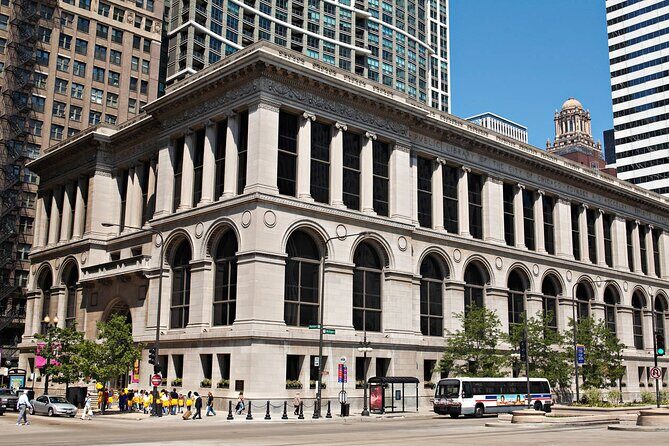
This part of the tour is a fun contrast. You’ll visit the Chicago Athletic Association – The Unbound Collection by Hyatt, a hotel housed in an 11-story Venetian Gothic building designed by Henry Ives Cobb and completed in 1893.
From construction until 2007, it functioned as a private club for wealthy Chicagoans. Today, the refurbishment is described as preserving a lot of the original “bells and whistles,” so the interior still leans heavily on ornate paneling, elaborate molding, and decorative trims—but with modern comfort added.
You’ll also be right near Millennium Park, since the hotel sits across the street from it. That location is useful because it makes it easy to connect your architecture tour day with park time right after.
Time here is about 30 minutes, and admission is free.
Chicago Cultural Center: Tiffany’s dome and a block devoted to culture
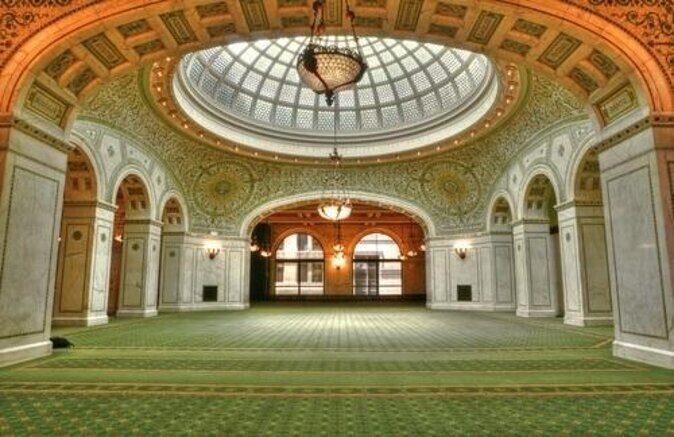
Next is the Chicago Cultural Center, one of downtown’s most popular attractions and a cultural hub. The building takes up an entire city block, which gives you a sense of how seriously Chicago invested in culture alongside commerce.
The headline feature is the world’s largest Tiffany stained glass dome. You’ll also be told that the center presents more than 700 humanities programs a year, and many of them are free and open to the public.
This stop is about 30 minutes and includes admission/ticket access.
If you’re trying to choose what to spend time on inside Chicago, this is a smart one. Even if you only have a short window, this building connects architectural beauty to real public life, not just historic photos.
Tribune Tower: Gothic spires and a lobby that acts like a shrine
The tour moves to the Tribune Tower, one of Chicago’s most iconic structures. Even though it rises only 36 stories, it’s described as helping set Chicago apart as a living architectural museum.
The building’s Gothic spires and shrine-like lobby are major highlights. The lobby also includes inspirational quotes, which have become part of the building’s identity over time.
Expect about 15 minutes at this stop, and admission is included.
Wrigley Building: French Renaissance flair and a clock tower you can’t miss
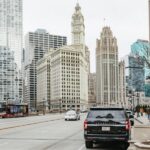
The last stop is the Wrigley Building, a recognized downtown icon from the 1920s. The exterior includes French Renaissance elements, but the biggest draw is the clock tower, which reaches about 130 meters (425 feet).
This ending works well for two reasons. First, you get a payoff skyline view—at least from street level. Second, it’s a clean finish point for your day since the tour ends at the Wrigley Building address.
This stop runs about 15 minutes and includes admission/ticket access.
What’s included (and how it affects the value)
The price is $211 per person for about 3 hours, and it’s a private format. On paper, that can sound steep. In practice, the value improves because several things are included.
You get:
- an English-speaking guide
- bottled water
- lunch
- all fees and taxes
And ticketing is also part of the deal: admission is included for multiple major stops (Marquette, Rookery, Sullivan Center, Chicago Cultural Center, Tribune Tower, and Wrigley Building), while the Palmer House lobby and Chicago Athletic Association are listed as free.
That combination can matter if you’re the kind of traveler who hates paying extra at each stop. It also helps if you want to trust that time won’t be wasted on separate ticket lines.
Lunch included: the one detail I’d double-check
The tour details say lunch is included, which is a real plus on a walking day. But there’s also evidence that lunch inclusion hasn’t always matched what some people expected based on confirmations.
So here’s my practical advice: when you book, confirm what the lunch includes and when you’ll get it. It’s a simple step, and it keeps your day from turning into a scramble.
Inside access: enjoy the buildings, but don’t assume every door opens
Another reality check: the tour is designed to show you key architecture, but building hours and access rules can limit interior time. There are times when you may not go inside every listed stop, especially when closures and operating restrictions apply.
That doesn’t mean the tour isn’t worth it. It just means I’d treat this as an architecture route with ticketed opportunities at several sites, not as a guarantee that every single building will have interior access at your exact moment.
Pace, comfort, and the walking reality
This is a walking architecture tour across the Loop, with multiple stops and short visit windows. That usually means comfortable shoes are a must. Bring water-ready habits too—bottled water is included, which helps a lot on a warm Chicago day.
Also, because the tour ends at the Wrigley Building rather than returning to the starting point, plan what you’ll do afterward. If you’re visiting Millennium Park, the Chicago Athletic Association stop makes that connection easy since it sits across from it.
Who should book this private architecture walk
This tour is a strong fit if you:
- want a guided route through major Loop landmarks without planning every stop
- like architecture with context: money, design decisions, and what the city chose to build
- prefer a private group pace over large-group tours
- want included ticketing and lunch instead of adding costs and logistics
It’s less ideal if you’re the type who needs long stays inside multiple interiors. This route is time-efficient, but each stop is measured—so the goal is understanding and highlights, not lingering for hours.
Should you book it?
If you’re looking for a structured Chicago architecture day, this private walk makes sense. The stop list covers office history (Marquette and Rookery), hotel/lobby design (Palmer House), Chicago School retail architecture (Sullivan Center), cultural institutions (Chicago Cultural Center), and two major skyline icons (Tribune Tower and Wrigley Building). That’s a lot of architectural storytelling in about three hours, with English guidance and several admission tickets included.
I’d still make two smart checks before you go: confirm lunch details and be prepared for limited interior access depending on day/time. If those are handled, you’ll get a well-built route that helps you read Chicago’s architecture like a map, not like a blur.
FAQ
How long is the private Chicago Architecture Walking Tour?
The tour lasts about 3 hours.
Where does the tour start and where does it end?
It starts at the Fine Arts Building, 410 S Michigan Ave, Chicago, IL 60605 and ends at The Wrigley Building, 400–410 Michigan Ave, Chicago, IL 60611.
What is the price per person?
The price is $211.00 per person.
Is the tour private or shared?
It’s a private tour/activity, meaning only your group participates.
What language is the guide?
The tour is offered in English.
Is lunch included?
Yes. Lunch is included in the tour details.
Are admission tickets included for the stops?
Admission is included for several stops, while others are free. The Marquette Building, Rookery Building, Sullivan Center, Chicago Cultural Center, Tribune Tower, and Wrigley Building include admission/tickets. Palmer House Hilton Historic Lobby and Chicago Athletic Association are listed as free.
Do I need a printed ticket?
No. You receive a mobile ticket.
Can I cancel for a full refund?
Yes. You can cancel up to 24 hours in advance for a full refund.