REVIEW · WALKING TOURS
Workers Cottages of Oldtown Triangle Walking Tour
Book on Viator →Operated by Tours by Doorways Of Chicago · Bookable on Viator
Chicago still hides whole streets of workers’ homes. On this Old Town Triangle walk you’ll see dozens of mid-1800s workers’ cottages and hear how this neighborhood survived the Great Chicago Fire and kept evolving for decades. I love the chance to study the architecture up close and the way the guide turns facades into real stories; the main catch is you’ll be outside, so good weather and a moderate walking pace matter.
Meet your guide at 164 W Eugenie Street, right in the middle of the neighborhood’s most photogenic block. I also like that it’s capped at just eight people, which helps you ask questions and get sharper explanations instead of rushing past everything. The guide I’m using as my benchmark here is Ronnie, and his tone comes through as calm, passionate, and professional.
The tour runs about 1 hour 45 minutes and ends a few blocks away at 216 W Menomonee Street. It’s not a tough hike, but you will be on your feet for the full route, so plan comfortable shoes and bring a light layer.
In This Review
- Key things you’ll notice on this Old Town Triangle walk
- Old Town Triangle on foot: the “pre–Great Fire” feeling you can still find
- Starting at 164 W Eugenie Street: a scenic meetup that makes the route easy
- Stop by stop: what you’ll see and why it’s worth your time
- The big focus: workers’ cottages around Old Town Triangle
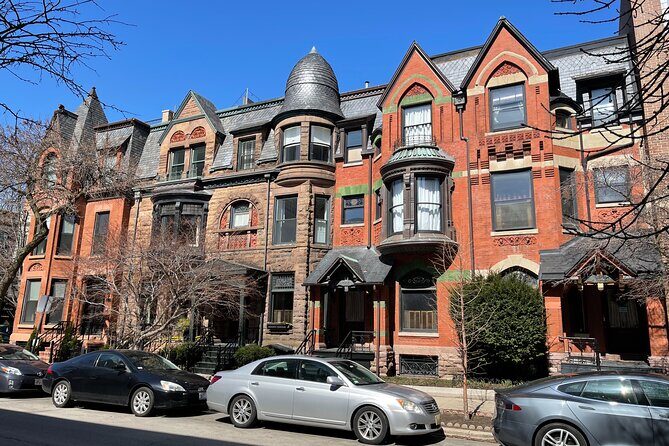
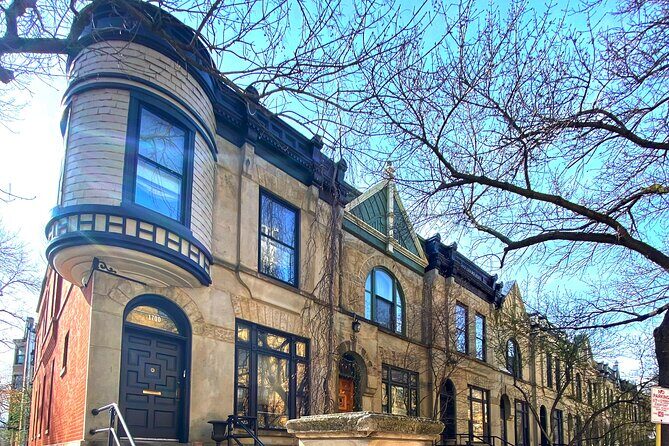
- West Eugenie Street: 5 opulent Queen Anne and Second Empire rowhouses (1886)
- North Crilly Court: famous residents plus a National Landmark property
- St. Michael House of Prayer (Old Town Catholic Church): 1866–1869 and the “tallest for 16 years” clue
- Twin Anchors Restaurant & Tavern: a classic Chicago stop tied to Sinatra’s favorites
- Old Town Triangle homes of Charles and Frederick Wacker (Wacker Drive)
- Ann Halsted Rowhouses designed when Louis Sullivan was in his early 20s
- The last remaining farmhouse from when Old Town was farmland
- Time on your feet: duration, pace, and why moderate fitness is mentioned
- Price and value: is $45 a good deal for this kind of architecture walk?
- Who this tour is best for (and who should skip it)
- Weather and planning: the one variable you can’t control
- Should you book Workers Cottages of Oldtown Triangle?
- FAQ
- What is the duration of the Workers Cottages of Oldtown Triangle Walking Tour?
- How much does the tour cost?
- How many people are in the group?
- Where do I meet the guide, and where does the tour end?
- Are there admission fees at the stops?
- Is the tour refundable if I cancel?
- FAQ
- Do I need good weather for the tour?
- Is the tour near public transportation?
- Are service animals allowed?
- What physical condition do I need?
- When is the start time?
- How far in advance should I book?
Key things you’ll notice on this Old Town Triangle walk
- A small group of up to 8 means you get breathing room for details and photos
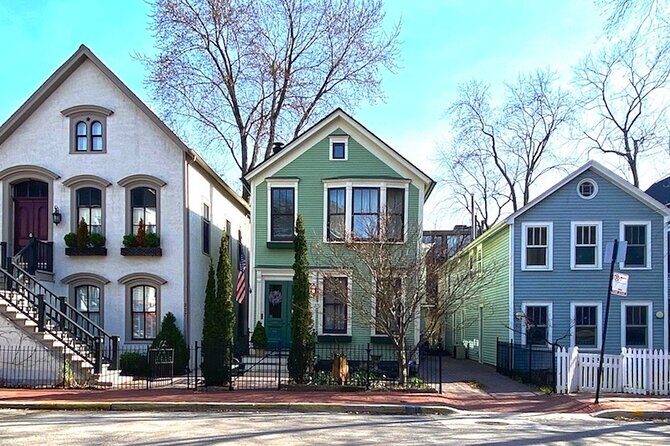
- Old Town Triangle’s workers’ cottages: about 40–50 examples, including rare “several in a row” stretches
- Eugenie Street rowhouses: a very rare set of 5 Queen Anne and Second Empire style homes
- St. Michael House of Prayer: built 1866–1869, and once Chicago’s tallest building for 16 years
- Local flavor at Twin Anchors: a long-running tavern tied to Frank Sinatra’s favorites
- Architect names you’ll recognize: Louis Sullivan (early work) and Harald Hansen (Eugenie Street rowhouses)
Old Town Triangle on foot: the “pre–Great Fire” feeling you can still find
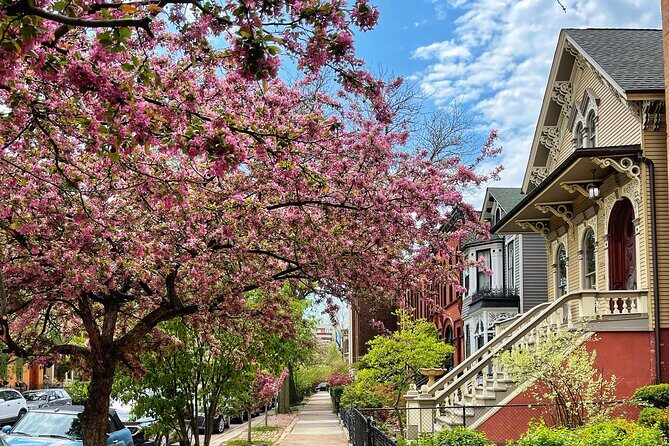
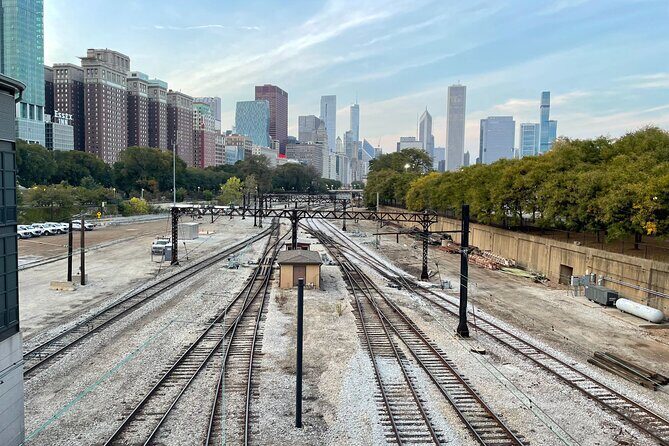
If you’ve only experienced Chicago through skylines and lake views, this tour is a nice correction. Old Town Triangle is where the city’s growth gets visible in brick, stone, and street plans. You’ll walk through a part of Chicago where the fabric of the neighborhood stretches back to the mid-1800s, and you’ll get to see what “workers’ housing” meant when the city was still learning how to build fast and stay livable.
I like that the focus stays concrete. Instead of generic talking points, you’ll be guided from house to house, noticing differences in design and layout. That turns history into something you can actually observe while you’re standing there.
One more thing: because the group is tiny, the guide can tailor the pace. If you stop for photos, you’re not constantly being swept along.
You can also read our reviews of more walking tours in Chicago
Starting at 164 W Eugenie Street: a scenic meetup that makes the route easy
You’ll start at 164 W Eugenie St, Chicago, IL 60614, with the meeting point laid out on a very practical address. This matters because Old Town can feel like a maze if you’re using landmark guesswork. Starting on a clear street makes it simple to arrive on time and start walking right away.
The tour also runs with a mobile ticket, so you’re not juggling paper. And since it’s near public transportation, you don’t have to build your whole day around driving and parking. If you’re pairing this with other Chicago neighborhoods later, that flexibility is real value.
Before you leave, check your footwear. The route covers multiple streets and short blocks. It’s not an all-day trek, but you’ll want shoes that handle city sidewalks comfortably.
Stop by stop: what you’ll see and why it’s worth your time
The big focus: workers’ cottages around Old Town Triangle
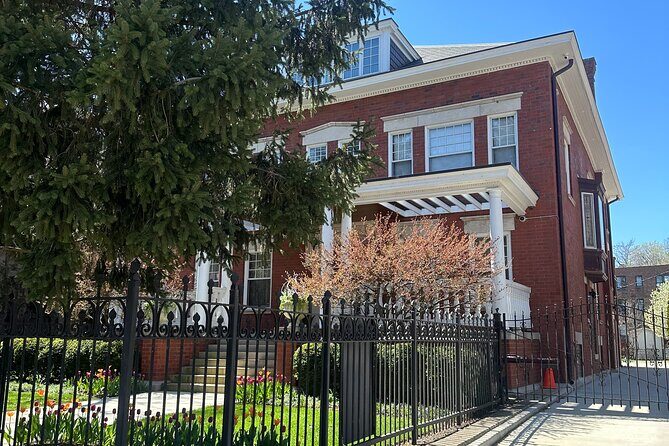
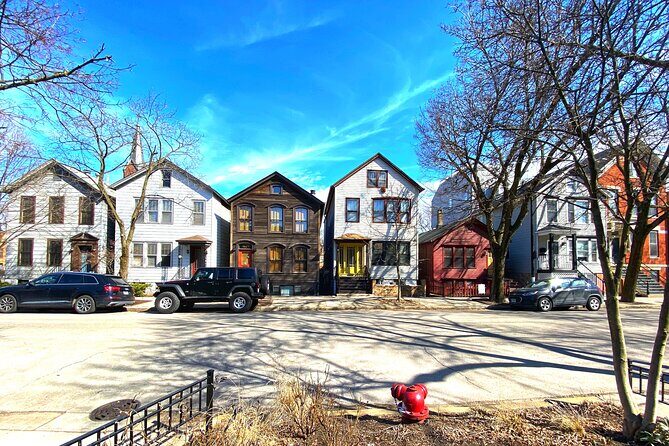
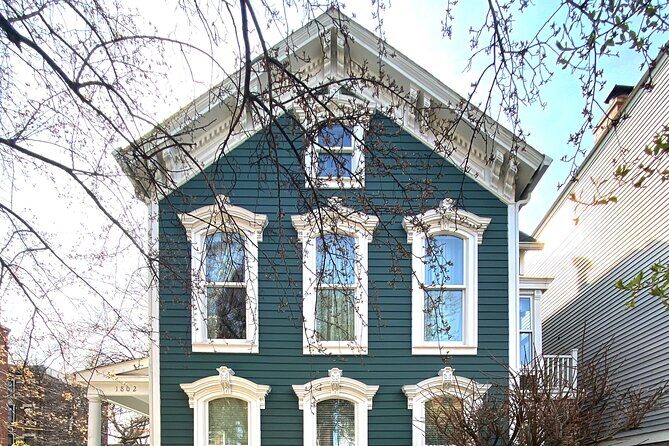
This is the centerpiece. You’ll spend time looking at roughly 40–50 workers’ cottages and the ways they were built—styles that reflect both practical needs and the design ideas of the era. The guide points out details that are easy to miss on your own, like how the cottages are shaped by their lots and street frontage.
What I find especially compelling is that you don’t just get one “typical” example. You’ll also see rare situations where cottages appear several in a row, and even an entire block where they’re present on both sides of the street. That street-level density is the fastest way to understand what daily life housing looked like before the Great Chicago Fire of 1871.
Even if you’re not an architecture nerd, you’ll still come away with a sharper sense of time. The buildings function like a timeline: you’re watching the city’s housing ideas progress, sometimes within a small geographic area.
Practical tip: bring your phone camera ready, but also take a moment to look with your eyes first. The differences in massing and rooflines are easier to see without trying to frame everything immediately.
West Eugenie Street: 5 opulent Queen Anne and Second Empire rowhouses (1886)
On West Eugenie Street, you’ll get a contrast lesson. Instead of the most straightforward workers’ cottage look, you’ll see an extremely rare group of five Queen Anne and Second Empire style houses, designed and built by architect Harald Hansen in 1886.
Why this matters: Chicago didn’t build one single “type” of neighborhood. Even in the same broader area, you can find housing built for very different lives and budgets. This section helps you understand Old Town as a mixed story, not a museum display.
If you enjoy identifying architectural styles, this stop gives you something concrete to chase: shapes, ornament patterns, and the way the houses sit together like a designed set rather than scattered individual homes.



North Crilly Court: famous residents plus a National Landmark property
North Crilly Court is the kind of place where you feel like you’re stepping into a smaller chapter of the city’s biography. Here, the guide connects the neighborhood to famous people who lived on the court, helping you connect the houses to real names instead of abstract “locals.”
You’ll also see one property listed as a National Landmark. The key point for your experience is that this isn’t only about pretty streets. It’s about recognized historical significance—federal-level acknowledgment that these buildings matter beyond Chicago.
If you like your tours with a mix of human stories and built environment, this stop is a strong one.
St. Michael House of Prayer (Old Town Catholic Church): 1866–1869 and the “tallest for 16 years” clue
Next you’ll look at St. Michael House of Prayer, also known as St. Michael Church of Old Town. It was built between 1866 and 1869, and for 16 years it was the tallest building in the United States.
That fact is one of those “wait, really?” moments that changes how you picture Chicago’s early skyline. Instead of imagining early Chicago as all low buildings, you realize the ambition showed up quickly, and it showed up in religious architecture.
You’ll have a shorter time here, but it’s enough to notice the building’s presence in its surroundings and understand why the community would have treated it as a major civic marker.
Twin Anchors Restaurant & Tavern: a classic Chicago stop tied to Sinatra’s favorites
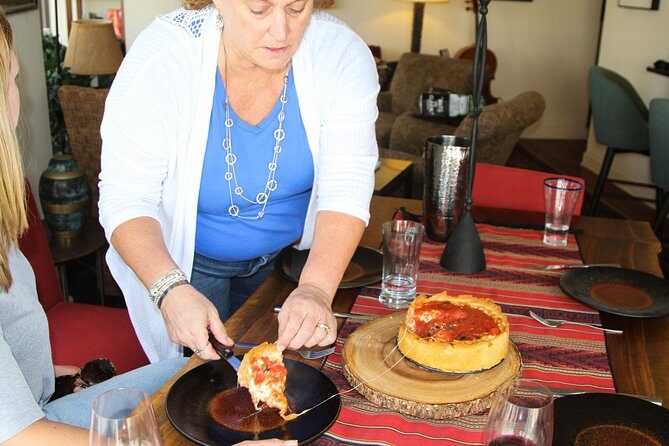
Then you hit Twin Anchors Restaurant & Tavern. It’s one of the oldest restaurants in Chicago, founded in 1932, and known for tender barbequed baby-back ribs. The tour also ties it to local music history: it was a favorite of Frank Sinatra for many years.
Even if you don’t plan to eat during the tour, this stop is valuable because it connects architecture and neighborhood streets to everyday gathering places. Restaurants like this help explain why Old Town Triangle feels like a community, not just a collection of buildings.
If you want to make it practical, you can treat this as your cue to plan lunch or a casual drink later. Just remember the tour time is short at each stop, so don’t get stuck reading menus yet.
Old Town Triangle homes of Charles and Frederick Wacker (Wacker Drive)
This section shifts you toward early city planning and the people who shaped Chicago’s direction. You’ll see the homes of Charles and Frederick Wacker tied to Wacker Drive, and you’ll hear how they were instrumental in the early design of the city.
What I like here is the parent-and-son angle. It’s not only “one important guy,” it’s a passing of influence and vision. For visitors, that makes the history easier to hold in your head.
If you enjoy civic history—who built the systems that let cities grow—this is a good match.
Ann Halsted Rowhouses designed when Louis Sullivan was in his early 20s
One of the most interesting moments comes when you see the Ann Halsted Rowhouses. These were designed by architect Louis Sullivan when he was in his early 20s, before his fame became widely recognized.
This is one of those chances where seeing early work changes how you interpret a designer’s later style. You’re not just learning that Sullivan mattered; you’re getting a snapshot of how his thinking started before the world caught up.
If you’re the type who likes to spot names and then go home and research, you’ll likely enjoy the fact that this stop gives you specific, trackable identifiers: the architect and the location.
The last remaining farmhouse from when Old Town was farmland
Finally, you’ll see what’s described as the only remaining farmhouse standing from when Old Town was still farmland outside the city limits. That’s a powerful mental reset.
This stop gives you a visible comparison: city growth didn’t happen overnight. It stepped out of farming space and into streets. Seeing that last farmhouse helps you picture the timeline, not just memorize it.
Even with the short time, it makes the whole route feel connected. The cottages, rowhouses, church, and civic influence aren’t random stops—they’re all part of the same transformation story.
Time on your feet: duration, pace, and why moderate fitness is mentioned
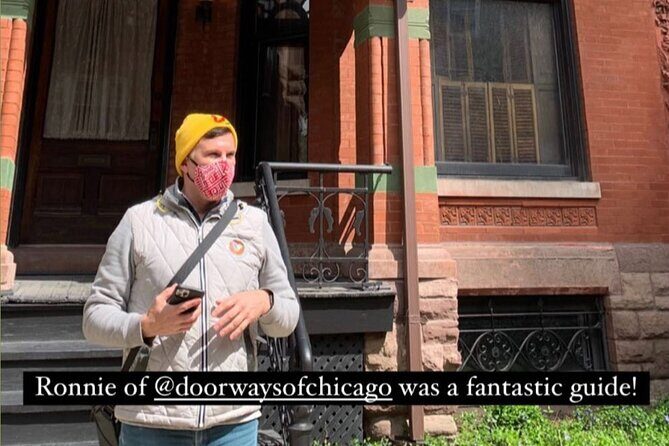
The tour is about 1 hour 45 minutes and is designed as a walking experience with multiple short stops. Each segment is timed, so the guide can keep moving without feeling rushed.
“Moderate physical fitness” is the honest warning label here. It’s not described as strenuous, but it does assume you’re comfortable walking city blocks and stopping along the way for explanations. If you’re recovering from an injury or you know you get tired quickly, consider whether this fits your day.
For everyone else, it’s a nice length: long enough to get real context, short enough that you can still do other Chicago plans afterward.
Price and value: is $45 a good deal for this kind of architecture walk?
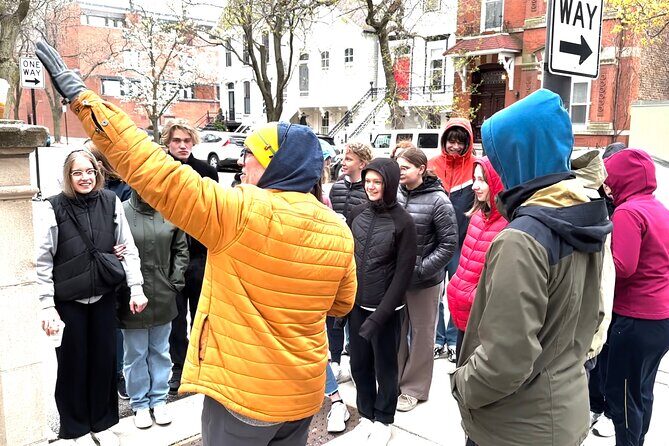
At $45 per person, this isn’t a free walking tour, but it also isn’t a big-ticket guided-transport situation. What you’re paying for is focus: a small group (max 8), dedicated time with a guide, and a route built around architectural observation and landmark context.
You also get value because the major stops are listed as Admission Ticket Free in the tour notes. That means you’re mostly paying for interpretation and guided storytelling, not entrance fees.
If you’re the kind of traveler who likes to understand what you’re looking at—street plans, builders, architectural styles—this price makes sense. If you just want scenic wandering with minimal explanations, you might be happier with a self-guided Old Town stroll.
For me, the deciding factor is the tight group size. With only eight people, the experience feels less like a conveyor belt and more like a conversation on the sidewalk.
Who this tour is best for (and who should skip it)
This works best if you:
- enjoy architecture details and want help “reading” buildings
- like neighborhood history tied to specific streets, buildings, and named people
- prefer smaller groups where you can ask follow-up questions
- want an Old Town experience that goes beyond shops and photo stops
You might skip it if:
- you need long indoor time or have mobility limits that make frequent walking hard
- you want a casual, purely scenic stroll with zero structure
- you’re only interested in Chicago’s downtown landmarks and don’t care about neighborhoods
Weather and planning: the one variable you can’t control
This experience requires good weather. If it’s canceled due to poor weather, you’ll be offered a different date or a full refund. Since the tour is outdoors, it’s smart to check the forecast the morning of your tour and plan layers for wind or sudden changes.
Also note the schedule planning reality: it’s typically booked about 20 days in advance on average. If you have a tight trip calendar, don’t wait until the last minute.
Should you book Workers Cottages of Oldtown Triangle?
Yes, if you want a guided Old Town walk that treats historic housing like something you can learn and see—not something you only hear about. The combination of workers’ cottages, rare grouped rowhouses on Eugenie Street, a church with a national “tallest building” claim, and named architects like Louis Sullivan makes it feel specific and worth the time.
Book it especially if you enjoy architecture, street-level history, and small-group pacing. You’ll leave with a better sense of how Old Town was shaped—how the area grew from farmland into a neighborhood with its own identity, and how Chicago’s big events like the Great Fire fit into a longer story of building and rebuilding.
FAQ
What is the duration of the Workers Cottages of Oldtown Triangle Walking Tour?
It lasts about 1 hour 45 minutes.
How much does the tour cost?
The price is $45.00 per person.
How many people are in the group?
The tour has a maximum of 8 travelers.
Where do I meet the guide, and where does the tour end?
You start at 164 W Eugenie St, Chicago, IL 60614, and the tour ends at 216 W Menomonee St, Chicago, IL 60614.
Are there admission fees at the stops?
The tour information lists Admission Ticket Free for the stops, meaning you’re not paying separate admission fees at these locations as part of the tour.
Is the tour refundable if I cancel?
No. The experience is non-refundable and cannot be changed for any reason.
FAQ
Do I need good weather for the tour?
Yes. The tour requires good weather.
Is the tour near public transportation?
Yes, it’s listed as near public transportation.
Are service animals allowed?
Yes, service animals are allowed.
What physical condition do I need?
Travelers should have a moderate physical fitness level.
When is the start time?
The start time listed is 11:00 am.
How far in advance should I book?
On average, this tour is booked 20 days in advance.