REVIEW · AUDIO TOURS
Chicago’s Storied Neighborhood: An Audio Tour
Book on Viator →Operated by VoiceMap Audio Tours · Bookable on Viator
Hyde Park turns into a story with the right narrator. This self-guided audio tour of Chicago’s Hyde Park lets you wander at your pace while Bill Ayers guides you past major campus and neighborhood landmarks using the VoiceMap app.
I especially like the human, personal angle. You’re not just getting directions, you’re getting commentary from a legendary local professor and activist. I also like the practical setup: offline audio and maps are included, so you’re not scrambling for service while you walk.
One thing to plan for: there can be longer stretches with limited narration. If you want constant commentary, or if a roughly multi-mile walk is tough for you, build in breaks and a realistic timeline.
In This Review
- Key highlights worth knowing before you start
- Why this Hyde Park audio tour beats a typical walking tour
- Bill Ayers narration: the difference between hearing and learning
- Starting outside the University of Chicago Laboratory Schools
- Rockefeller Memorial Chapel to the Frederick C. Robie House: great landmarks, mostly from the sidewalk
- Touring University of Chicago buildings and faculty areas without the entrance fee headache
- The Nuclear Energy Sculpture and how to use “passing moments” well
- Washington Park into the DuSable Museum: neighborhood scale and cultural context
- How long it really takes: distance, downtime, and smart pacing
- What’s included: lifetime access plus offline maps and audio
- Price and value: what you’re paying for (and what you’re not)
- Who should book this audio tour, and who may bounce off it
- Should you book this Chicago Hyde Park Audio Tour?
- FAQ
- How long is the Hyde Park audio tour?
- Is this tour guided by a person in real time?
- Who narrates the tour?
- What language is the audio available in?
- Do I need to bring my own smartphone and headphones?
- Does the tour work offline?
- Where does the tour start and where does it end?
- Is the tour only for my group?
Key highlights worth knowing before you start
- Bill Ayers narration adds personal context, not just a facts-and-figures walk
- VoiceMap navigation helps your audio start at the right places as you move
- Offline access includes audio, maps, and geodata, which is a big reliability win
- Campus-to-neighborhood route links University of Chicago sites with Hyde Park streets
- Flexible stopping means you can pause for photos, rest, or a quick detour
- Private group format means your experience is only for your party
Why this Hyde Park audio tour beats a typical walking tour
I like audio tours when the route makes sense to walk. Hyde Park does. You get a coherent, linear route that connects the University of Chicago area to broader neighborhood landmarks, without forcing you to keep up with a guide’s pace.
This one works because it is self-guided. You can linger at a chapel frontage, slow down near a museum area, or stop whenever your feet (or curiosity) say so. The total time sits around 40 minutes to 1 hour, which is long enough to feel like you did something, but short enough that you can still mix in other Hyde Park plans after.
It’s also a smart choice if you dislike being herded. There’s no need to wait for someone in your group to finish a photo. You press play when you’re ready, and you let the app handle the timing as you go.
The only caution I’d give you up front: because it’s a walk with occasional gaps in narration, this isn’t the best pick if you want nonstop talking the whole time. Think of it as guided walking with chapters, not a live lecture.
You can also read our reviews of more tours and experiences in Chicago


Bill Ayers narration: the difference between hearing and learning
The headline here is the narrator. You’re listening to Bill Ayers, described as a legendary local professor and activist, and the tour is built around his perspective.
What that means for you on the ground: the audio feels less like a scripted history line and more like personal commentary. You’re not only passing well-known places; you’re also getting the why behind neighborhoods—how people, institutions, and local landmarks can reflect bigger ideas.
From a practical standpoint, this kind of narration helps you connect dots while you’re walking. Instead of reading a plaque, you can just keep moving and still pick up meaning. And because it’s audio, you can absorb the story while doing the easy part: looking around and orienting yourself.
The balance point: one recent criticism is that there are quiet stretches with limited information. So if you’re the type who gets restless without constant audio, you might feel the pacing more than you expected. On the flip side, if you like the freedom to walk and think, those gaps can feel natural—like giving you time to see what you’re actually passing.
Starting outside the University of Chicago Laboratory Schools
Your tour begins outside the University of Chicago Laboratory Schools at 1362 E 59th St. This is a good place to start because it anchors you near the University of Chicago area right away, so you build orientation early.
In the first minutes, your best move is simple: get your bearings, make sure your phone is set up, and let the app start the audio at the correct spot. One of the strengths people talk about with VoiceMap-style tours is that the audio timing lines up with where you are, instead of drifting into confusion like some DIY audio trails.
Also, since the tour includes offline access, don’t treat signal as the main event. Download (or ensure you’ve downloaded) before you start, then walk calmly. The whole experience is designed to function without relying on constant connectivity.
Even if you’re not a campus deep-dive person, this opening sets your expectations: you’re going to be moving through University-adjacent streets and entrances. That’s useful because it tells you how to read what’s around you—buildings, gates, campus edges, and the neighborhood transitions.
Rockefeller Memorial Chapel to the Frederick C. Robie House: great landmarks, mostly from the sidewalk
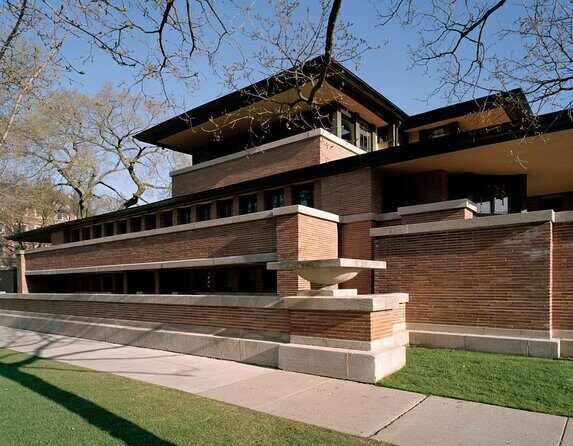
After the start, the route moves past the Rockefeller Memorial Chapel and then the Frederick C. Robie House. Both are high-recognition names in the Hyde Park/University of Chicago orbit, and passing them works well for an audio tour because you can slow down at visual viewpoints without buying a ticket.
Here’s the practical catch: you’re likely to experience these places from the outside. One piece of feedback that matters is that the tour does not take you into the university’s original buildings. So if your ideal tour is interior access, this isn’t that.
Still, outside viewing can be plenty—especially if the audio is doing its job. When the narration explains what you’re looking at, you get the payoff without the wait lines or ticket hassle.
If you’re the kind of traveler who likes structure, you might feel frustrated by sidewalk-only access. If you’re more about atmosphere and context, you’ll probably enjoy the flow: audio chapter, landmark view, keep walking.
Touring University of Chicago buildings and faculty areas without the entrance fee headache
A big chunk of the experience is passing faculty and university buildings belonging to the University of Chicago. This is where the tour earns its keep for first-timers: you get a sense of scale and layout without needing to plan a full campus visit.
You’ll also be reminded that Hyde Park is not only a neighborhood; it’s also an institutional landscape. Hearing an activist professor’s framing while you watch the campus edges can help you see the area as more than pretty architecture. It becomes a place where ideas, people, and local identity intersect.
The flip side, based on user feedback: there can be limited narration during longer walking stretches. When you’re between points—especially across campus pathways—that might feel like downtime.
My advice: treat those gaps as your pause button. Stop for a minute. Look up. Take a photo. Re-check where the next audio trigger should kick in. That way, quiet time becomes a feature, not a bug.
Also, remember that admission to any optional stops is not included. So if you decide to go inside something along the route, you’ll need to handle that separately.
You can also read our reviews of more tours and experiences in Chicago

The Nuclear Energy Sculpture and how to use “passing moments” well
Midway, the tour passes the Nuclear Energy Sculpture. Sculptures like this are perfect for audio tours because they give you something concrete to react to while the story in your headphones connects to larger themes.
But again, this tour is built around walking from point to point. That means “passing moments” are part of the experience. You won’t get a long visit with a guide standing next to you explaining every detail. Instead, the audio aims to give you enough context so the sight makes sense.
If you’re the type who always wants to understand everything instantly, here’s the practical trick: slow your pace a little when you approach notable landmarks. Even a 30-second slowdown can turn a quick pass into an actual moment. You’ll hear the audio beat, see the object, and then move on with meaning instead of just motion.
This section is also a reminder of pacing. If you’re finding narration sparse, choose your “attention points” deliberately: prioritize the landmarks you care about most, and let the quieter stretches carry you.
Washington Park into the DuSable Museum: neighborhood scale and cultural context
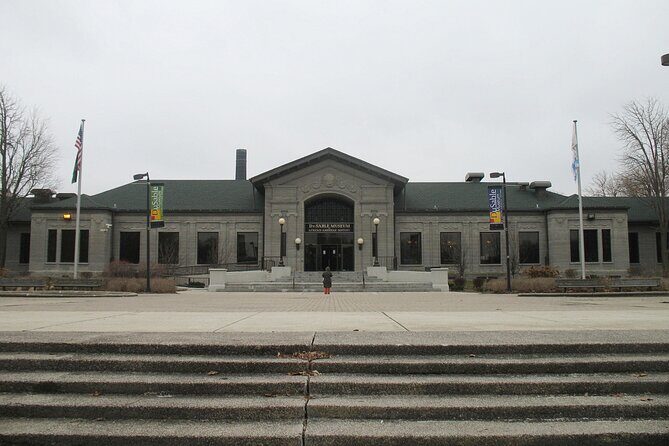
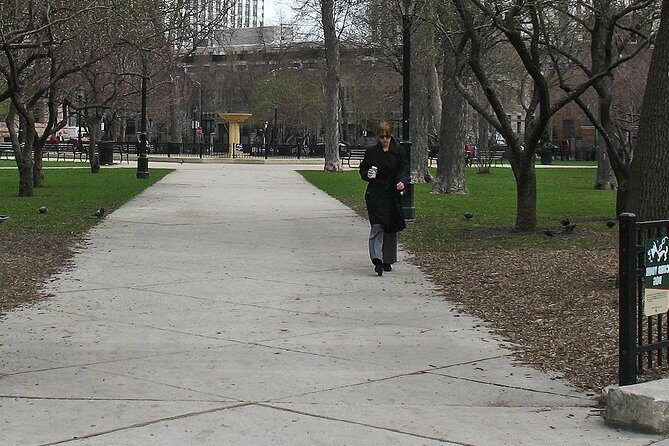
The route continues through parts of Washington Park and then passes the DuSable Museum of African American History. This is one of the strongest reasons to take the tour at all: Hyde Park is not a one-note campus bubble. You’re walking through neighborhood space, and you’re ending with a major cultural stop along the way.
Passing the DuSable Museum’s location matters because it widens the story beyond institutions. Even if you don’t go inside, the name alone signals what kind of ideas you’re being pointed toward.
There’s also a practical travel advantage here. If you want to stretch the day, the museum is the kind of place where you could naturally add time—since the tour ends near an apartment building further east, you might decide to build a longer museum visit into your Hyde Park plan.
One more reality check: because the tour is self-guided and time-limited, you’re not guaranteed to have the luxury of long stops. The tour structure is built for movement. So if museum time is important to you, plan your schedule so you’re not rushing after.
How long it really takes: distance, downtime, and smart pacing
The duration is listed as about 40 minutes to 1 hour, but real walking time depends on how often you stop. One review highlighted a roughly three-mile walk being too much for an 82-year-old, and another mentioned too much downtime with limited talking.
Here’s what you should take from that without stressing: audio tours aren’t always the same as sightseeing tours. If your goal is calm walking with context, it may feel fine. If your goal is constant commentary and frequent engagement, you may feel the gaps.
My practical pacing tips:
- If you’re sensitive to walking time, start earlier in the day and wear comfortable shoes.
- When the narration drops off, treat it like a breather, not a failure.
- Pause with purpose: drink water, take one photo, then move on.
- If you’re planning other Hyde Park stops, don’t stack them back-to-back without margins.
Since you can stop whenever you wish, you’re not locked into a sprint. Use that freedom.
What’s included: lifetime access plus offline maps and audio
This tour is sold with lifetime access in English, delivered through the VoiceMap app for Android and iOS. That means you’re not buying a one-time experience. You can revisit parts of the route whenever you want, or re-walk it to catch audio you missed on the first attempt.
Offline access is the standout included feature: audio, maps, and geodata are available without relying on a strong mobile connection. That’s a big deal in cities, because nothing ruins a walking tour faster than a phone searching for signal at the worst possible moment.
Also note what’s not included. You’ll need to bring a smartphone and headphones. So before you leave, charge your phone and pack headphones that work reliably. This is one of those “it seems obvious until it’s not” details.
Finally, the tour is described as private in the sense that only your group participates. That matters mainly if you dislike crowded shared experiences or want the quiet of your own pace.
Price and value: what you’re paying for (and what you’re not)
No price is listed in the details you provided, so I can’t do a cost-per-hour math exercise. But I can still help you judge value.
You’re paying for:
- lifetime access to an on-demand audio route
- offline functionality (audio plus maps and geodata)
- a high-profile local voice with personal storytelling
- flexible pacing, including the ability to stop often
You’re not paying for:
- entry into buildings (the route can be outside-facing)
- food, drink, transportation
- headphones or a smartphone
- admission tickets to any optional attractions
So the value question comes down to your travel style. If you like self-paced walking and you enjoy the feel of a narrative guide in your headphones, the setup sounds strong. If you want a tightly packed, high-information guide who stops to lecture every step, you might find the structure less satisfying.
Who should book this audio tour, and who may bounce off it
This is a good fit if you:
- like walking tours but want to control the pace
- want an insider voice with a professor/activist perspective
- are okay with outside viewing of major landmarks
- appreciate offline audio and maps
You may want to skip or reconsider if you:
- need constant narration without quiet stretches
- strongly prefer entering buildings during a tour
- have difficulty with longer walking distances and don’t plan breaks
The route is also ideal for a first pass through Hyde Park. You get orientation fast, and you learn what kind of places you want to return to—especially if you decide later to add museum or campus time.
Should you book this Chicago Hyde Park Audio Tour?
If you’re looking for a self-guided Hyde Park experience with Bill Ayers’ personal commentary, I’d say it’s worth booking. The offline audio setup and lifetime access make it easy to use, and the campus-to-neighborhood route helps you understand the area as one connected place.
My main “only if” is pacing. Go in expecting chapters, not a nonstop lecture. If you plan a comfortable walk pace and you’re ready to stop when you want, you’ll get more out of the quieter sections.
If you’re the type who gets impatient with limited talking, or if walking distance is a real constraint, you’ll likely have a better day planning a shorter museum-focused plan instead, and using this tour only if you’re confident you can manage the route comfortably.
FAQ
How long is the Hyde Park audio tour?
The tour duration is listed as approximately 40 minutes to 1 hour.
Is this tour guided by a person in real time?
No. It’s a self-guided audio tour you run through the VoiceMap app.
Who narrates the tour?
The tour is narrated by Bill Ayers.
What language is the audio available in?
The tour is offered in English.
Do I need to bring my own smartphone and headphones?
Yes. A smartphone and headphones are not included.
Does the tour work offline?
Yes. It includes offline access to audio, maps, and geodata.
Where does the tour start and where does it end?
It starts outside University of Chicago Laboratory Schools (1362 E 59th St, Chicago, IL 60637) and ends outside 1101 East Hyde Park Boulevard Apartments (1101 E Hyde Park Blvd, Chicago, IL 60615).
Is the tour only for my group?
Yes. It’s described as a private tour/activity, with only your group participating.