REVIEW · HISTORICAL TOURS
Explore Black History on the Southside of Chicago
Book on Viator →Operated by Gillian · Bookable on Viator
A great street-level lesson in Black Chicago. This 2.5-hour walking tour takes you through Bronzeville and beyond with a 5th-generation South Sider, hitting major landmarks and everyday details like murals and street art. You’ll start at the DuSable Museum of African American History area and end at the Blackstone branch of the Chicago Public Library, with photo stops along the way.
I love how the route connects big names to specific places you can actually stand in, especially the Barack Obama Chicago home stop and the Muhammad Ali former home stop. I also like the way the guide invites questions, so the walk feels like a conversation, not a lecture. The main drawback: you won’t go inside the DuSable Museum during the tour, so you’re relying on what you see outside plus what Gillian explains—if you want the exhibits, plan to visit separately.
In This Review
- Key highlights
- Why Bronzeville and Kenwood tell the fuller Black Chicago story
- Meeting at DuSable Museum: the start point you should not rush past
- Washington Park in front of DuSable: statues, scale, and 1800s roots
- Kenwood’s architecture and the Obama home photo stop
- Operation PUSH HQ at 930 E 50th St: civil rights advocacy in action
- Muhammad Ali’s former home on Woodlawn Ave
- The Blackstone Branch Chicago Public Library: your satisfying end point
- Price, pace, and what to bring for a 2–3 hour walk
- Who this tour is for (and who should skip it)
- Should you book this Bronzeville Black History tour?
- FAQ
- What is the duration of the walking tour?
- How much does the tour cost?
- Where does the tour start?
- Does the tour include entry into the DuSable Museum?
- What major stops are included?
- Is there a mobile ticket?
- Is the tour dependent on weather?
- How soon will I get confirmation after booking?
Key highlights
- Gillian’s South Side perspective brings context you can’t get from captions alone
- Photo stops at Barack Obama’s home and Muhammad Ali’s former home place history in real neighborhoods
- Washington Park grounds the story in the landscape of Bronzeville
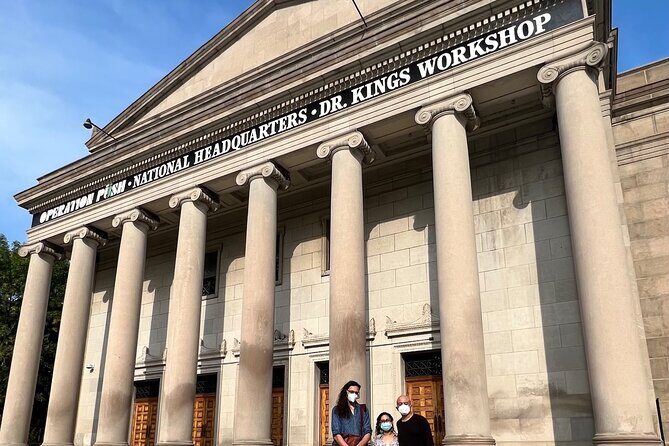
- Operation PUSH headquarters and Dr. King’s Workshop link activism across decades
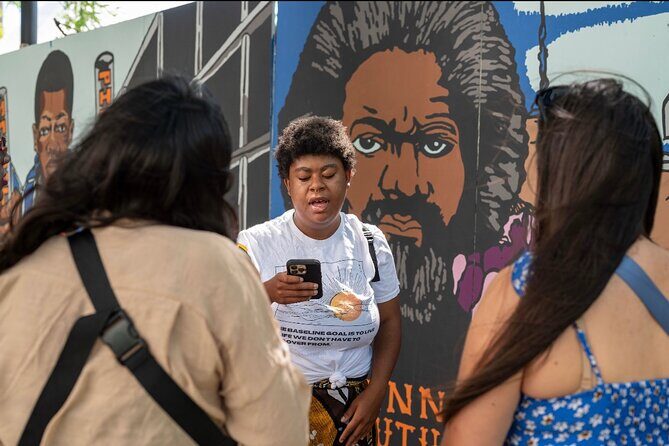
- Murals and street art along the way make the culture visible
- Drinks included add a small, welcome reset during the walk
Why Bronzeville and Kenwood tell the fuller Black Chicago story
When people picture Chicago history, they often default to the river and downtown views. This tour nudges you in a different direction: south of the Loop, where Black leadership, culture, and community-building shaped what the city became.
You’ll walk through Bronzeville and into parts of Kenwood, which matters because it’s not just about famous figures. It’s about the neighborhoods and institutions that supported them—places where activism, art, faith, and politics mixed in real time. The tone is practical and local: what these sites meant, how they relate to each other, and why the streets themselves feel like part of the lesson.
And because it’s a walking route, you don’t just check boxes. You get bearings: the scale of homes, the look of parks, and the feel of the blocks around major landmarks.
You can also read our reviews of more historical tours in Chicago

Meeting at DuSable Museum: the start point you should not rush past
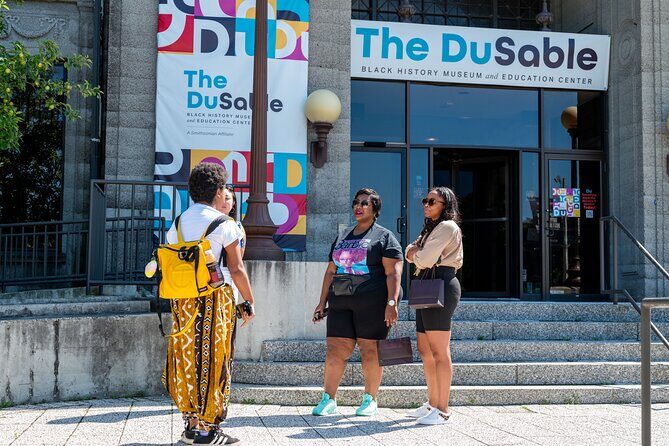
Your tour begins at the DuSable Museum of African American History and Education Center at 740 E 56th Pl, Chicago, IL 60637. This museum is named after the first non-native person to settle in Chicago, and it’s the anchor for the whole experience.
Important practical note: the tour does not include going inside the museum. The stop is outside, and you’ll spend time there just getting oriented and then moving on. If you want the full museum experience—exhibits, artifacts, and interpretation—come early and handle it on your own, then join the walking portion.
If you’re trying to decide whether this matters: it does. Outside stops are great for atmosphere and storytelling, but museums add depth you can’t always recreate on the sidewalk. Still, the benefit here is that you get a guided route through multiple key locations without being stuck indoors for hours.
Bring your camera or phone—you’ll have multiple moments designed for photos.
Washington Park in front of DuSable: statues, scale, and 1800s roots
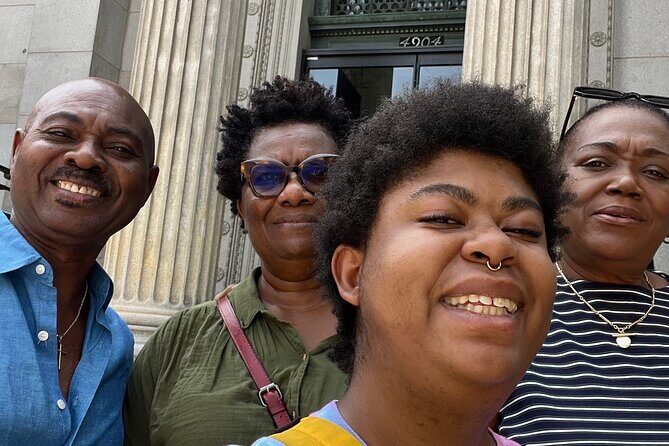
After the museum area, you’ll head to Washington Park, located right in front of the DuSable Museum. This is a big park setting, and the tour uses it to slow things down.
You’ll spend around 20 minutes here, with time to take in the statues and sculptures and to hear the history going back to the 1800s. For me, that’s one of the smartest ways to start: park history sets a baseline before you start talking about individuals.
One consideration: parks take up space. On a walking tour, weather and light can change how much you enjoy these stops. If it’s too cold or too hot, you’ll feel it more than you would on a shorter indoor tour.
Kenwood’s architecture and the Obama home photo stop
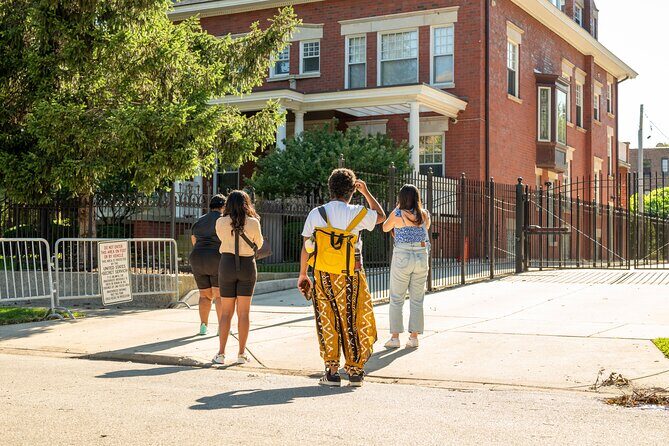
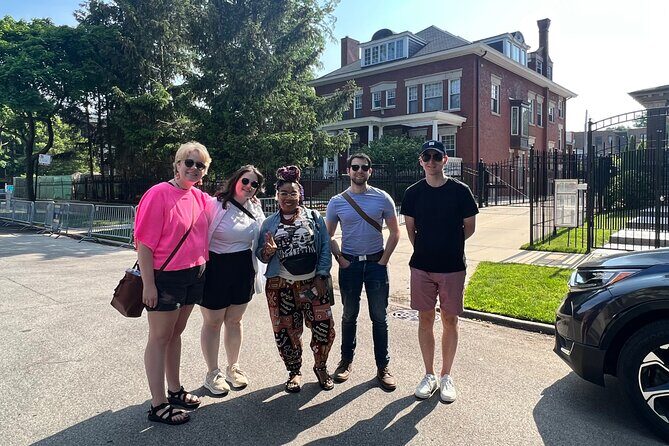
Kenwood is where the walk starts to feel different. The streets widen, and the homes have that preserved, older look that makes you slow down without being told to. You’ll get a stop at Casa de Barak Obama in Kenwood—where you’ll take pictures and talk about Barack Obama’s historic presidential election as the nation’s first Black president.
You’ll spend about 25 minutes at this location. That extra time matters because it’s both a photo stop and a storytelling stop. Also, the description of the homes you’ll see is specific: brown and gray stone mansions that have been well preserved for over a hundred years. That detail helps you understand why this neighborhood feels like more than a backdrop.
Drawback to plan for: you can photograph the home from the street, but you should be ready that you’re not touring private property or going inside. This is a viewing and explanation moment—bring patience and keep your expectations aligned with an exterior walking format.
Operation PUSH HQ at 930 E 50th St: civil rights advocacy in action
Next up is 930 E 50th St, the Operation Rainbow PUSH National Headquarters. You’ll also connect it to Dr. King’s Workshop, founded by Rev. Jesse Jackson, who is described here as a constituent of Dr. Martin Luther King.
The value of this stop isn’t only who’s associated with the place. It’s the idea of continuity—how civil rights advocacy didn’t pause after the headline moments of the 1960s. PUSH is described as an international human and civil rights organization with activism and advocacy stretching from the 1960s to today.
You’ll spend around 20 minutes here, which is a good amount of time for a concept-heavy stop. Still, if you prefer sites with lots of visible physical detail to photograph, this one may feel more “talk-forward” than “camera-forward.” That’s not a dealbreaker—it’s just a different kind of learning moment.


Muhammad Ali’s former home on Woodlawn Ave
One of the most memorable stops is 4944 S Woodlawn Ave, listed as Muhammad Ali’s former home. You’ll hear about why it mattered to him personally and spiritually.
The tour frames it around his decision to refuse joining military based on religious grounds, and then his choice to live closer to his spiritual mentor, Elijah Muhammad. In other words, this stop isn’t just celebrity nostalgia. It’s about conviction, religion, and the real-world impact of those choices.
You’ll spend about 20 minutes here. Again, you’re viewing from the public side, so you’ll want to be ready for a focused talk plus photos rather than an interior visit.
If you like your history tied to voice and personal meaning, you’ll probably love this section the most. The Ali story on this route is built to feel human, not just historic.
The Blackstone Branch Chicago Public Library: your satisfying end point
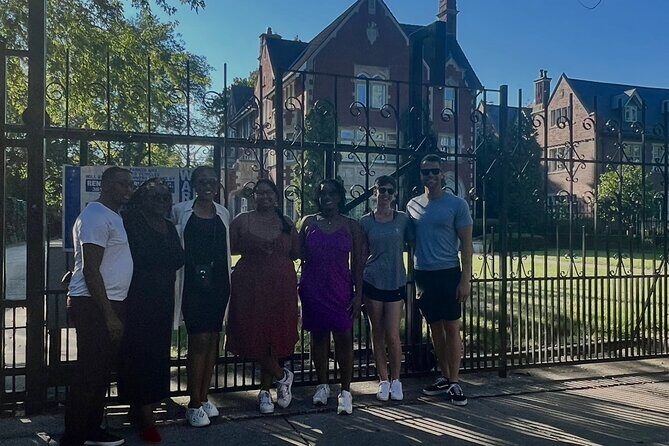
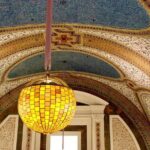
Your walk ends at the Blackstone Branch of the Chicago Public Library, which is the city’s oldest public library. The tour notes Greco-Roman architecture and a rich history, making it a strong final stop because it’s both beautiful and meaningful.
You’ll spend about 20 minutes there to land the experience. Libraries work well as a finishing point on a history tour because they’re about knowledge in the simplest form: reading, learning, and community access.
One more reason this ending works: a library feels like a natural pause after walking past major historic homes and advocacy headquarters. It gives you a place to reset, take in the building details, and reflect on what you’ve just learned.
Price, pace, and what to bring for a 2–3 hour walk
The price is $5.00 per person, which is unusually low for a guided walking tour that includes multiple major landmarks plus drinks. I’d treat the value as two layers: first, what you get (guided context at several key sites), and second, how efficient it is. For a short window, you cover a lot of meaningful ground without needing to rent a car or spend time figuring out complicated logistics.
The tour lasts 2 to 3 hours (about 2.5). That’s enough time to keep momentum while still letting the guide slow down at the most important moments. Group size is capped at a maximum of 50 travelers, so you should expect a typical small-group feel rather than a massive crowd.
A few practical tips from how the tour is set up:
- Bring a camera/phone for the home photo stops.
- Come with questions. The guide specifically says she’s happy to answer what she knows.
- Wear shoes for walking. The tour is best with at least moderate physical fitness.
- Plan for good weather. This experience requires it, and if it can’t run due to poor weather, you’ll be offered another date or a full refund.
- The tour is near public transportation, so you’re not locked into one complicated arrival plan.
Also, you’ll have a mobile ticket, which is handy if you’re doing this as one stop in a longer Chicago itinerary.
Who this tour is for (and who should skip it)
This experience is a great fit if you want:
- Black History in Chicago told in a place-based way (not just a slide deck)
- a walking tour that connects Bronzeville to nearby neighborhoods like Kenwood
- real photo stops at landmark residences and institutions
- a guide who welcomes questions and talks like a South Sider who knows the streets
You might want to skip it if:
- you strongly prefer museum interiors during the scheduled tour time (since the DuSable Museum isn’t entered)
- you hate walking or the idea of spending several separate blocks on foot
- you only want sites you can quickly photograph with minimal explanation (this route includes talk-heavy context at some stops)
Should you book this Bronzeville Black History tour?
Yes, if you’re looking for a low-cost, high-meaning walking experience that helps you understand Black Chicago through specific places. For $5, you get a lot: major stops tied to national figures, neighborhood context, murals and street art along the way, plus drinks to keep the energy up.
It’s especially worth booking if you’re visiting on a tight schedule and want a guided overview before you go deeper on your own—like pairing the walk with a separate visit inside the DuSable Museum. If you’re the kind of traveler who likes questions, conversation, and standing in front of history, this route is a strong choice.
FAQ
What is the duration of the walking tour?
It lasts about 2 to 3 hours (approximately 2.5 hours).
How much does the tour cost?
The price is $5.00 per person.
Where does the tour start?
The tour starts at the DuSable Museum of African American History and Education Center, 740 E 56th Pl, Chicago, IL 60637.
Does the tour include entry into the DuSable Museum?
No. The tour starts in front of the museum, but it does not include going inside or a museum tour. Admission is not included.
What major stops are included?
The tour includes stops at Washington Park, Casa de Barak Obama, Operation Rainbow PUSH National Headquarters (930 E 50th St), Muhammad Ali’s former home (4944 S Woodlawn Ave), and the Blackstone Branch, Chicago Public Library.
Is there a mobile ticket?
Yes, the tour uses a mobile ticket.
Is the tour dependent on weather?
Yes. The experience requires good weather. If it’s canceled due to poor weather, you’ll be offered a different date or a full refund.
How soon will I get confirmation after booking?
You should receive confirmation within 48 hours, subject to availability.