REVIEW · GUIDED
BYOB Chicago River Guided History Tour
Book on Viator →Operated by Chicago Boat Company · Bookable on Viator
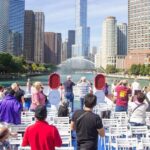
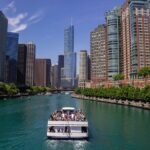
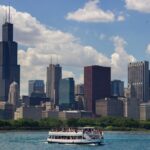
Chicago’s history looks better from a boat. This 2-hour guided cruise takes you along the Chicago River and focuses on specific turning points, from early settlement sites to disaster, civic engineering, and the 1893 World’s Fair. It’s a BYOB setup, so you control the vibe and cost, and the guide keeps the facts moving without turning it into a lecture.
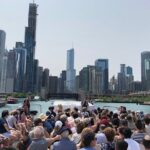
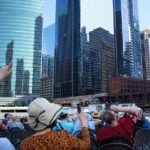
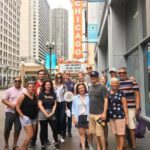
I like two things right away: the small group size (up to 18) makes the guide feel present, and the boat setup is practical—ice coolers are provided, there’s a bathroom onboard, and you’re not stuck sitting on bare benches. One thing to consider is weather: the experience runs only when conditions are good, and Chicago can still feel cold on the water even when the city seems fine from land.
In This Review
- Key Highlights You Should Care About
- What This Cruise Feels Like: A Guided Ride Through Chicago’s Turning Points
- Getting to the Boat: Sweet Home Gelato and a Smooth Riverwalk Start
- The Party Barge Setup: U-Shaped Bar, Ice Coolers, and Onboard Comfort
- What Stops You’ll See: Fort Dearborn, the Fire, and a Bridge That Changed Everything
- 1964 Turning Point: Industrial Age to Residential Metropolitan
- The Chicago River Reversal: How the Water Shaped the City
- 1893 World’s Fair: Inventions You Still See Today
- Captain Santa and the Rouse Simmons: Christmas Trees on the River
- BYOB, No Glass, and the Simple “Bring Your Own” Strategy
- Duration and Timing: Why Two Hours Works
- The Crew Makes the Difference: Names You Might Hear Onboard
- Who Should Book This Cruise (and Who Might Skip It)
- Should You Book the BYOB Chicago River Guided History Tour?
- FAQ
- How long is the BYOB Chicago River guided history tour?
- How much does it cost?
- Where do I meet the tour?
- Do I need to bring my own drinks?
- Are snacks provided?
- What is included besides the guide?
- Where does the cruise depart from?
- Is it in English?
Key Highlights You Should Care About
- BYOB with ice coolers included, so you can bring drinks and keep them chilled
- Up to 18 people, which makes questions and conversation much easier
- Bathroom onboard, plus charging ports for keeping your phone (and maps) alive
- Big Chicago moments tied to real spots: Fort Dearborn, the 1871 Fire, and major river changes
- World’s Fair and Chicago River reversal themes, so you leave with more than postcards
- Guides with real personality, like Monica, Avril, Maria, and Kelli (names you’ll hear from the crew)
What This Cruise Feels Like: A Guided Ride Through Chicago’s Turning Points
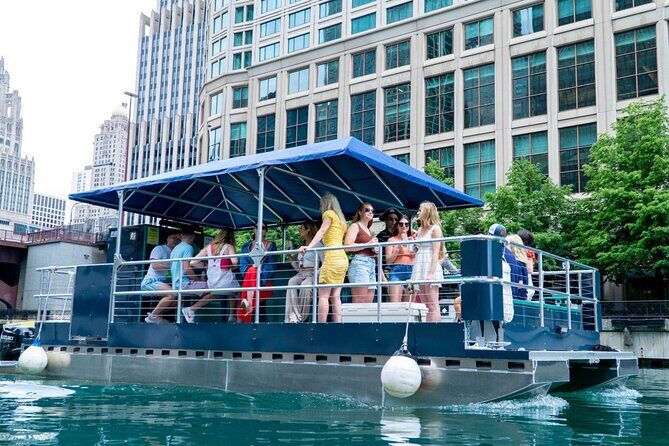
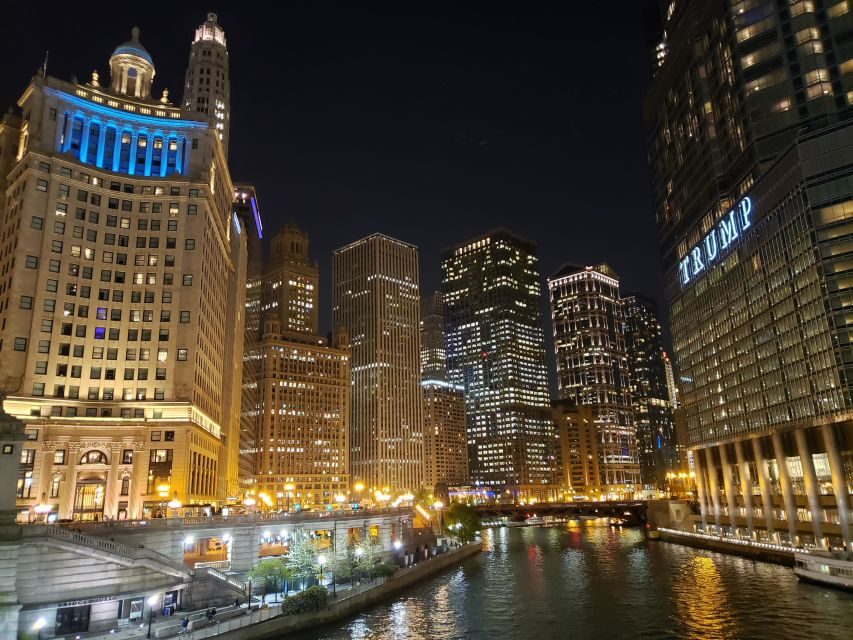
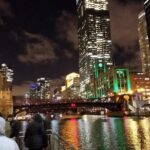
This is the kind of tour that works because it stays specific. Instead of generic “Chicago is great” storytelling, you’ll move stop to stop and connect each location to what changed the city—politically, technologically, and physically. You’ll get the why behind the river’s shape and Chicago’s major historical pivots, all while watching the skyline slide by.
I also like that it’s timed for people who don’t want half a day consumed. About 120 minutes is long enough to feel like a real experience, but short enough that you can still do dinner after. And since it’s BYOB, it’s easier to budget: you pay a set tour fee, then bring your own drinks without paying bar prices.
You can also read our reviews of more guided tours in Chicago



Getting to the Boat: Sweet Home Gelato and a Smooth Riverwalk Start
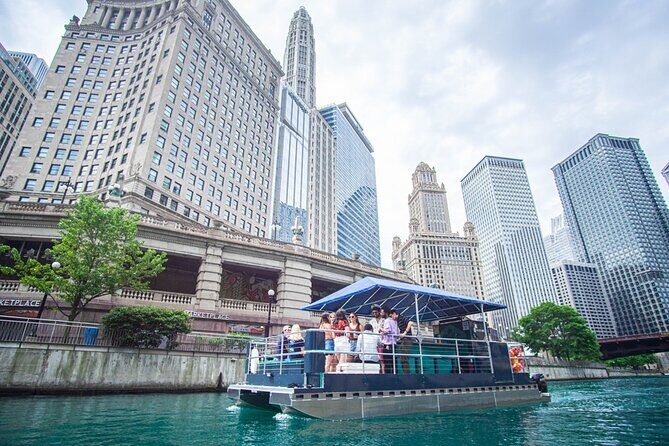
The meeting point is Sweet Home Gelato, 151 W Riverwalk, Chicago, IL 60601. The tour runs from 10:30 am, and it returns back to that same meeting point afterward.
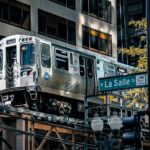
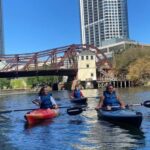
Departures happen from the Chicago Riverwalk between the LaSalle Street and Wells Street bridges. That matters because you’ll want to give yourself a little extra time to get oriented on the Riverwalk—Chicago is easy to get turned around on, especially if you’re also trying to find the right bridge area. If you’re using public transportation, you’re in a good spot since the meeting area is described as near public transit.
Tip: arrive a few minutes early so you can check in and settle before boarding. With a small boat and a firm departure rhythm, being late is just extra stress.
The Party Barge Setup: U-Shaped Bar, Ice Coolers, and Onboard Comfort
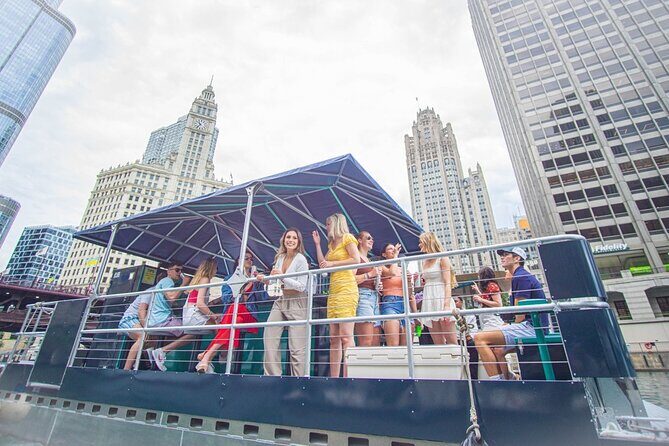
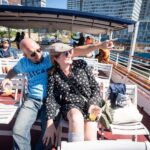
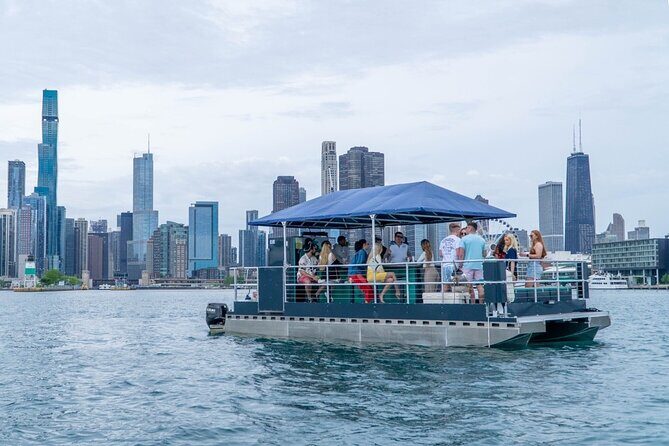
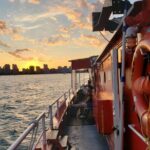
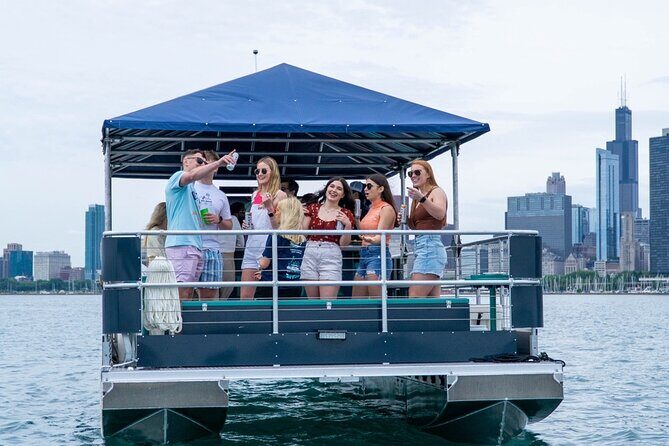
The boat is called the Party Barge, and the layout is built for cruising with friends. It has a u-shaped bar with bar stools, so the center of activity is right where you’ll likely spend time—especially during the early narration when you’re getting your bearings.
You also get practical onboard features that make a difference for a 2-hour outing:
- A head (bathroom) onboard, which is huge on any river cruise
- Charging ports, helpful if you’re filming or using your phone for photos
- Extra seating near the bow, so you can switch up your angle for views
- Coolers with ice for your drinks
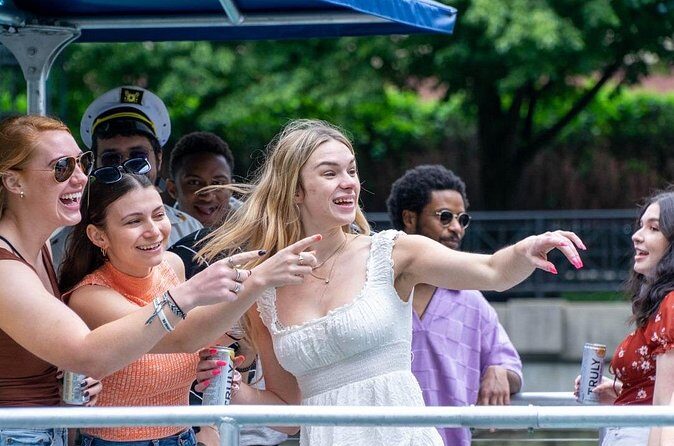
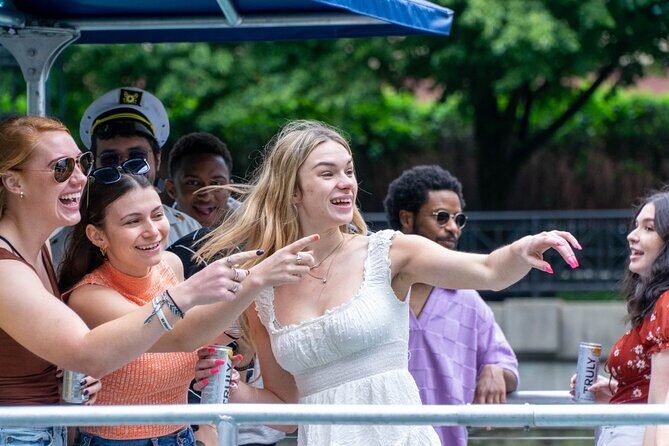
The BYOB part is straightforward: drinks are not included, but you’re welcome to bring them. The key rule is no glass. I’d bring beverages in plastic or cans, and if you’re sharing, plan for how your group wants to chill and pour.
Also, snacks/food aren’t included, but you can bring them onboard. That’s handy if you’re doing this as a mid-day plan and want something simple to munch on while you watch the river.
What Stops You’ll See: Fort Dearborn, the Fire, and a Bridge That Changed Everything
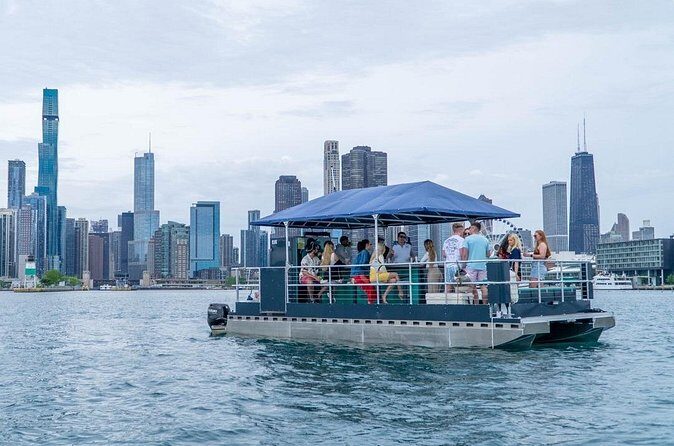
Your first historical anchor comes from the south side of the river, where the site of Fort Dearborn once stood. This is your early “how Chicago began” moment, and it sets up the bigger theme of the cruise: places you can point to, not just eras you vaguely remember.
Next comes the site where the 1871 Great Chicago Fire started. Seeing it from the river adds a physical scale to the story. Fire spread and devastation reshaped the city’s growth, and having you glide past the area while your guide ties it together makes it easier to understand why Chicago rebuilt the way it did.
Then there’s a more modern disaster-linked story. In 1992, a hole formed under a bridge and led to the Great Flood, shutting Chicago down for a whole week. This stop is valuable because it reminds you Chicago history isn’t only old buildings and early settlement—it includes the infrastructure and systems that keep the city running.
A small caution: disaster stories are intense by nature. If you’re on this cruise for pure fun, you may want to balance it with an easy dinner plan afterward so the tone doesn’t drag you into the evening.
1964 Turning Point: Industrial Age to Residential Metropolitan
After the major historic disasters, you move into a different kind of Chicago story—one about the city’s shift in how it developed.
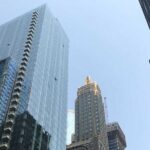
You’ll pass buildings built in 1964, described as the turning point from Chicago’s Industrial Age into the residential metropolitan it is today. That’s a great stop for people who like to see how planning and building choices show up decades later. From the water, you also get a better sense of how the river corridor connects these areas, instead of imagining it from a single street view.
What I like here is that the guide doesn’t just say “this changed.” They connect the stop to what the city became and why that matters for how Chicago works now—work, living, and movement along the river.
You can also read our reviews of more historical tours in Chicago

The Chicago River Reversal: How the Water Shaped the City
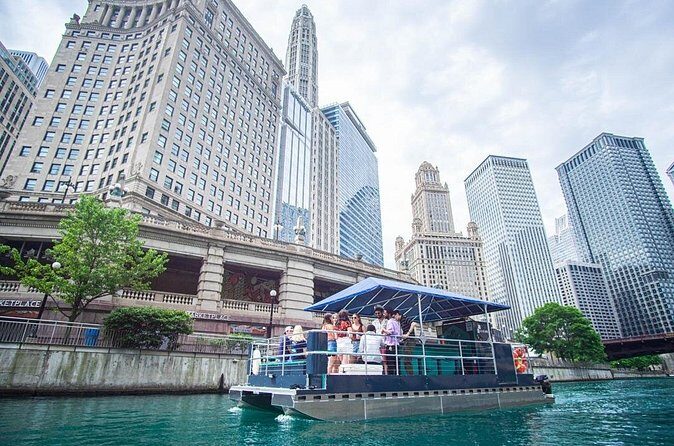
One of the more memorable segments is the explanation of the reverse of the Chicago River and how that has formed the city over the last century.
Even if you’ve heard the phrase before, being on the river helps the concept click. The city’s water story isn’t abstract when you’re literally watching the river line up with bridges and neighborhoods around you. You’ll learn how river changes affected Chicago’s path through time—especially in terms of what the city could support and where growth could take hold.
This is also the section where you’ll probably notice your attention shifting: the skyline becomes a backdrop, and the river becomes the main character. If you’re the type who likes city systems—water, transportation, engineering—this part is worth it.
1893 World’s Fair: Inventions You Still See Today
Next up is the World’s Fair of 1893—a big Chicago name for a reason. From this stop, you’ll learn about inventions introduced at the fair that people still use today.
This portion works because it links a single event to everyday life, instead of treating it like a museum date. When your guide points to where the fair energy played out, it gives you a better sense of why 1893 is tied to Chicago’s reputation for turning ideas into real-world outcomes.
If you’re a design or tech fan, pay attention here. Even without getting a list of every invention, you should leave with a stronger grasp of how Chicago branded itself through innovation.
Captain Santa and the Rouse Simmons: Christmas Trees on the River
The final historical stop has a seasonal flavor. In the late 1800s, Captain Santa set up shop on his sailboat, the Rouse Simmons, selling Christmas trees every winter at this corner of the river.
This is the moment that makes the cruise feel human. Big disasters and infrastructure changes are serious, but a story like this adds texture—how the river served working people and small commerce, not just major institutions. It also gives your guide a chance to show personality, and you’ll likely see more smiles during the narration.
It’s also a reminder that a river corridor is a working space year-round. Chicago didn’t only show up for the grand events; people used the river for everyday life too.
BYOB, No Glass, and the Simple “Bring Your Own” Strategy
The tour is priced at $65.00 per person, and the BYOB format is a big part of the value. You’re not paying included drink prices—you’re paying for:
- a local guided history experience
- use of the coolers and ice
- a boat with onboard comfort like a bathroom and charging ports
So the math depends on what you bring. If you’re okay packing a couple of drinks and maybe splitting snacks, this can feel like a smarter use of time than a cruise where you’re locked into higher bar spending.
Practical BYOB tips:
- Bring drinks in non-glass containers (cans or plastic bottles are easiest)
- Use the provided coolers and ice so you’re not chasing temperature control
- If you’re sharing with a group, agree ahead of time who’s bringing what
- If it’s a chilly day, warm layers beat trying to dress too lightly since you’ll be on the water
Also, since your tour is in English and the boat holds a maximum of 18 travelers, the guide can keep the pacing lively without talking over everyone.
Duration and Timing: Why Two Hours Works
This cruise is about 120 minutes, and it fits perfectly into a normal day in the city. Two hours gives you enough time for a full arc—early settlement, major catastrophe, infrastructure change, and cultural milestones—without turning into a long afternoon where people start losing interest.
Starting at 10:30 am can be ideal if you want daylight views and an early win before the city gets crowded. And because you return back to the meeting point, your next plan can be simple: grab lunch nearby, do a museum hop, or just wander.
If you’re someone who gets restless on tours longer than an hour, this time window is a sweet spot.
The Crew Makes the Difference: Names You Might Hear Onboard
The best part of this kind of guided boat tour is the human touch: how a guide connects the dots and keeps things lively. On cruises with this operator, I’ve heard names like Monica, Avril, Maria, and Kelli connected to the experience, and that matters because it suggests a team approach—captain plus co-captain style support.
From what I’ve learned about the tone, the guides tend to balance humor with facts, and they make sure your group is comfortable while still hitting each major stop. That’s exactly what you want on a boat, where the environment already gives you plenty to look at.
Who Should Book This Cruise (and Who Might Skip It)
This is a great fit if you want:
- a guided history walk turned into a boat ride
- a format that’s social but not overwhelming (small group)
- a chance to see the river area from a new angle without doing museum homework
It’s also good for people who like practical sightseeing. You’re not just staring at buildings—you’re getting the story behind key places along the corridor.
You might think twice if:
- you strongly prefer tours with included drinks (this one expects you to bring your own)
- you hate dressing for wind and cold on the water
- you’re looking for a super long, deep, multi-part history seminar (this is tight and focused for 2 hours)
The experience requires good weather, and if conditions aren’t right, you’ll be offered a different date or a full refund. So check the forecast and don’t gamble with a must-do schedule.
Should You Book the BYOB Chicago River Guided History Tour?
If you want a smart, scenic way to learn Chicago’s story, I’d book it. The price is fair for what you get: two hours, a real guide, coolers with ice, and onboard comfort—all while you watch the river line up with the stories. The BYOB approach also lets you control spending and personalize the experience with your own drinks.
Book this especially if you’re new to Chicago, or if you’ve been in the city but haven’t connected the dots between the river, major events, and how Chicago evolved. It’s the kind of tour that makes you look at the river differently the rest of your trip.
FAQ
How long is the BYOB Chicago River guided history tour?
It runs for about 2 hours.
How much does it cost?
The price is $65.00 per person.
Where do I meet the tour?
You meet at Sweet Home Gelato, 151 W Riverwalk, Chicago, IL 60601.
Do I need to bring my own drinks?
Yes. This is a BYOB cruise, and drinks are not included. You can bring drinks, but no glass is allowed.
Are snacks provided?
Snacks/food are not included, but you are welcome to bring your own onboard.
What is included besides the guide?
The tour includes coolers and ice, plus the local knowledgeable guide.
Where does the cruise depart from?
The boat departs from the Chicago Riverwalk between the LaSalle Street and Wells Street bridges.
Is it in English?
Yes, the tour is offered in English.