REVIEW · 2-HOUR EXPERIENCES
2-Hour Chicago’s Chinatown History and Culture Tour
Book on Viator →Operated by Chinatown Visitor Center · Bookable on Viator
Chinatown hits you fast, then teaches you. I like the English-speaking guide who keeps the pace easy, and I like how the route starts with street-level visuals like zodiac statues before moving into deeper context.
The one thing to watch is the 2-hour time limit. This is a highlights tour, so if you want long, detailed stories about everyday lives, you may feel it moves a little quickly.
In This Review
- Key things to know before you go
- Why This Two-Hour Chinatown History Walk Works
- Meeting Point on Wentworth: Easy Start, Flexible Finish
- Chinatown Square: Zodiac Statues, Murals, and St. Anne’s Bakery
- Archer and Cermak: How Old Chinatown Took Shape
- Pui-Tak Center, Won Kow Building, and the TerraCotta Tile Trail
- Merchant associations: the less-famous but crucial story
- Chinese-American Museum of Chicago: Art and Innovation in One Stop
- Nine Dragon Wall: Dragons, Good Fortune, and a Beijing Connection
- Ping Tom Memorial Park: River Walks and Skyline Views to Close
- Price and Value: What $30 Buys You Here
- How Much Depth Should You Expect?
- Who Should Book This Tour (and Who Might Skip)
- Should You Book 2-Hour Chicago’s Chinatown History and Culture Tour?
- FAQ
- How long is the Chinatown history and culture tour?
- What does the tour cost, and what’s included?
- Are admissions included for the stops?
- Where does the tour start and end?
- Is the tour in English, and are service animals allowed?
- What should I know about weather?
Key things to know before you go
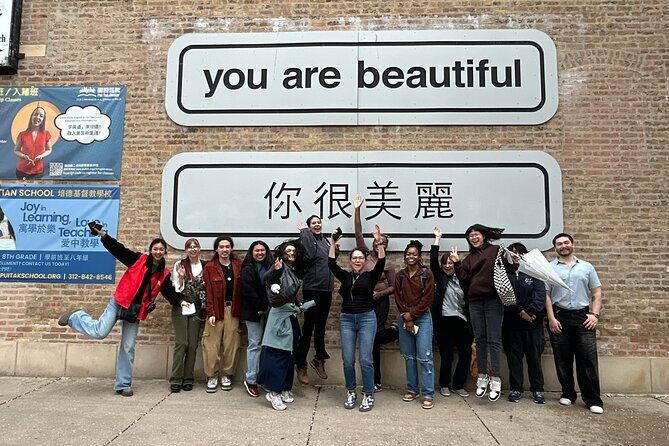
- Small group size (15 max) keeps it manageable for walking and photo stops
- Mostly free admissions along the way, including the museum stop
- Big symbolism on display like the Nine Dragon Wall modeled after Beijing’s Beihai Park
- Lots of photo corners including the Welcome Gate and well-known historic building façades
- A scenic finish at Ping Tom Memorial Park with river walking paths and possible Water Taxi access
Why This Two-Hour Chinatown History Walk Works
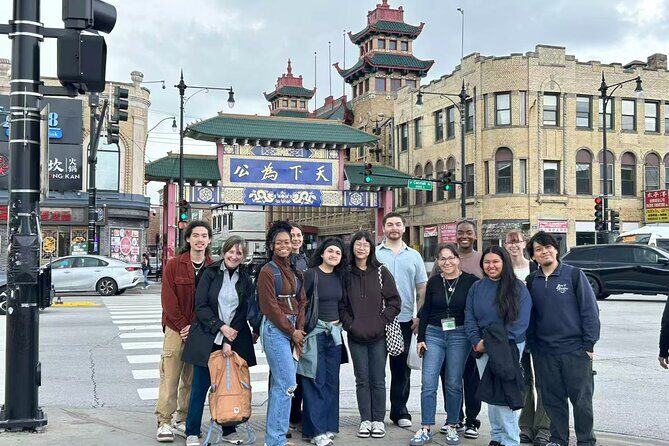
This tour is designed like a good appetizer: it gives you enough to get oriented fast, without demanding an all-day commitment. You’ll spend your time where Chinatown’s “look and meaning” are visible—murals, tiles, gates, plaques, and the kind of storefront streetscapes that tell you how neighborhoods grow.
What I like most is that it’s not just sightseeing for sightseeing’s sake. You’re shown how symbols work (zodiac animals, dragon imagery, tiles) and why certain locations mattered (merchant associations, community centers, and evolving street life). It also helps that the guide is English speaking and focused on history and culture, not just directions.
The vibe is practical too. You’ll be walking through multiple key streets and corners, then landing in spots where you can pause, take photos, and re-center your bearings.
You can also read our reviews of more historical tours in Chicago
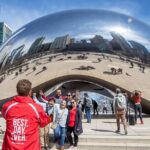


Meeting Point on Wentworth: Easy Start, Flexible Finish
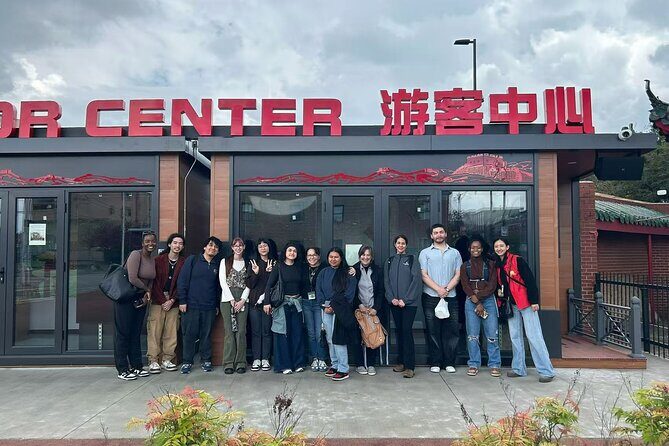
You’ll start at 2189 S Wentworth Ave, Chicago, IL 60616. That’s close enough to transit that you won’t feel like you’re trekking across the city just to begin.
The tour ends at Chinatown Square Plaza, 2133 S China Pl. The plan is simple: return to that plaza area for foods and drinks, or keep your day going by relaxing at Ping Tom Memorial Park. If you choose the park option, you can also use the Water Taxi to reach downtown Michigan Avenue, which is handy if you’d rather not plan your return transit.
Because the group is capped at 15 travelers, you’re less likely to feel swept along like a cattle-car situation. Still, you should be ready for steady sidewalk time.
Chinatown Square: Zodiac Statues, Murals, and St. Anne’s Bakery
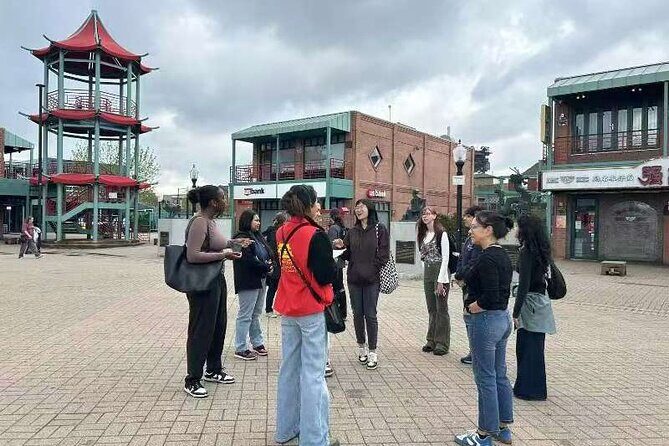
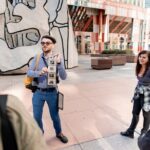
Stop 1 is Chinatown Square, and it’s an attention-grabber right away. You’ll see a mural plus 12 zodiac animal statues while walking through the plaza. This is a smart opener because zodiac imagery is a common thread in Chinese culture. When you spot it here, it makes later stops—especially the dragon-themed ones—feel connected instead of random decoration.
As you move through the plaza, you pass recognizable day-to-day neighborhood sights: Joy Yee and a mix of general merchandise shops, restaurants, and ice cream parlors. That mix matters. Chinatown isn’t just historic set dressing; it’s a lived-in commercial district.
You’ll also be near the historic St. Anne’s Bakery. Having a landmark like that early helps you understand the layering of the neighborhood—community institutions, long-running businesses, and newer storefront energy sharing the same blocks.
This is the kind of stop where you can pause, take photos, and let the neighborhood “register” before the tour starts adding historical structure.
Archer and Cermak: How Old Chinatown Took Shape
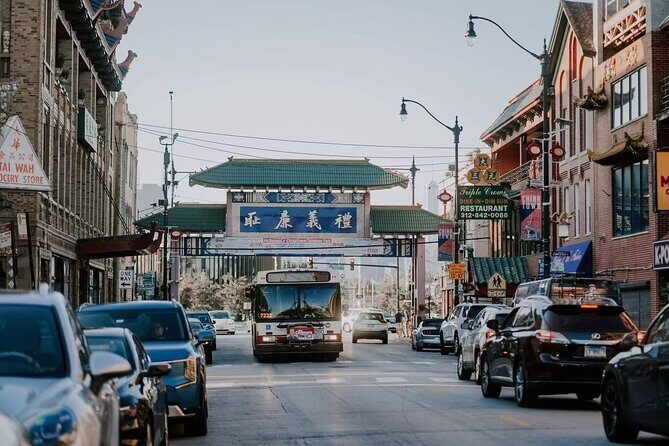
Stop 2 is where the tour shifts into street narrative. You’ll cross Archer, then Cermak Rd. There’s a specific historical detail here: Cermak is named for a former Chicago mayor who was killed in an assassination attempt on a U.S. President. That kind of fact sounds like trivia until you realize how often big national events and local city history are tangled together in street names.
From there, you walk east while hearing about how Old Chinatown developed. This is one of those moments where the guide turns a modern street grid into a story. You’re not just walking from one landmark to another—you’re learning how these streets helped shape a community over time.
Then you’ll hit two very photo-friendly zones:
- The Welcome Gate at the corner of Wentworth
- An alley linked with the Chicago PD TV show
If you like street photography, this portion is built for it. You’ll get the visual markers that people associate with Chicago’s Chinatown identity, and you’ll also get why those markers exist in the first place.
Pui-Tak Center, Won Kow Building, and the TerraCotta Tile Trail
Still in Stop 2, the tour continues with major historic corners that look beautiful and also carry cultural weight.
You’ll reach the historic Pui-Tak Center, and nearby you’ll see the Won Kow building. The tour highlights that it’s been used in many TV shows and movies, and that it was a favorite hangout of legendary Chicago gangster Al Capone. Even if you’re not a gangster-movie person, that pop-culture connection helps you remember the place because it’s so widely referenced.
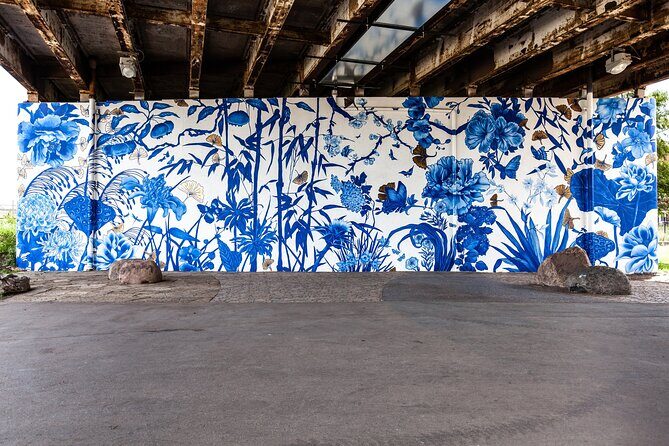
A standout visual detail here is the TerraCotta decorative tilework. You’ll be pointed out the recessed balcony above Emperor’s Choice restaurant, and you’ll notice similar TerraCotta tiles on the Pui-Tak Center and other buildings throughout Chinatown. This matters because it turns a pretty façade into a clue. Tiles like this aren’t just decoration; they’re part of how craftsmanship and community presence were made visible on streets.
You’ll also stop at the oldest Chinese bakery store in Chinatown: Chiu Quon. This is the kind of stop that feels simple, but it’s valuable. A neighborhood’s history doesn’t live only in museums. It lives in who keeps baking, selling, and serving day after day.
You can also read our reviews of more tours and experiences in Chicago


Merchant associations: the less-famous but crucial story
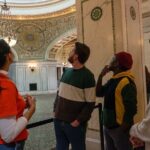
After the key building stops, you’ll spend a few minutes on the importance of merchant associations in developing Chinese communities. This is one of the most meaningful parts of the tour because it shifts the focus from single buildings to how communities organize. Trade groups, social ties, and shared support networks often determine whether a neighborhood survives, grows, and adapts.
It’s also the part you’ll appreciate most if you like history that explains how real people make systems work.
Chinese-American Museum of Chicago: Art and Innovation in One Stop
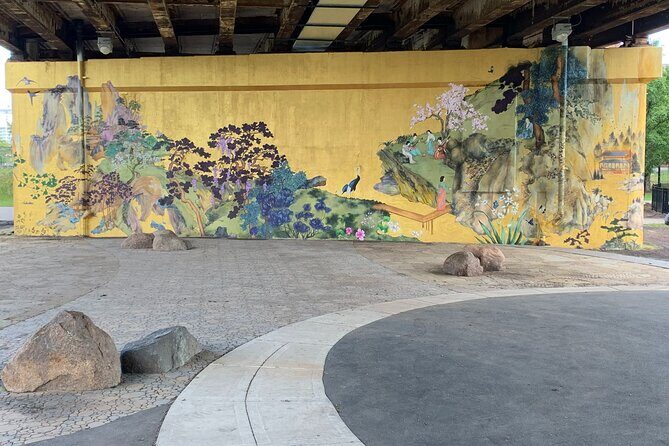
Stop 3 is the Chinese-American Museum of Chicago. The focus here is on unique local Chinese American history, with a spotlight on current Chinese American art, culture, and innovation.
Even though you only have about 30 minutes, the museum stop has a clear purpose. It helps you connect the street-level visuals to modern cultural life. In other words: you see Chinatown’s historic shapes, then you move into how the community expresses itself now.
This stop is also great if you want more than murals and building façades. The museum gives you a moment where you can slow down, reset your understanding, and get a broader sense of how identity shows up in art and public storytelling.
If you’re the type who likes museums but hates spending half a day in line, this time frame may feel exactly right.
Nine Dragon Wall: Dragons, Good Fortune, and a Beijing Connection
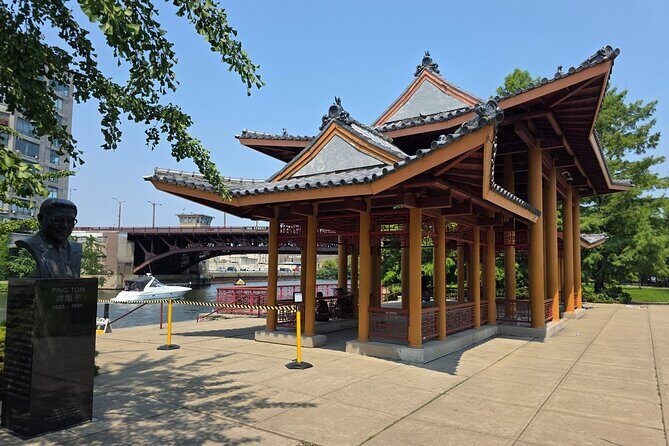
Stop 4 is the Nine Dragon Wall. This one is special because it’s made of glazed tile from China and modeled after the wall in Beihai Park in Beijing.
The tour also points out symbolism: the Chinatown mural replicates the large dragons plus more than 500 smaller dragons painted in red, gold, and blue. In Chinese cultural interpretation, dragons often connect to good fortune and prosperity. Here, that idea is turned into a visual theme you can read at a glance.
There’s also a “rare outside China” fact: this particular Nine Dragon Wall is one of only three such replicas outside China. That turns a short stop into something that feels extra purposeful. You’re not just seeing a wall—you’re seeing a specific cultural artifact designed to be a recognizable form of heritage abroad.
This is a short stop (about 5 minutes), but it’s efficient. It gives you a strong image to remember later when you’re trying to explain Chinatown to someone who hasn’t been.
Ping Tom Memorial Park: River Walks and Skyline Views to Close
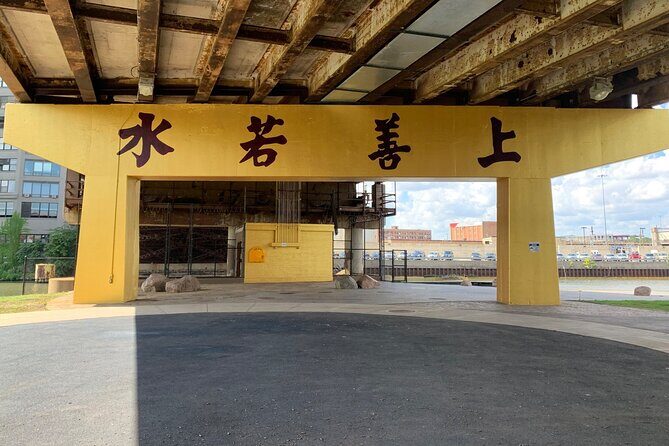
Stop 5 is Ping Tom Memorial Park, where the tour shifts from historical streets to outdoor views along the South Branch of the Chicago River.
You’ll walk among trails with wonderful views of Chicago’s skyline and historic bridges. That river setting changes the pace quickly. After blocks of buildings and signage, the open sightlines help you decompress.
You’ll also see Chinese murals under the 18th Street Bridge, plus amenities that make the park feel like more than a decorative postcard. There’s a pagoda pavilion and a children’s playground, so it’s often more of a hangout space than a monument.
One practical perk: Water Taxi access. The tour notes a Water Taxi to Ogilvie Metra Station and Michigan Avenue operated by Wendalla. If you plan to keep exploring downtown after the tour, this can save you time and stress.
This is also where I think the tour gives you real value. Most short tours end on a sidewalk and call it a day. This one gives you an option to turn your last half-hour into a scenic buffer before the rest of your day.
Price and Value: What $30 Buys You Here
At $30 per person for an approximately 2-hour tour, the value is strong—mostly because the itinerary is packed with stop-by-stop “why it matters” moments.
A few value boosters:
- English-speaking guide service for the full walk
- A souvenir gift from the Chinatown Visitor Center
- Discount for future tours and workshops
- Multiple stops marked as ticket-free on this route, including the Chinese-American Museum of Chicago and the major sights
You still need to plan for gratuity. Suggested guide gratuity is $6–10 per person, or more. Since it’s not included, it’s smart to carry cash and also be ready for Venmo or PayPal as noted. If you’re on a tight budget, build gratuity into your total cost early so there are no last-minute decisions.
How Much Depth Should You Expect?
Let’s be honest about fit.
This tour is built to cover many key Chinatown landmarks in about two hours. That means you get highlights—strong orientation, strong visuals, and a handful of historical context anchors like merchant associations and development of Old Chinatown.
If you’re the type who wants a long, slow deep dive into everyday life—work, immigration patterns, family stories, and years of change—this may feel a bit more like a fast guided walkthrough than a full academic experience. The structure just doesn’t allow that much depth.
If, however, you want a smart first visit to Chinatown, you’ll likely appreciate how quickly it helps you understand what you’re looking at and why it’s there.
Who Should Book This Tour (and Who Might Skip)
Book it if:
- You want a short, focused introduction to Chinatown’s symbols, buildings, and institutions
- You enjoy photo stops and want an organized route rather than wandering randomly
- You’d like a museum stop without committing to a long museum session
- You want a scenic finishing option at a river park with a Water Taxi possibility
You might skip it or pair it with extra time if:
- You want long-form stories about everyday life and specific community histories
- You prefer fewer stops with more discussion per stop
Should You Book 2-Hour Chicago’s Chinatown History and Culture Tour?
My take: yes, if this is your first or second time in Chicago’s Chinatown and you want a guided sampler that gets you oriented fast. The blend of murals, zodiac and dragon symbolism, historic building tilework, a real museum stop, and then river views gives you a satisfying arc.
Two-minute warning: because it’s a compact route, you’ll get the key points, not a full novel. If you want depth, plan a follow-up visit to the museum or spend extra time around the Welcome Gate and the TerraCotta tile streets so the details settle in.
FAQ
How long is the Chinatown history and culture tour?
It’s about 2 hours.
What does the tour cost, and what’s included?
The price is $30.00 per person. Included are an English-speaking tour guide, a souvenir gift from the Chinatown Visitor Center, and a discount for future tours and workshops.
Are admissions included for the stops?
The tour lists admission as free for the stops including Chinatown Square, the Pui-Tak Center area, the Chinese-American Museum of Chicago, the Nine Dragon Wall, and Ping Tom Memorial Park.
Where does the tour start and end?
It starts at 2189 S Wentworth Ave, Chicago, IL 60616 and ends at Chinatown Square Plaza, 2133 S China Pl, Chicago, IL 60616.
Is the tour in English, and are service animals allowed?
Yes, it’s offered in English, and service animals are allowed.
What should I know about weather?
The experience requires good weather. If it’s canceled due to poor weather, you’ll be offered a different date or a full refund.
If you want, tell me what month you’re going and whether you care more about photos or museum time, and I’ll suggest how to plan the rest of your day around this route.