REVIEW · 2-HOUR EXPERIENCES
Chicago: Downtown Loop & Millennium Park 2 Hour Walking Tour
Book on Viator →Operated by Tours By Foot - Chicago · Bookable on Viator
Chicago’s downtown tells stories fast.
This 2-hour walk links the Loop’s dramatic city story with art you can touch and photograph, especially at Cloud Gate (The Bean). I like how the route is compact and focused, so you get a clear sense of Chicago’s character without feeling like you’re marching across the whole city.
What I also appreciate is the guide’s tone: they’re friendly, and they share enough context to make the landmarks click. One thing to consider: it’s still a walking tour, so even with indoor breaks in cold or rainy weather, you’ll want layers and decent shoes.
In This Review
- Key things you’ll notice on this Loop and Millennium Park walk
- Why this 2-hour Loop plus Millennium Park route makes sense
- Starting at the Chicago Theatre and setting up Chicago’s themes
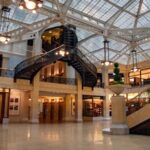
- Marshall Field and Company Building: the department-store stop that explains a whole era
- Daley Bicentennial Plaza and Picasso: a quick stop with a strong visual payoff
- Getting your bearings in the Loop: trains, the Great Chicago Fire, and why it all connects
- Millennium Station: learning where the Loop name comes from
- Chicago Cultural Center and the Tiffany Windows indoor reset
- Cloud Gate and Millennium Park: the skyline reflections finale
- Price and value: is $49 per person fair for this 2-hour walk?
- Who this walking tour fits best
- What to bring (and what to do) for the smoothest experience
- Should you book this Chicago Loop and Millennium Park walking tour?
- FAQ
- Where is the tour starting point?
- Where does the tour end?
- How long is the walking tour?
- Is admission included for the stops?
- Is this tour suitable for winter or rainy weather?
- How large is the group?
- Are service animals allowed?
- Can I cancel for a full refund?
Key things you’ll notice on this Loop and Millennium Park walk
- The Chicago Theatre marquee and its Wonder Theatre nickname set the tone early
- Marshall Field and Company building lore gives you department-store context you’ll remember
- Daley Bicentennial Plaza’s Picasso sculpture turns a quick stop into a real photo moment
- The Loop taught through trains and resilience (including the Great Chicago Fire of 1871)
- Tiffany Windows at the Chicago Cultural Center gives you a colorful indoor reset
- Cloud Gate and Millennium Park finish with skyline reflections and major park landmarks
Why this 2-hour Loop plus Millennium Park route makes sense
Chicago can feel huge when it’s your first day. This tour keeps you in the highest-impact zone: the Downtown Loop for architecture and big moments, then Millennium Park for iconic public art and a more relaxed vibe.
You also get a smart pacing. The longest stretch is about the Loop itself, which is where you’ll understand how the city’s design and history shaped everyday life. Then the tour shortens up into quick, high-payoff stops—perfect if you don’t have a full morning or afternoon.
You can also read our reviews of more walking tours in Chicago

Starting at the Chicago Theatre and setting up Chicago’s themes
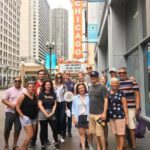
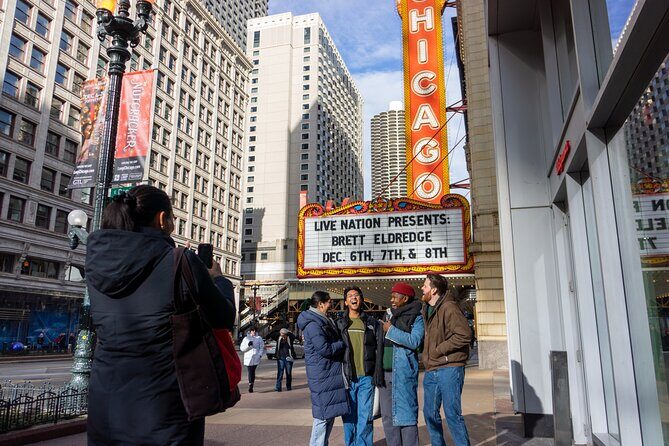
You meet at the Chicago Theatre, 175 N State St. The first stop is short, but it works because it frames what you’ll be doing for the rest of the walk: looking at famous Chicago landmarks and learning why they matter.
The Chicago Theatre is known for grand architecture and a classic marquee, and it’s also famous for its Wonder Theatre of the World nickname. That early context helps you look past the surface. Instead of just seeing a pretty building, you start noticing how Chicago puts on a show—whether it’s theater, architecture, or public art.
Practical tip: since this stop is only about 10 minutes, come ready to look up and take photos quickly.
Marshall Field and Company Building: the department-store stop that explains a whole era
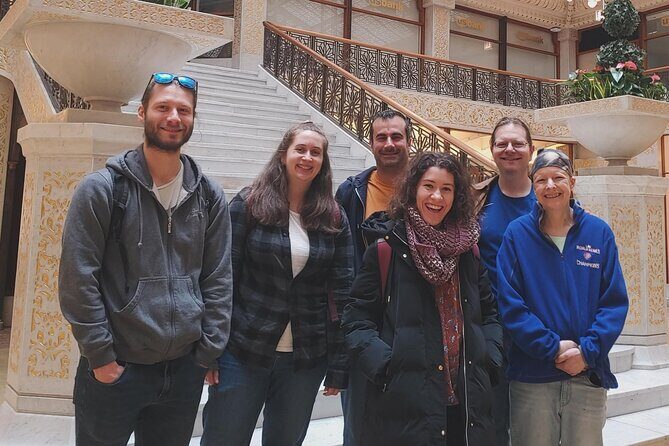
Next up is the Marshall Field and Company Building, with about 10 minutes on this part and admission Ticket Included. Even if you don’t plan to shop, this stop is useful because it connects Chicago to a broader idea of how the city served people—through major institutions and landmark shopping spaces.
The tour’s focus here is the history behind Chicago’s legendary department store. That means you’ll come away with a clearer sense of Chicago’s commercial identity, not just a few building photos. It’s the kind of stop that improves your city awareness when you later walk through other downtown streets on your own.
Daley Bicentennial Plaza and Picasso: a quick stop with a strong visual payoff
You’ll spend around 10 minutes at Daley Bicentennial Plaza. The key feature on this stop is the Picasso sculpture, which has become a city symbol. That matters because it changes how you interpret public art. Instead of thinking it’s just a statue, you start understanding it as a marker of civic identity.
This is also one of the easiest “everyone can enjoy it” moments. You can take photos without needing tickets, and the plaza setting gives you space to pause with the group.
Getting your bearings in the Loop: trains, the Great Chicago Fire, and why it all connects
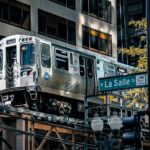
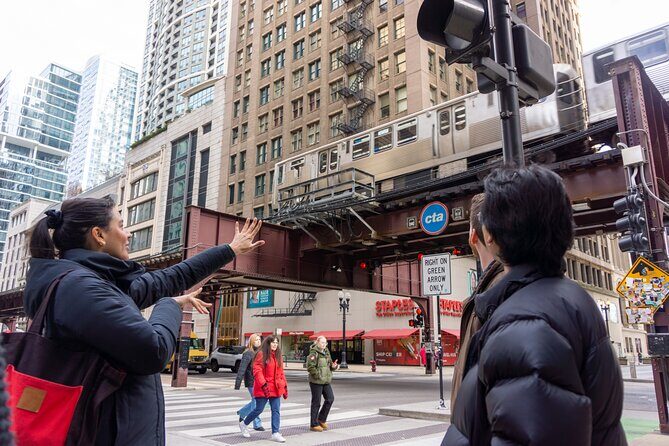
One of the best parts of this tour is that the Loop isn’t treated like a random downtown blur. You spend about 30 minutes on the Loop itself, and the guide ties what you’re seeing to two big ideas: the Loop’s defining train tracks and Chicago’s resilience after the Great Chicago Fire of 1871.
Here’s how the story lands for you as you walk:
- You see the Loop as a commercial hub, not just a name on a map.
- You learn how the train tracks shaped movement and helped define the area people recognize as the Loop.
- You connect the fire of 1871 to why the modern city looks the way it does today—rebirth is part of the explanation, not just a dramatic detail.
If you want your first-day orientation, this is the middle-anchor stop. It gives you a framework that makes the rest of downtown feel less confusing.
You can also read our reviews of more tours and experiences in Chicago




Millennium Station: learning where the Loop name comes from
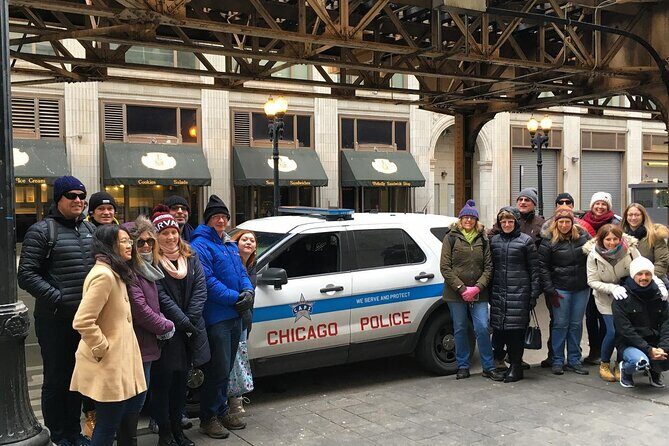
After the Loop, you hit Millennium Station, with about 10 minutes here. This stop is specifically about the elevated train system that gives the Loop its name.
Even though it’s another short stop, it’s valuable because it turns a nickname into something concrete. You’re not guessing why locals call it the Loop—you get the reasoning while you’re standing in the right place, looking at the transit context that shaped the city’s layout.
Photo tip: use this time for wide shots that show the station area and surrounding street geometry, since you’ll see more on your own later if you understand the transit pattern first.
Chicago Cultural Center and the Tiffany Windows indoor reset
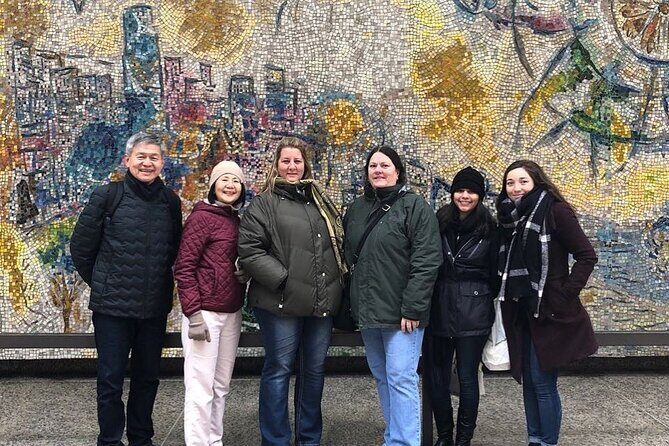
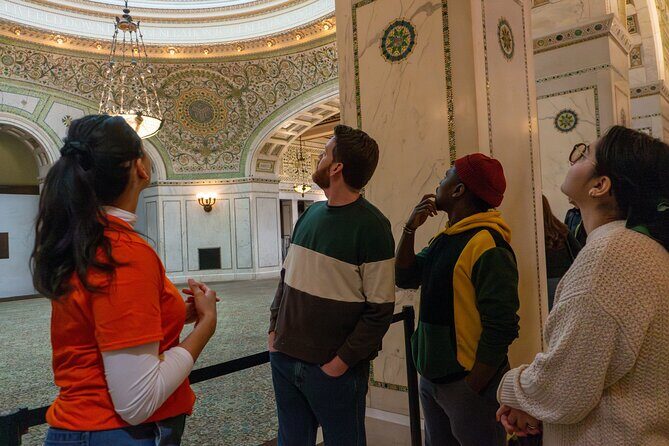
When the weather turns—cold, rainy, gray days—this tour is designed to keep you moving but not miserable. One big example is the Chicago Cultural Center, where you get about 10 minutes and free entry to see the Tiffany Windows.
The description is exactly what you need: delicate, colorful glass works of art. This stop is a smart break in the middle of an outdoor-heavy day because it gives your eyes a new kind of detail. Instead of reading building facades and street grids, you’re looking closely at glass color and light.
If you’re traveling in winter, this is the kind of indoor stop that makes the whole experience feel worth it. You’re still learning, but the body gets a breather.
Cloud Gate and Millennium Park: the skyline reflections finale
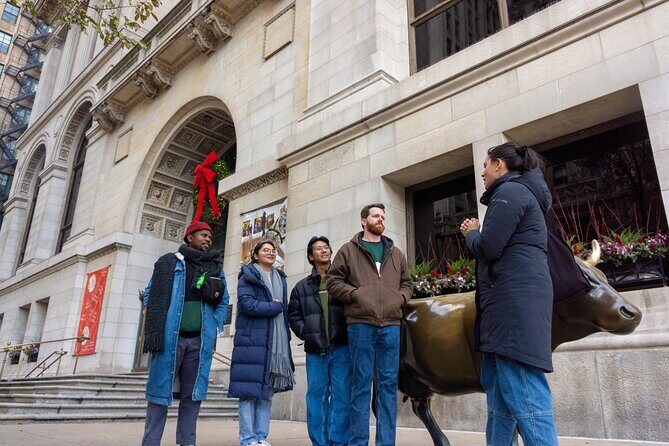
The final stretch is built around two headline attractions: Cloud Gate (The Bean) and Millennium Park. Cloud Gate gets about 5 minutes, and Millennium Park gets about 10 minutes.
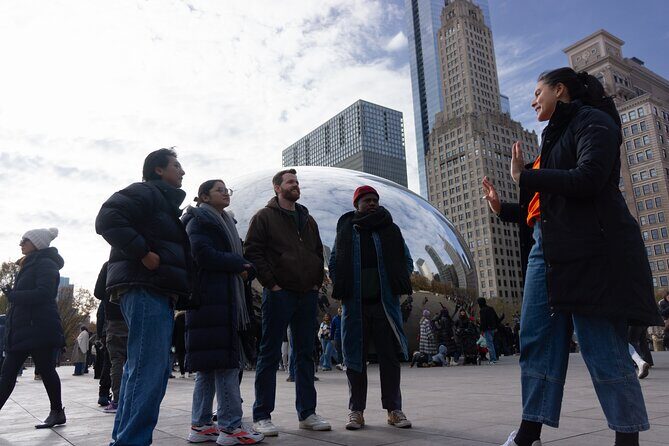
Cloud Gate is designed by Anish Kapoor, and its reflective surface is the point. The shape captures the skyline and invites interaction—meaning you’re meant to move around it, try different angles, and watch your reflection distort across the metal.
Then you head into Millennium Park, which is a renowned urban space in the heart of Chicago. You’ll see major features like the Jay Pritzker Pavilion and Lurie Garden, and the tour positions it as a favorite destination for locals and tourists.
Why this works as a landing point:
- You finish with art you can instantly recognize.
- You get a little time to enjoy the park setting, not just rush through a checklist.
- You leave with photos that actually tell a Chicago story, not just random street shots.
Practical tip: because the Cloud Gate stop is short, it helps to decide what you want before you arrive—classic view, close-up distortion, or skyline reflection.
Price and value: is $49 per person fair for this 2-hour walk?
At $49 per person for about 2 hours, the value comes from what’s included and how efficiently it’s organized.
Here’s where the price holds up:
- You get a professional tour guide leading the interpretation, not just a route map.
- The tour includes multiple landmark stops, most of them with free admission for viewing.
- One stop explicitly includes admission: the Marshall Field and Company Building, which lowers the chance of surprise costs.
- The winter-friendly plan matters. Indoor stops during cold or rainy weather add comfort, and comfort changes how much you enjoy the day.
You’re also paying for something harder to measure: a guide who can connect dots. Based on the feedback I’m seeing reflected in the overall tour tone, the strongest satisfaction comes from the combination of city history and practical recommendations—helpful for what you do after the tour ends.
Who this walking tour fits best
This tour is ideal if you:
- Want a first-day orientation to Chicago’s downtown core
- Like architecture and public art, but don’t want a long itinerary
- Prefer guided context over reading signs on your own
- Travel with limited time and want major landmarks grouped together
It’s also a good choice in winter. The tour is designed for cold and rainy conditions with indoor stops. If you’re visiting Chicago in shoulder season and expect weather surprises, this route makes the plan more reliable.
What to bring (and what to do) for the smoothest experience
You’ll be walking through downtown, so don’t show up in thin, non-support shoes. Think comfort first: supportive footwear, layers, and a jacket that handles wind.
Bring:
- A phone or camera for photos at Cloud Gate and the Picasso sculpture
- A warm layer for the indoor/outdoor transitions
- Anything you need to stay dry if it’s raining, since you’ll still be outdoors for parts of the route
Also, since the group is capped at a maximum of 15 travelers, it helps to be ready to move when the guide calls everyone along. Short stops mean the guide is managing time tightly so you see the big pieces.
Should you book this Chicago Loop and Millennium Park walking tour?
I’d book it if you want a guided, efficient introduction to two of Chicago’s most recognizable areas. The mix of theater-and-commerce downtown icons, a clear history thread about the Loop (including the Great Chicago Fire of 1871), and a finish at Cloud Gate makes the 2 hours feel like more than a simple sightseeing stroll.
Skip it only if you hate walking in cold weather or you prefer a slow, unstructured day where you can linger for long stretches at just one spot. This tour is about momentum and coverage, not staying all afternoon in one location.
If you’re trying to decide what to do on day one (or any short-time day), this one gives you a strong foundation for the rest of your Chicago days.
FAQ
Where is the tour starting point?
The tour starts at the Chicago Theatre, 175 N State St, Chicago, IL 60601.
Where does the tour end?
The tour ends at Cloud Gate, 201 E Randolph St, Chicago, IL 60602.
How long is the walking tour?
The tour lasts about 2 hours.
Is admission included for the stops?
Most stops are free to view. Marshall Field and Company Building is listed with admission Ticket Included, and the other stops are marked as free.
Is this tour suitable for winter or rainy weather?
Yes. It is suited for Chicago winter, with indoor stops when it’s cold and rainy.
How large is the group?
The tour has a maximum of 15 travelers.
Are service animals allowed?
Yes, service animals are allowed.
Can I cancel for a full refund?
Yes. You can cancel up to 24 hours in advance for a full refund.