REVIEW · CITY TOURS
The Devil in the White City: A Haunting History Tour
Book on Viator →Operated by Chicago Hauntings · Bookable on Viator
Haunted Chicago, told with city facts. This half-day tour threads 1893 World’s Fair sights together with the legends around H.H. Holmes, using a mix of bus narration and short walks that keep the story moving.
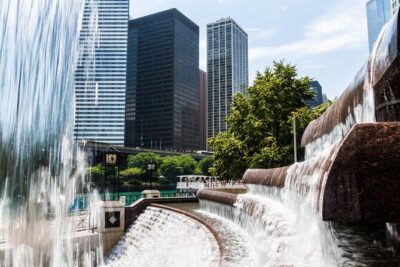
I also like the photo-ready stops, especially Jackson Park’s Japanese Garden, where the setting helps the haunting feel less like chaos and more like a timed scene.
One thing to consider: if you want nonstop horror, go in expecting history-first storytelling. The “haunting” is there, but it shares screen time with Victorian Chicago, architecture, and big-fair details.
In This Review
- Key things you’ll get from this tour
- A 3-hour haunted-history loop that still feels like Chicago
- Meeting at Congress Plaza: where the story starts
- Prairie Avenue Historic District and the Fort Dearborn Massacre context
- The Postal Service building and the legend of the Murder Castle
- Japanese Garden in Jackson Park: a break that still feeds the story
- Jackson Park and the former 1893 World’s Fairgrounds
- The Union Stockyard Gate and the Upton Sinclair link
- Museum of Science and Industry: the last remaining 1893 structure
- Price and logistics: what $64 buys you
- The guide makes or breaks it: Tony’s impact
- Walking amount and comfort: mostly easy, but not zero
- Who should book this tour
- Who should skip (or adjust expectations)
- FAQ
- FAQ
- Where does the tour start?
- How long is the tour?
- What time does it begin?
- How much does it cost?
- Do I need to print a ticket?
- Is this tour mostly on a bus, or do I walk?
- What kinds of stops are included?
- What happens if the weather is bad?
- Should you book this Devil in the White City tour?
Key things you’ll get from this tour
- A tight 3-hour mix of bus sightseeing plus brief on-foot stops, so you cover a lot without being on your feet all day
- H.H. Holmes’ legend tied to real places, including the former Murder Castle site connected to the Postal Service building
- World’s Fair 1893 context built into the route, so the ghost story lands in a bigger Chicago picture
- Jackson Park viewpoints that work well for photos and quick breaks from the bus
- Fort Dearborn Massacre location context at Prairie Avenue Historic District, which adds weight to the “Victorian Chicago” theme
- Smallish group size (max 52), which makes it easier to hear the guide and stay together
A 3-hour haunted-history loop that still feels like Chicago
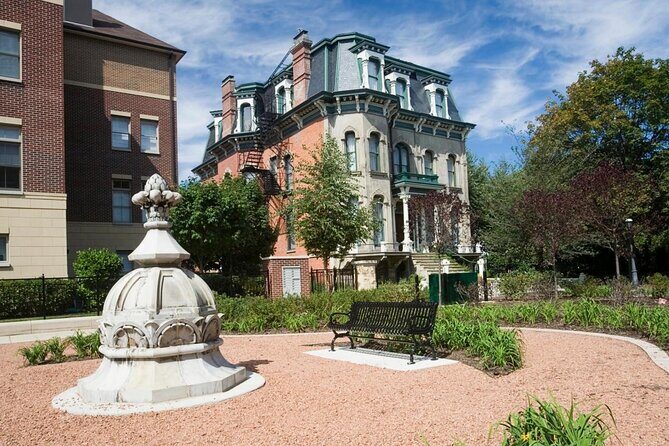
Chicago can do spooky in a practical way. This tour leans into that. You ride by bus to the major waypoints, then step out briefly to look at specific corners of the city where the 1893 World’s Fair era—and the darker myths that grew from it—feel oddly close to the present.
What makes this work is the pacing. You’re not stuck reading plaques for hours. You’re getting a guided narrative that tries to connect Victorian Chicago’s ambitions with the darker side of the same time period. You’ll walk a bit, but it’s not an all-day hike. For most people, it feels like a controlled sprint through history.
You can also read our reviews of more city tours in Chicago


Meeting at Congress Plaza: where the story starts
The tour starts at the Congress Plaza Hotel & Convention Center at 520 S Michigan Ave, with a 2:00 pm departure. That matters more than it sounds. The guide’s framing begins right where the World’s Fair era was part of Chicago’s everyday life, not sealed away in a museum.
It also helps you get your bearings fast. If you’re new to the city, this is a smart way to learn how Chicago’s major landmarks connect. Even if you’re not a “hauntings” person, you’ll still come away with an understanding of how the 1893 fair shaped the city’s image.
Prairie Avenue Historic District and the Fort Dearborn Massacre context
Your first major stop is the Prairie Avenue Historic District. This area is known for its Victorian-era identity, and the tour adds an extra layer by referencing the Fort Dearborn Massacre site.
That’s a useful move. It stops the experience from being only about a single sensational figure. Instead, you get a broader Chicago timeline: settlement violence and early conflict sit in the background, and then later the city’s wealthy, showy era takes center stage.
What I like here: it gives you a “start point” for why Chicago looked the way it did by the 1893 fair—big ambitions, big neighborhoods, big changes.
What to watch for: this isn’t a museum walkthrough. It’s more of a guided look at place and atmosphere, so if you prefer walls of information, you’ll want to take a quick photo or two and then keep listening.
The Postal Service building and the legend of the Murder Castle
One of the most striking segments is at the United States Postal Service site, presented as the former Murder Castle. This is where the tour leans hardest into the H.H. Holmes narrative—using the contrast between an unassuming everyday building and a myth built from terrible stories.
I like this contrast because it makes the experience feel less like a themed attraction. It’s easier to picture how legend attaches to ordinary streets. The tone stays “guided storytelling,” not gore. You’re learning why the story became so sticky and why people keep tying it to specific addresses.
The practical benefit: you’re also seeing real Chicago infrastructure in action. You get a haunting story without the tour turning into a dark-room performance.
Small consideration: if you’re hoping for a long, detailed crime-history lecture, the most intense legend moments may still feel like they’re competing for time with broader World’s Fair context.
Japanese Garden in Jackson Park: a break that still feeds the story
Then comes Jackson Park’s Japanese Garden. This stop is short, and it’s used for something smart: it gives you a clean visual anchor. It’s also an opportunity to get photos without feeling like you’re sprinting through another stop.
This part helps you shift gears. A haunting-history tour can get heavy. A pretty, calm setting lets the guide’s story breathe—and it also reminds you what the 1893 fair was selling: spectacle, design, and visitors from everywhere.
You can also read our reviews of more historical tours in Chicago





Jackson Park and the former 1893 World’s Fairgrounds
From the Japanese Garden, the tour moves into Jackson Park itself, focusing on the former World’s Fair grounds of 1893. This is where the tour really tries to answer the big question: why did this era create both wonder and opportunity for people with less-than-sunny intentions?
I like how the guide ties the fair’s influence to the city’s physical layout. You’re not just hearing that the World’s Fair mattered—you’re seeing where it happened and why it still shows up in Chicago’s identity.
If you want value here: listen closely to the guide’s connections. The “ghost” angle makes more sense when you understand what Chicago was building, showcasing, and attracting in the late 1800s.
The Union Stockyard Gate and the Upton Sinclair link
Next up is the Union Stockyard Gate. The tour frames it as consequential nineteenth-century history and connects it to Upton Sinclair’s groundbreaking work, The Jungle.
This is a smart pivot because it widens your understanding of how Chicago’s industrial and human realities became stories. The fair is one kind of narrative—glamour, power, architecture. The stockyards are another—labor, harsh conditions, and the kind of social attention that turns into major writing.
Even if Holmes is your main reason for booking, this stop adds balance. You end up learning that the same city that could stage a world event also generated the conditions that demanded reform-era storytelling.
Museum of Science and Industry: the last remaining 1893 structure
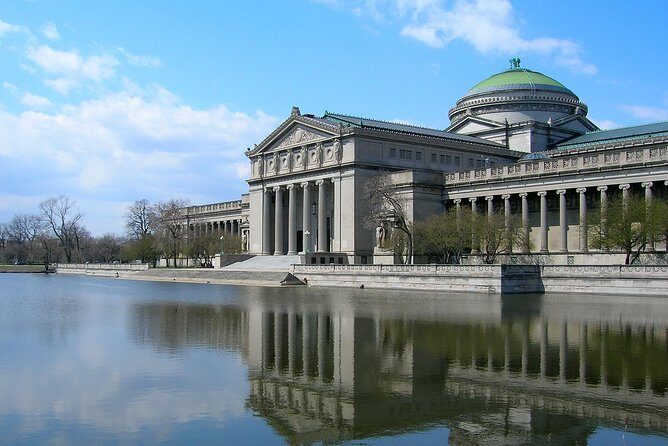
The tour ends at the Museum of Science and Industry, with a focus on the last remaining building from the 1893 World’s Fair. This is a good capstone because it’s tangible. You’re not only hearing about what used to be there—you’re visiting a surviving piece of the fair era.
And that matters for the whole experience. If you only hear legends, you’ll walk away with just a vibe. Ending with a physical reference point helps you remember what the city actually kept.
The tour wraps back at the meeting point area, so you don’t have to manage a complicated end-of-day transit plan. For a 3-hour outing, that’s a big deal.
Price and logistics: what $64 buys you
The price is $64.00 per person, and the tour is commonly booked about 24 days in advance. That tells me this isn’t a “show up and decide at random” type of experience if you’re traveling during busy periods.
Is it good value? For me, it comes down to what you want out of Chicago history.
- If you like guided storytelling and want the route organized, $64 feels fair because you’re getting bus transport plus guided walking segments plus commentary that connects multiple key locations.
- If you prefer to self-guide with your own reading, you might feel a bit like you’re paying for structure, not for exhaustive deep-dive content at each stop.
Group size is capped at 52, which keeps things from turning into chaos. You’ll also use a mobile ticket, which is convenient.
Two practical notes to plan around:
- The experience requires good weather.
- Most travelers can participate, but expect short on-foot segments rather than fully seated sightseeing.
The guide makes or breaks it: Tony’s impact
One name shows up strongly in positive feedback: Tony. People describe him as funny, friendly, and very good at explaining the material in a way that makes you feel like you’re watching the city’s past happen in front of you.
That’s exactly what you want for a topic like this. The Devil in the White City style is part romance, part history, part legend. A guide who can shape that story without losing you in details is the difference between a tour you remember and one you barely recall.
There’s also a caution sign in the feedback: some people felt the pacing could have been tighter, or that the tour spent too long on themes like architecture and millionaires rather than focusing on the World’s Fair and H.H. Holmes for the majority of the time. So I’d frame it this way: this is not a pure Holmes crime tour. It’s Victorian Chicago with Holmes as a major thread.
Walking amount and comfort: mostly easy, but not zero
The tour includes guided tour time both on foot and by bus. The walking is usually described as a little, and the whole setup feels comfortable for a half-day.
Still, one critical point is worth keeping in mind: at least some people found there was more walking involved than they expected. So if you’re sensitive to walking distances, bring sensible shoes and plan for short pauses and transitions.
The upside: none of the stops are described as requiring long, strenuous travel. This is built for people who want to see Chicago efficiently.
Who should book this tour
This is a strong pick if you:
- Want a guided way to connect the 1893 World’s Fair era to modern-day Chicago landmarks
- Like spooky stories but prefer them tied to real places and historical context
- Would rather ride and listen than build your own multi-stop route
- Enjoy a lively guide style and don’t mind that pacing can vary by day
It’s also a good option for first-time visitors because it strings together major neighborhoods and sites in a logical flow.
Who should skip (or adjust expectations)
Skip it if you:
- Want a strict, deep crime-history lecture centered only on H.H. Holmes
- Expect the tour to focus almost entirely on World’s Fair details with only minimal haunting elements
- Need perfect routing with no chance of bus navigation hiccups (some feedback mentioned bus getting lost)
Also, if you’re already very well-read on the subject, you might find yourself wanting more direct facts per stop. In that case, treat the tour as a way to organize your own understanding, not as your only source of information.
FAQ
FAQ
Where does the tour start?
It starts at the Congress Plaza Hotel & Convention Center, 520 S Michigan Ave, Chicago, IL 60605, USA.
How long is the tour?
The duration is about 3 hours.
What time does it begin?
The start time listed is 2:00 pm.
How much does it cost?
The tour costs $64.00 per person.
Do I need to print a ticket?
No. The tour uses a mobile ticket.
Is this tour mostly on a bus, or do I walk?
It’s a mix. You travel by bus for sightseeing, with guided on-foot time at stops.
What kinds of stops are included?
The tour covers major Chicago locations tied to the 1893 World’s Fair and the H.H. Holmes legend, including the Prairie Avenue Historic District, a former Murder Castle site connected to the Postal Service, Jackson Park (including the Japanese Garden), Union Stockyard Gate, and the Museum of Science and Industry.
What happens if the weather is bad?
The experience requires good weather. If it’s canceled due to poor weather, you’ll be offered a different date or a full refund.
Should you book this Devil in the White City tour?
If you want a structured, moderately spooky way to see Chicago’s 1893 landmarks—and you like your horror stories grounded in place—this is a solid booking. The $64 price works best when you value the bus-and-guide format and the connections between the World’s Fair era and the Holmes legend.
If you’re expecting a Holmes-centered deep-dive with heavy crime detail all the way through, consider it before you buy. This tour is really about Victorian Chicago with haunting threads, not an all-plot, all-Holmes lecture.