REVIEW · HISTORICAL TOURS
Historic Homes and Cottages of Wicker Park Walking Tour
Book on Viator →Operated by Tours by Doorways Of Chicago · Bookable on Viator
Chicago hides a worker-cottage world in plain sight. This small-group walking tour in Wicker Park is a smart way to see how Chicago grew—up close—while you track down historic workers’ cottages and bigger mansions with real local context. It runs about 1.5–2+ hours, with a route built for people who like buildings that have something to say.
I especially like the way the tour connects street corners to design choices, not just names on a plaque. With guide Ronnie and the Atlas app (with photos and stop info), you’re not just walking—you’re building a mental map of what you’re seeing as you go. That makes the architecture feel personal, even if it’s your first time in Chicago.
One drawback to flag up front: this is a real walking tour (around a 3-mile walk) and it’s not suitable for most kids under 13 or for adults with health issues. If you’re not comfortable walking that distance at an evening pace, you’ll want to choose a shorter option.
In This Review
- Key things you’ll notice on this Wicker Park tour
- Why Wicker Park’s worker cottages make Chicago click
- Meeting at 6:00 pm: pace, walking distance, and what to expect
- Wicker Park on foot: historic homes, styles, and street-level architecture lessons
- Ronnie’s guide style: stories that connect buildings to real context
- The Atlas app: a handy way to remember what you saw
- Price and group size: what $45 buys you in Chicago
- Timing, tickets, and getting oriented without stress
- Who should book this tour (and who should skip it)
- Should you book Historic Homes and Cottages of Wicker Park?
- FAQ
- How long is the Historic Homes and Cottages of Wicker Park walking tour?
- How far do you walk during the tour?
- What group size should I expect?
- Where does the tour meet and end?
- What language is the tour offered in?
- Do I get a mobile ticket?
- Is the tour suitable for children?
- Are service animals allowed?
- What happens if the tour is canceled due to weather?
- What is the cancellation and refund policy?
Key things you’ll notice on this Wicker Park tour

- Maximum 8 people keeps it conversational, not crowded.
- Workers’ cottages + mansions show the wide range of Chicago’s housing styles.
- Atlas app support helps you keep up with what you’re viewing using photos and stop details.
- Architectural vernacular focus—especially styles from the late 1800s—makes the neighborhood read like a timeline.
- Night meeting and walking route: it starts at 6:00 pm and ends around W Division, so you’ll plan for dark and weather.
- Wicker Park off-the-main-tract vibes: you’ll spend time in a hip neighborhood rather than just iconic downtown sights.
Why Wicker Park’s worker cottages make Chicago click
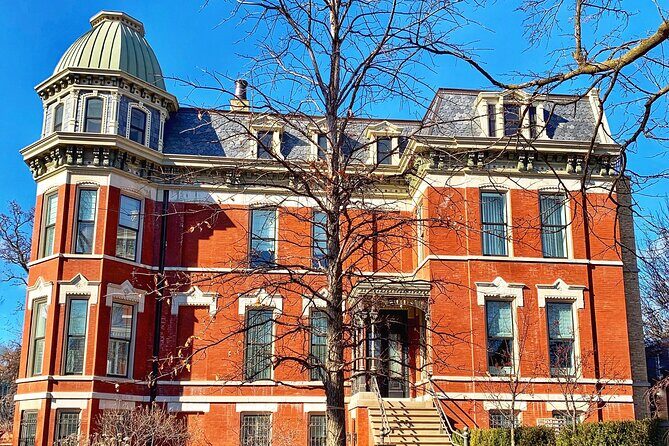
Chicago gets a lot of love for its big, famous skyline views. This tour takes a different route—and that’s exactly why it works. In Wicker Park, you can actually see how ordinary people lived, what builders valued, and how architecture changed neighborhood by neighborhood.
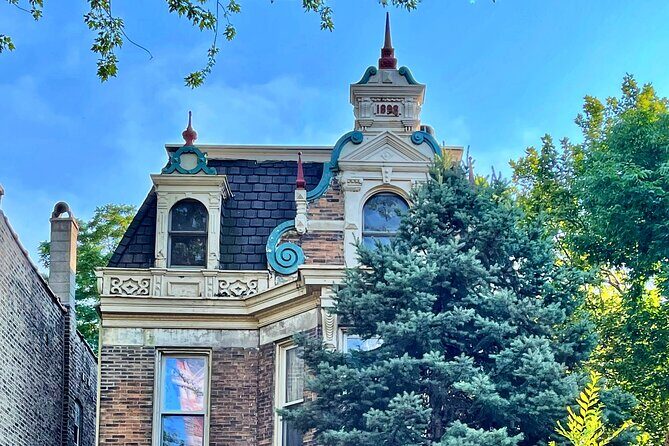
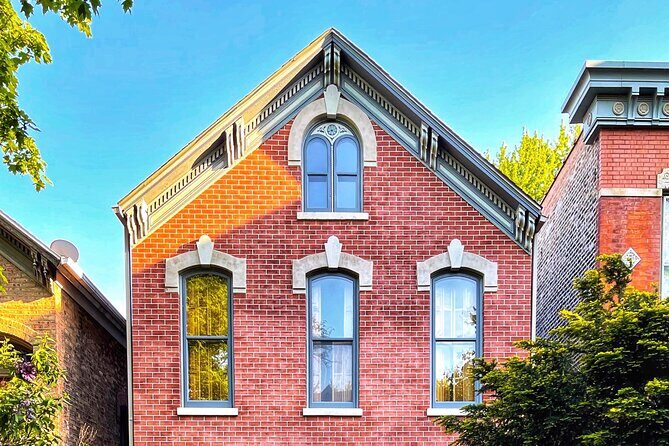
The core focus is workers’ cottages and the specific styles those cottages used. You’re looking at a local architectural vernacular tied to the late 1800s, plus other historic homes and buildings along the way. Instead of feeling like you’re studying a museum exhibit, the details sit right on the sidewalk where they belong.
And here’s the payoff: once you start recognizing small design differences—rooflines, materials, and overall proportions—Chicago stops looking like one uniform city. It turns into layers, with neighborhoods telling different stories at different speeds. That shift is what makes the experience feel like a new way of seeing the city.
You can also read our reviews of more walking tours in Chicago



Meeting at 6:00 pm: pace, walking distance, and what to expect
This tour starts in the evening at 6:00 pm at 1237 N Hoyne Ave, and you’ll finish at 2001 W Division St. The listed meeting spot is a four-story red brick historic building at the corner of W Division Ave and N Damen Ave, so you can use that corner as your landmark.
Time-wise, you should plan for about 1 hour 30 minutes to 2+ hours, and a walking distance of about three miles. The “approx” time makes sense here—small-group tours move at a human pace, with frequent stops for explanations and questions.
Comfort matters. The tour notes a moderate physical fitness level, and it’s clearly not designed for people who can’t handle several blocks on foot. If you’re bringing a friend who needs frequent breaks, you might find the schedule tight—because the whole point is to keep the walking flow while the stories stay fresh.
Wicker Park on foot: historic homes, styles, and street-level architecture lessons
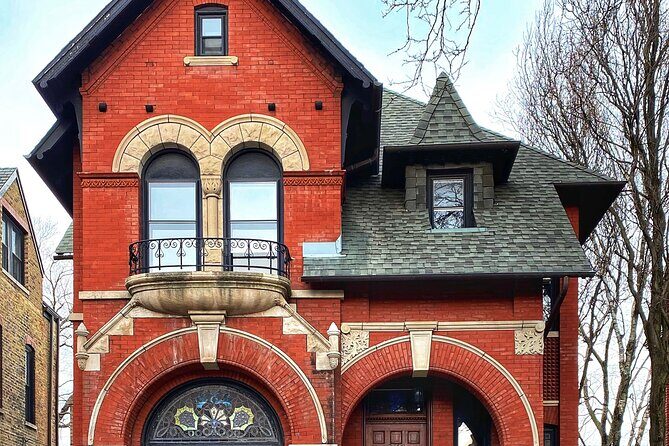
The real action happens as you move through Wicker Park and see the housing types that built the neighborhood’s identity. This isn’t a drive-by “look at that building” tour. It’s a guided walking route built around 40+ workers’ cottages plus 25+ historic homes, mansions, and other buildings.
The guide’s job is to translate what you’re seeing into something you can understand. You’ll hear how different cottages were designed and constructed, and how those choices connect to the people who would have lived there. You’ll also get history that stretches back around 150 years and beyond, not as a lecture, but as context that makes the architecture feel logical.
A big value here is learning to read a block. You start noticing patterns: where homes sit on the lot, how the façade is composed, and how the building material and form create a distinct “Chicago language” at street level. Even if you’re not an architecture nerd, this kind of explanation helps you look past generic curb appeal and see what’s actually going on.
The tour also leans into contrast. You’re not only seeing small workers’ homes. You’ll also spot bigger mansions and other landmarks, so you can compare scale and style rather than treating the neighborhood as one uniform style. That range helps you understand Chicago as a city where housing variety existed side by side.
Ronnie’s guide style: stories that connect buildings to real context
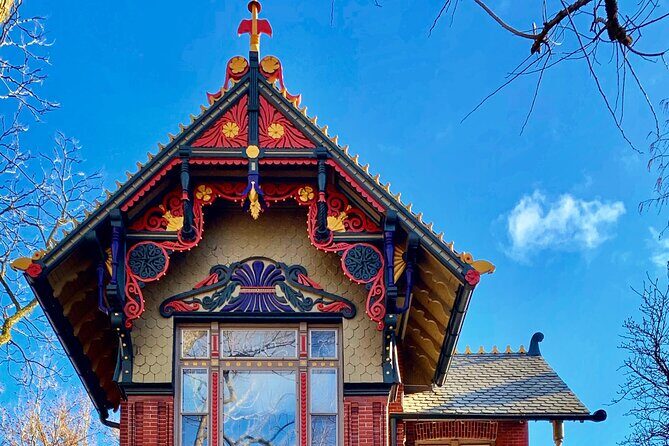
The experience gets consistently strong marks for one reason: the guide. Ronnie is described as passionate and knowledgeable about architecture, and that shows in how the tour stays anchored in building details while still telling broader Chicago history.
What I like about this approach is that it makes the walking tour feel less like sightseeing and more like interpretation. You’re not memorizing a list of facts. You’re learning why certain designs became common, what builders were responding to, and how neighborhoods evolved over time.
The best part is that the explanations seem built to change how you look at the city afterward. That’s not just a feel-good outcome—if you’re paying $45, you want the kind of value that lasts beyond the walk. Ronnie’s delivery (and the stop-by-stop format) is set up for that.
The small-group size matters too. With a maximum of 8, you’re more likely to get personal follow-ups and clearer explanations instead of being squeezed into the back of a line. For a topic as detail-heavy as historic architecture, that’s a real advantage.
The Atlas app: a handy way to remember what you saw
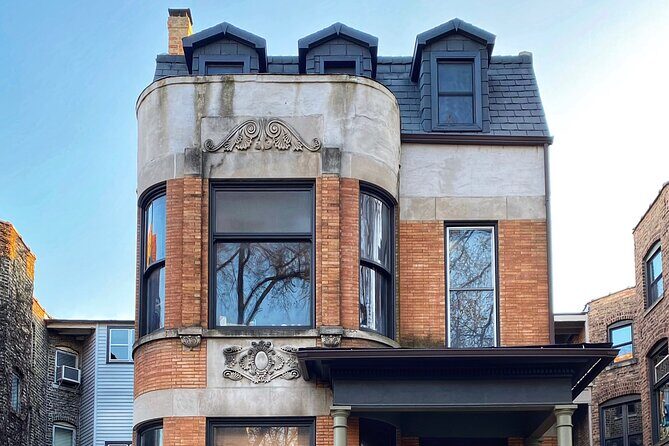
One of the smartest practical touches here is the Atlas app, which the reviews highlight as really helpful. The point isn’t just having an app. It’s using it to connect each stop with a photo and additional information.
That helps you in two ways. First, it makes the tour feel easier to follow in the moment—especially at night when you can’t study every façade detail for long. Second, it gives you a way to refresh your memory afterward without trying to recall street names and building features from a blur.
If you’re the kind of person who likes to take photos, this also supports that instinct. Even if you don’t photograph everything, you’ll have visual references tied to each location.
Practical tip: make sure your phone battery is healthy before you start. A walking tour with an app is only as smooth as your ability to keep the screen going.
You can also read our reviews of more historical tours in Chicago






Price and group size: what $45 buys you in Chicago
At $45 per person, this tour doesn’t feel like “pay for a quick walk.” It’s priced like a guided experience with enough structure to justify the ticket. The biggest reason: max 8 travelers means you’re paying for individualized attention, not just access to a route.
You’re also getting a lot of visible architecture for the money: cottages, mansions, and other historic buildings, with explanations tied to the design choices. A short tour that only hits a couple of stops would struggle at this price point. But here, the stops are frequent and the scale is large enough—40+ cottages plus other properties—to keep the walk from feeling repetitive.
The booking pace is also a clue. It’s commonly booked about 18 days in advance on average, which suggests this tour has a loyal following. If you want a spot, don’t wait until the last minute.
Value check you can use: if you want the “Chicago architecture explained in a human way” feeling, this price makes sense. If you only want a quick look at a couple notable buildings, you may find a different type of tour better.
Timing, tickets, and getting oriented without stress

This tour uses a mobile ticket, which is handy if you don’t want paperwork. Confirmation is received at booking time, and it’s offered in English, which keeps communication straightforward.
It also notes that the tour is near public transportation. That’s important for an evening start. You can plan to arrive without committing to a whole parking mission.
One more practical note: the tour runs at 6:00 pm and focuses on properties as you walk. So plan for the basics—comfortable shoes, and a light layer in case weather turns cooler than you expected.
Because the experience depends on good weather, have a backup plan in your head for rescheduling if conditions aren’t ideal.
Who should book this tour (and who should skip it)
This tour is a strong match if you:
- enjoy neighborhood walking tours where you can actually see the details
- like architecture that’s approachable, not pretentious
- want a small-group experience with a guide who answers questions
- care about understanding why buildings look the way they do—not just where they are
It’s also a good fit if you’re visiting Chicago for a short stay. Wicker Park is a great choice for seeing a different side of the city beyond the usual downtown beats, and the architecture focus gives you something to talk about at dinner.
It might not be the best fit if you:
- can’t handle about a 3-mile walk
- need something stroller-friendly or generally easier for kids under 13
- have health issues that make sustained walking difficult
- prefer indoor or minimal-footstep tours
Basically, if walking and paying attention to building details sounds like your kind of evening, you’ll likely enjoy this.
Should you book Historic Homes and Cottages of Wicker Park?
Yes—if you’re excited by the idea of learning Chicago through workers’ cottages, hands-on neighborhood context, and a guided route with a small group. The combination of Ronnie’s storytelling style and the Atlas app support is a rare mix: you get interpretation during the walk and a way to remember it afterward.
I’d skip it if your plans revolve around comfort over walking distance, or if you know you won’t have the stamina for an evening stroll of a few miles. This tour is designed for people who want to move, look, and listen.
If you book, do yourself a favor: arrive a little early, keep your phone charged for Atlas, and go in with curiosity about what looks “ordinary.” That’s where the best Chicago surprises are hiding.
FAQ
How long is the Historic Homes and Cottages of Wicker Park walking tour?
The tour runs for about 1 hour 30 minutes on average, and it’s described as a 2+ hour experience with walking.
How far do you walk during the tour?
The tour is noted as about a three-mile walking route.
What group size should I expect?
This is a small-group tour with a maximum of 8 travelers.
Where does the tour meet and end?
It starts at 1237 N Hoyne Ave, Chicago, IL 60622 (near the corner area at W Division Ave and N Damen Ave) and ends at 2001 W Division St, Chicago, IL 60622.
What language is the tour offered in?
The tour is offered in English.
Do I get a mobile ticket?
Yes, the tour uses a mobile ticket.
Is the tour suitable for children?
The tour notes it is not suitable for most children under 13.
Are service animals allowed?
Service animals are allowed.
What happens if the tour is canceled due to weather?
The experience requires good weather. If it’s canceled due to poor weather, you’ll be offered a different date or a full refund.
What is the cancellation and refund policy?
The experience is non-refundable and cannot be changed for any reason. If you cancel, the amount you paid is not refunded. If it’s canceled due to poor weather or because the minimum number of travelers isn’t met, you’ll be offered a different date or a full refund.